Our Lady of Częstochowa
The Black Madonna, Queen and Mother of Poland
The icon of the Black Madonna of Jasna Góra is one of the most venerated in the world and the spiritual heart of Poland. Her dark face, marked by two scars on the cheek, has accompanied the Polish people through their most difficult hours.
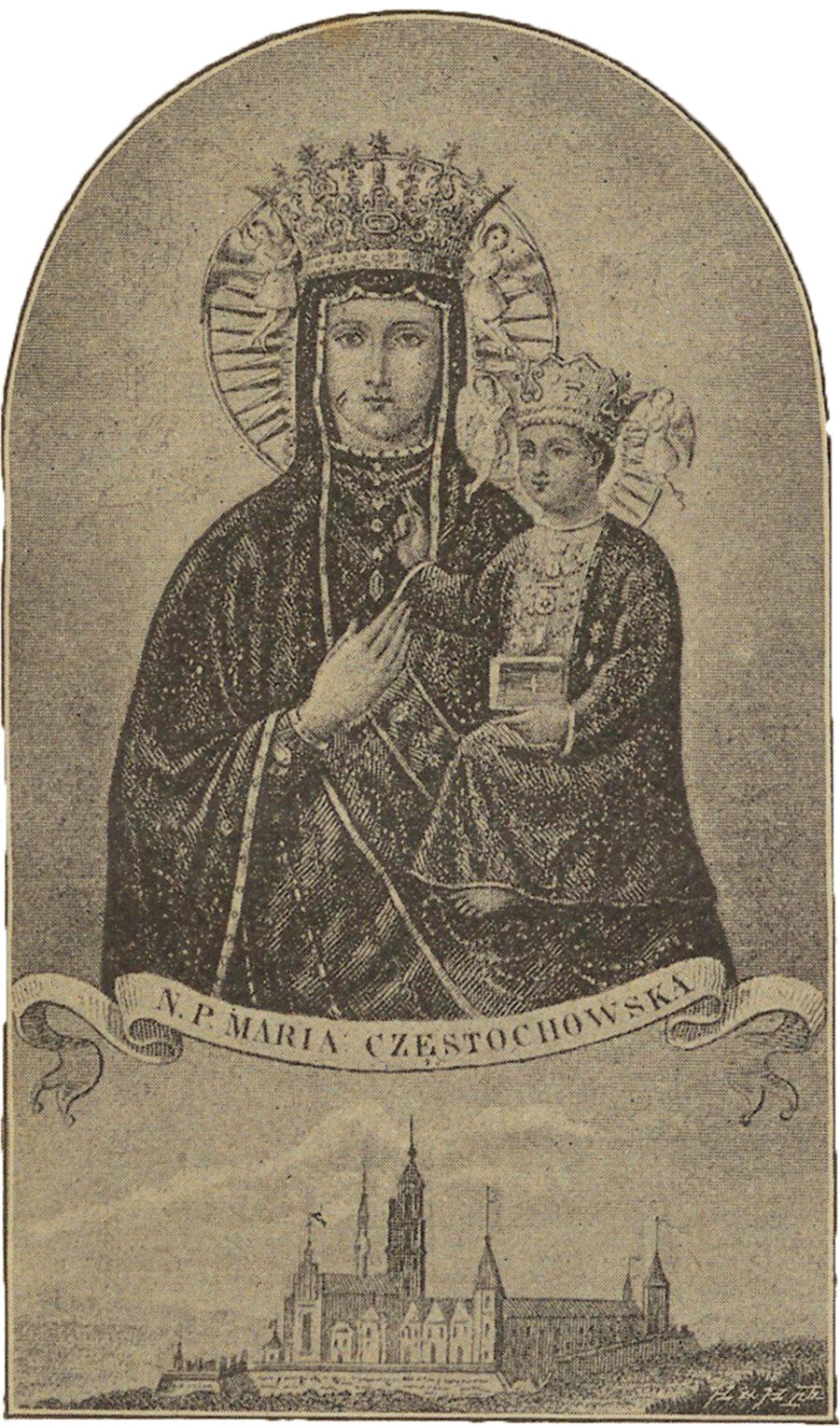
An ancient icon
The image is a painting of the Hodegetria type («she who shows the way»), of Byzantine origin, documented in Częstochowa since the 14th century. According to tradition, it was brought to Poland by Duke Ladislaus of Opole and entrusted to the Pauline Fathers at Jasna Góra around 1382. During a Hussite raid in 1430 the image was damaged: the two scars on the Virgin’s right cheek remain visible to this day.
The heart of a nation
Jasna Góra became the spiritual center of Poland, especially after the Swedish siege of 1655, whose victorious resistance was attributed to the protection of the Virgin. In gratitude, King John II Casimir consecrated Poland to Mary in 1656, proclaiming her «Queen of the Crown of Poland.» Saint John Paul II, a deeply devoted son of this Virgin, linked his motto Totus Tuus to her.