
Anecdotes about the Virgin Mary
The house of the Mother who suffers with her children
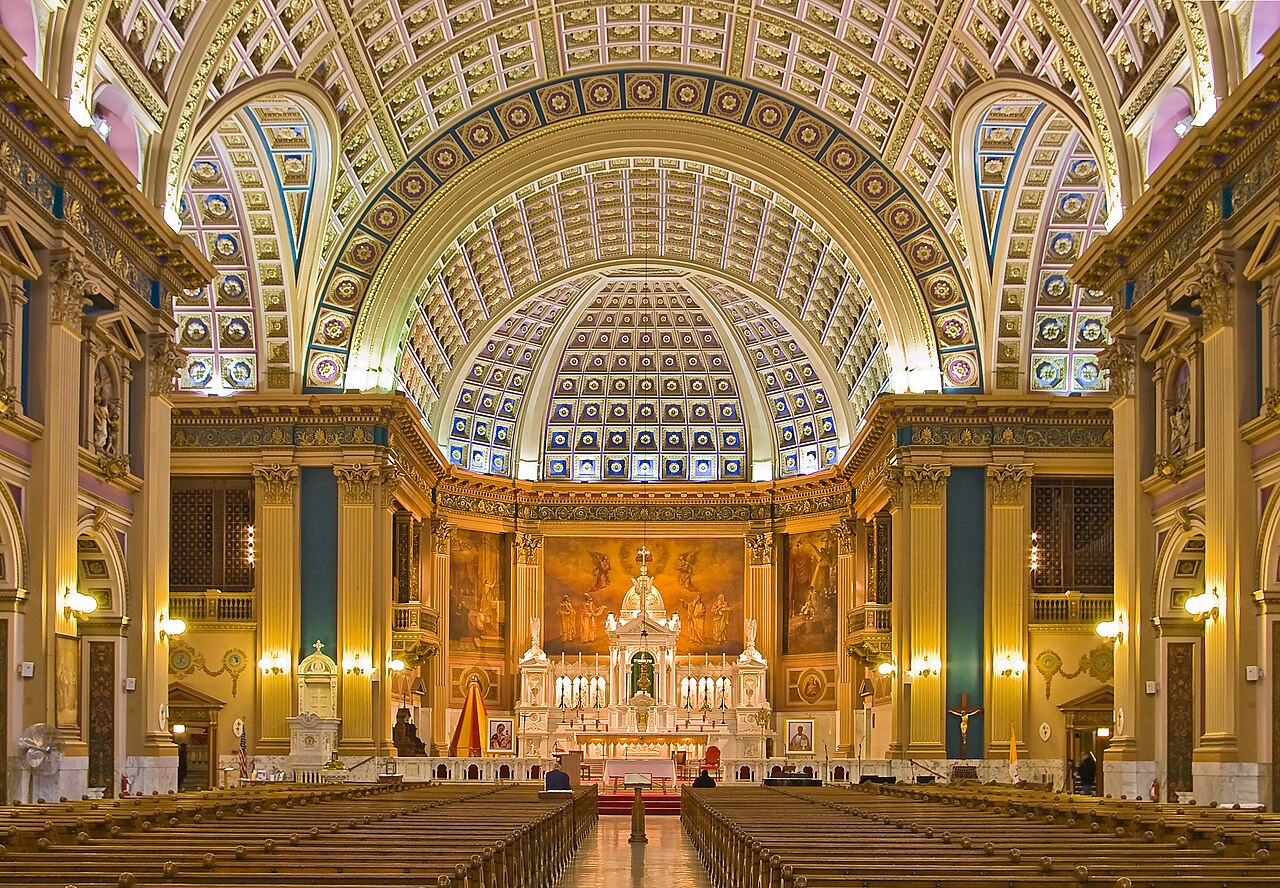
On West Jackson Boulevard in Chicago stands the Basilica of Our Lady of Sorrows. The parish was founded by the Servite Order to serve the city's growing Catholic population in the 19th century. A large church was built, which eventually became one of Chicago's most important Marian shrines, later being designated a minor basilica by the Holy See.
The spirituality of the place revolves around the Seven Sorrows of the Virgin Mary, according to Servite tradition: the prophecy of Simeon, the flight into Egypt, the loss of Jesus in the Temple, the encounter on the way to Calvary, the death of Jesus on the cross, the descent from the cross, and the burial. The church is known for its solemn Stations of the Cross and for its Marian ministry closely linked to the suffering of the faithful: immigrants, the sick, and the poor of the city. Italian, Polish, and later Latin American communities have passed through its halls, finding solace in the image of Our Lady of Sorrows.
It is important to distinguish between documented and devotional aspects. The Servite foundation, the construction of the church, and its elevation to a basilica are documented in the diocesan and Order archives. The strong popular devotion is also evident, with processions and novenas, especially around Good Friday and September 15th. The local press reports accounts of people who found great inner peace there after experiencing urban violence, grief, or the suffering of migration, and the presence of votive offerings and plaques of gratitude is a verifiable feature. However, a singular miracle, officially recognized by decree, is not mentioned in the Spanish-language sources consulted; nor are the exact dates of foundation and elevation to basilica, which are available in the official English-language documentation.
The connection to the Rosary here is twofold and beautiful. On the one hand, the traditional Marian Rosary is prayed. On the other, the Seven Sorrows Chaplet is especially promoted—that Servite “rosary” in which each of Mary’s sorrows is meditated upon, a devotion intrinsically linked to the basilica’s identity. There is no record of a specific “Rosary” miracle associated with the place: the relationship is one of daily prayer and pure Servite spirituality.
A flower for the Virgin
Give thanks to the Virgin Mary for her love. Pray a Hail Mary remembering this story.
Pray Hail MaryIs the advocation of the Virgin Mary of your people missing?
Si no encuentras la advocación mariana de tu ciudad o pueblo, cuéntanosla: la investigaremos para ubicarla y darla a conocer en este mapa del amor de la Madre por el mundo.
Propose an apvocation →