Marian devotion
Mother Three Lovable Days, Queen and Winner of Schoenstatt
Marian Advocation of Vallendar (Rhineland-Palatinate)
La advocación de la Mother Three Lovable Days, Queen and Winner of Schoenstatt nace unida al Schoenstatt Apostolic Movement, founded by the father José Kenenich in 1914 in Schoenstatt, Vallendar district, Renania-Palatinado, Germany. The name of the place, Schoenstatt ("beautiful place"), gives name to both the movement and the original sanctuary.
Main data
Origin and history
La advocación de la Mother Three Lovable Days, Queen and Winner of Schoenstatt nace unida al Schoenstatt Apostolic Movement, founded by the father José Kenenich in 1914 in Schoenstatt, Vallendar district, Renania-Palatinado, Germany. The name of the place, Schoenstatt ("beautiful place"), gives name to both the movement and the original sanctuary.
♪ documented history ♪
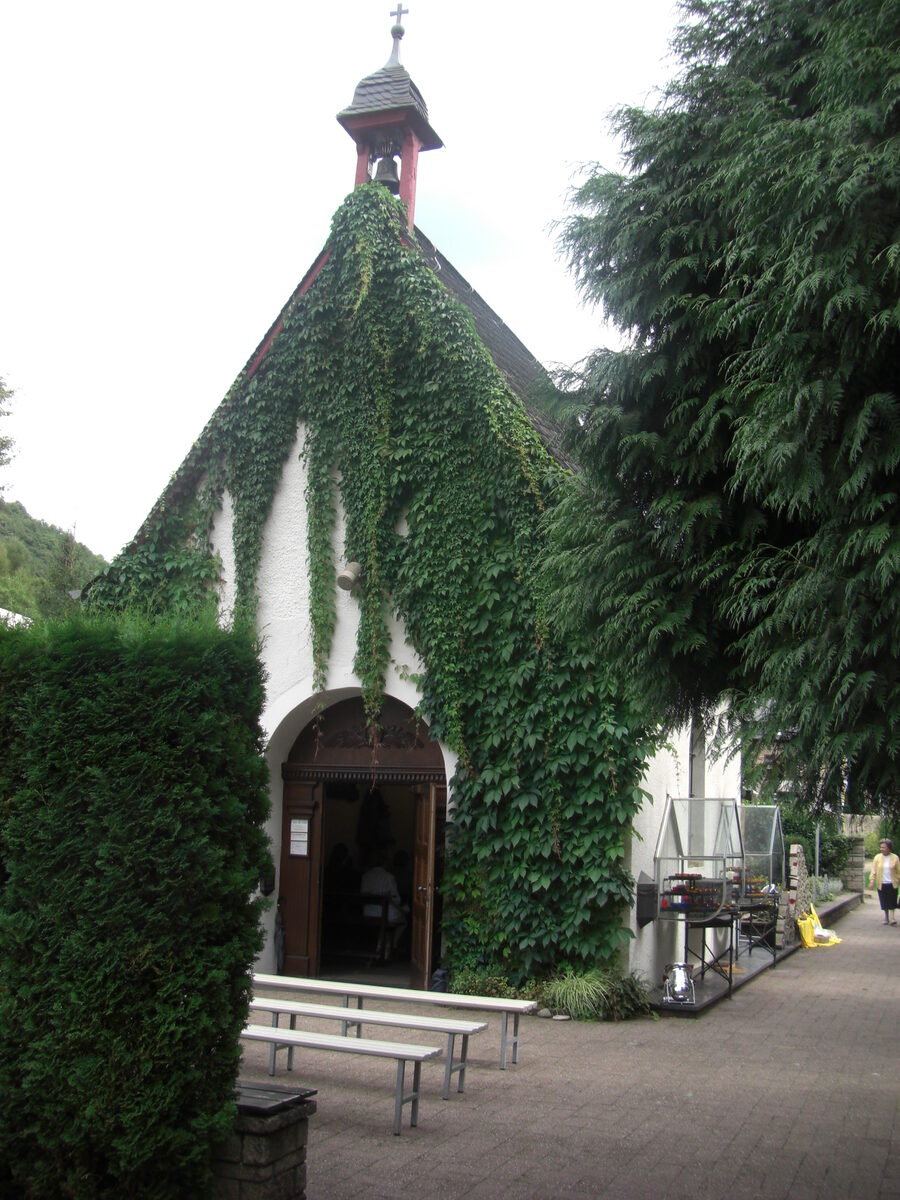
In an old chapel dedicated to San Miguel Archangel, linked to the seminar of the Palotine Fathers in Schoenstatt and existing at least since 1319, Father Kenenich proposed on 18 October 1914 a "Alliance of Love" with the Virgin Mary, which is considered the founding act of the Schoenstatt Movement. The chapel, restored in 1914, has since become the Santuario Original de Schoenstatt (Primordial Shrine), spiritual center of the new Marian current.
In 1915, a teacher from the Palotine school gave the seminarians a lithographic reproduction of the Marian image painted by the Italian Luigi Crosio in 1898, known as Refugio Peccatorum Madonna (Refuge of sinners). The image was placed in the chapel the 19 August 1915 and since then remains there as an image of Mother Three Admirable Times. From mediados de 1916 there began to venerate the Virgin under the Latin title Mater Ter Admirabilis (MTA), Madre Tres Veces Admirable, which over time was extended to the full name: "Mother and Queen Victorious Three Lovable Days of Schoenstatt".
With the development of the Schoenstatt Movement, devotion was extended to many countries through a network of santuarios subsidiaries; the advocation is present today in almost 200 shrines distributed throughout the world, all reproducing the model of the Original Sanctuary of Vallendar.
# # Tradition and spiritual heritage
The title “Tres Veces Admirable” is not born in Schoenstatt, but it retakes the tradition of Mariana Congregation of Ingolstadtin southern Germany. According to tradition, Father Jakob Rem, spiritual director of that congregation, asked the Virgin to demonstrate under what title she wished to be invoked; during the laurean litany, in pronouncing Mater Admirabilis, asked that this invocation be repeated three times, so that the title Mater Ter Admirabilis. The first congregants of Schoenstatt saw a spiritual affinity with that experience and adopted the same title for the image venerated in his sanctuary.
The symbolic interpretation of "three times" has been theologically enriched: it is often explained, among other formulations, as that Mary is Tres Veces Admirable por ser Mother of God, Mother of the Redeemer and Mother of the Redeemed, the admirable by su faith, love and hopeor as a daughter of the Father, a collaborator of Christ and a temple of the Holy Spirit. These explanations belong to the spiritual development of the movement and its own mariology, not to a specific magisterial document.
The image and the sanctuary
♪ ♪ The image
The imagen of the Madre Tres Veces Admirable by Schoenstatt es una Marian iconographic type painting devotional, lithographically reproduced from the original Luigi Crosio (1835–1915)entitled "Our Lady Refuge of sinners" (Refugio peccatorum), dated 1898. This is a representation of Mary with the Child Jesus:
– María sostiene al Niño en sus brazos, en una actitud de ternura. – El Niño es notoriamente large in proportion to the Mother and wrapped in a mantle that, in the scholenstattian version, covers both, subrayando el carácter de refugio y protección. – La obra original es una pintura al óleo; en Schoenstatt se venera una reproduction (lithography / retouched oil) adapted for veneration in the sanctuary.
In its origins the image retained the title of "Refuge of sinners"but in the context of the movement it became officially invoked as "Mother and Queen Victorious Three Lovable Days of Schoenstatt".
### El Santuario Original (Primordial Shrine)
The central place of this advocation is the Santuario Original de Schoenstatt (Primordial Shrine), situado en Schoenstatt, Vallendar district, Renania- Palatinate, Germany. Its documented history includes:
– Antigua capilla vinculada a San Miguel Archangel, mencionada ya en 1319 y relacionada con monjas agustinas en el siglo XVI. – Ha sido looted and destroyed twiceand the current construction dates from 1812. – En July 1914 was restored for the use of the Palotine seminary; shortly after it became the core of the Schoenstatt Movement.
Architectural, it's a small chapel of a simple plant, which has become the model reproduced by the numerous shrines of Schoenstatt in the world. The original Sanctuary has the title of minor basilicaor that it is canonically erected as National sanctuary; if conoce habitually como sanctuary of the Schoenstatt Movement and international pilgrimage centre.
There is no specific recognition in the revised sources as a "diocesan sanctuary" with a decree mentioned; however, its ecclesial importance is recognized as a place of origin of the Marian movement and of intense sacramental and pastoral life.
Sponsorship and coronation
# Patronage
La advocación de la Mother and Queen Victorious Three Lovable Days of Schoenstatt is particularly linked to Schoenstatt Apostolic Movement and the network of their sanctuaries. The sources consulted highlight their international dissemination, but do not indicate a specific civil or ecclesiastical legal patronage (e.g., official patron of a diocese or nation) recognized by decree and cited.
In many countries and localities, the Virgin of Schoenstatt is welcomed as a spiritual patron of communities, parishes or groups of the movement, but the available sources do not offer an official list of canonically declared patronates; therefore, does not contain a universally recognized legal patronage beyond its role as Mother and Queen of the Schoenstatt Movement.
# # Canonical coronation
In accessible documentation (historical synthesis, outreach articles and official Schoenstatt pages consulted) does not contain a documented canonical coronation of the image of the Original Sanctuary with clear reference to the year and to the intervention of a pontiff or pontifical delegate.
It is known internally in the spirituality of Schoenstatt that exist acts of "spiritual coronation" of the Virgin by the movement (gestures of consecration and surrender, in difficult historical contexts), but these do not necessarily correspond to a canonical coronation in the legal and liturgical sense regulated by the Church. Since the revised sources do not provide verifiable data for a formal canonical coronation, it should be stated:
Canon coronation: there is no documented canon coronation.
Party and devotion
La main party From Mother Three Lovable Times of Schoenstatt is celebrated every 18 Octoberin memory of the Love Alliance sealed in 1914 in the Original Sanctuary. On that date, in the shrine of Vallendar and in all the branches of the world, the Schoenstatt Movement organizes days of prayer, renewal of the alliance and Eucharistic celebrations.
Among the characteristic features of devotion are:
– La Love Alliance with Mary as a spiritual axis, understood as
A flower for the Virgin
It offers a simple prayer to this advocation. Pray a Hail Mary for Germany and for the peace of the world.
Pray Hail MaryIs the advocation of the Virgin Mary of your people missing?
Si no encuentras la advocación mariana de tu ciudad o pueblo, cuéntanosla: la investigaremos para ubicarla y darla a conocer en este mapa del amor de la Madre por el mundo.
Propose an apvocation →