
Marian devotion
Our Lady of Dublin
Marian vocation of Dublin (Leinster)
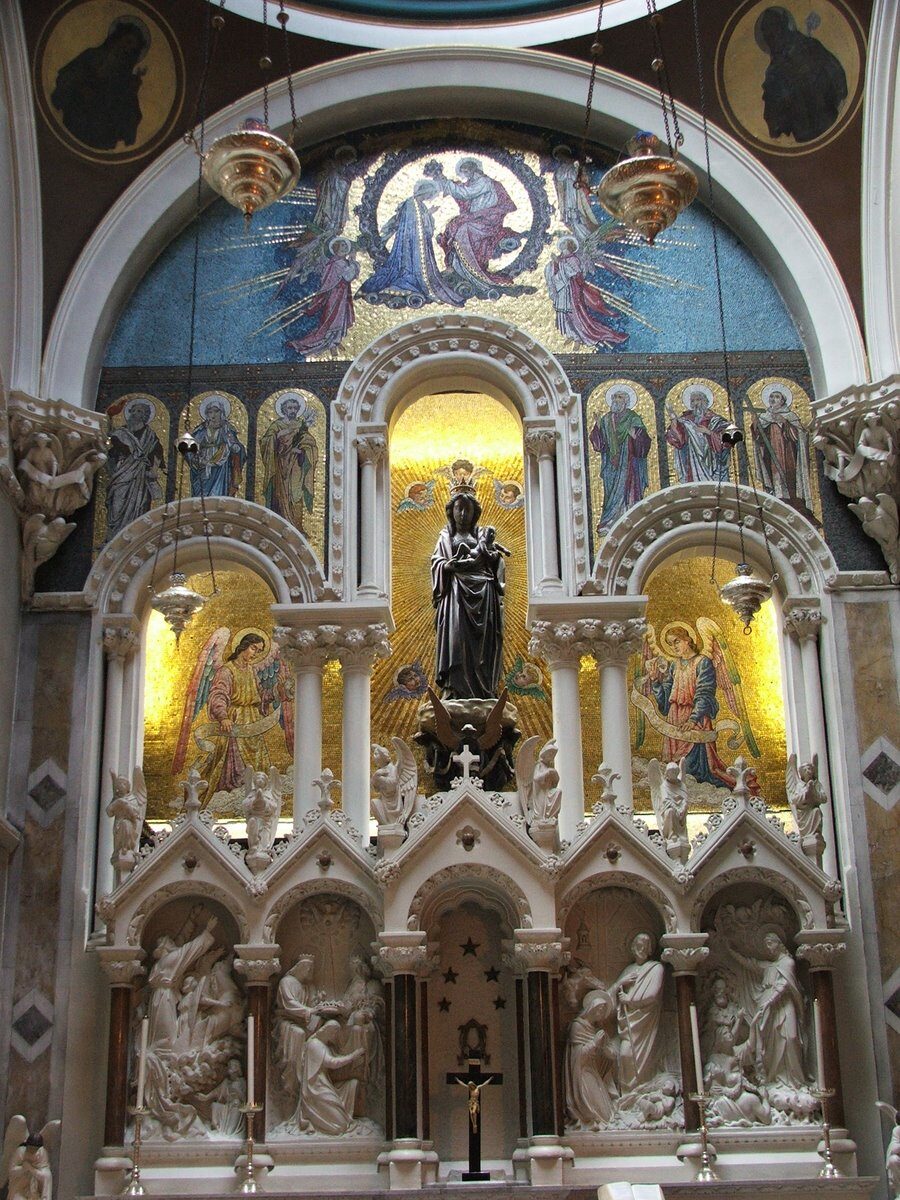
Our Lady of Dublin is a ancient Gothic image of the Virgin with the Child, today venerated in the Carmelite church of Whitefriar Street in the centre of Dublin. It is also known as the Virgen Negra de Irlanda by the dark tone of the size. Most of the authors place it between the end of the 15th and early 16th century, when the Marian images of polychrome wood abound in the churches of the city; this dating is based on its late Gothic style (information collected in local heritage descriptions, although without an explicit dated document).
Main data
Origin and history
Our Lady of Dublin is a ancient Gothic image of the Virgin with the Child, today venerated in the Carmelite church of Whitefriar Street in the centre of Dublin. It is also known as the Virgen Negra de Irlanda by the dark tone of the size. Most of the authors place it between the end of the 15th and early 16th century, when the Marian images of polychrome wood abound in the churches of the city; this dating is based on its late Gothic style (information collected in local heritage descriptions, although without an explicit dated document).
♪ documented history ♪
The image was originally venerated in a medieval church in Dublin (a temple of the historical center is usually mentioned), but it was removed from its place of worship and saved from the destruction in the times of the Reformation and the subsequent persecutions against the Catholic cultIt was preserved for centuries in private or unvisible places. In the 19th century, in the context of the post-emancipation Catholic Renaissance, the size was recovered and restored to public veneration and ended up being installed in the church of the Carmelites barefoot Whitefriar Streetwhere it is currently venerated.
The Carmelites of Whitefriar Street, known for keeping a number of images and relics of great devotion in Dublin (including Valentine's Day), have since promoted the worship of Our Lady of Dublin as one of the most important historical Marian images of the Irish capital.
# # Tradition and legendary elements
The local tradition stresses that the image was "hidden" or "hidden" to prevent his desecration during the centuries of Protestant rule, and that devotion remained discreetly between Catholic families until his "rediscovery" in the 19th century. There is also talk of a continuity of Marian veneration in Dublin focused on this image, which would have been especially loved by the humble population of the city.
These accounts belong to the tradición oral and devotional memory; the existence of an old size saved after the Reformation is credible, but detailed documents of each stage of its concealment and recovery are not preserved, at least in easily accessible sources. Therefore, beyond the determination of its seniority and its present presence on Whitefriar Street, the intermediate details should be considered traditionalNot strictly demonstrable.
—
The image and the sanctuary
♪ ♪ The image
Our Lady of Dublin is a oak wood size of late Gothic style, which represents the Virgin Mary with the Child Jesus. The Virgin appears sitting, in the attitude of presenting the Son, following the iconographic scheme of the Madonna entronizada The child, on his lap, blesses or holds a symbol (the descriptions present it as a fully Marian image, although the specific details of the child's gesture vary according to the sources). The darkening of wood and polychrome over the centuries has given rise to the appeal of Virgen Negra de Irlanda.
The most cited material is oak wood, common in the Northern European imagery of that period, although some popular references simply speak of "dark wood"; in the absence of an accessible technical report, the traditional attribution to oak is maintained, noting that there is no published scientific study that explicitly confirms it.
### The sanctuary / temple
The image is venerated in the Iglesia de Our Lady of Mount Carmel (Whitefriar Street Church), commonly called Whitefriar Street Church, belonging to the Order of Carmen (Carmelitas). The temple is located in the centre of Dublin, in the southern area of the Liffey River, and is one of the city's main centres of urban devotion.
Main characteristics of the temple:
– Es una Carmelite church de gran tamaño, con varias capillas laterales dedicadas a santos y advocaciones muy frecuentadas por los fieles (entre ellas, san Valentín y san Judas Tadeo, según la información habitual sobre la parroquia carmelita de Whitefriar Street, recogida en guías religiosas locales). – Está configurada como urban parish and sanctuary of popular devotionsbut no consta having received the title of minor basilicanor formal recognition as Marian national sanctuary (este título corresponde en Irlanda al santuario de Knock). – En el interior, Nuestra Señora de Dublín ocupa un Highlights of the altar or chapel, identified in some descriptions as a particularly venerated image by the Dublinese.
It does not contain, in open-ended, a specific decree declaring it Marian diocesan sanctuary in the technical sense; functionally, acts as place of pilgrimage and Marian devotion inside the city.
—
Sponsorship and coronation
# Patronage
Our Lady of Dublin is considered a the Marian vocation of the city of Dublin, particularly linked to the faithful of the capital and the Carmelite tradition of Whitefriar Street. In practice, many devotees identify it as a Marian Patron of the Citybut:
– No constain accessible sources, a formal decree proclaiming it main patron of the Archdiocese of Dublin ni de todo el país. – Irlanda, como nación, tiene otros centros de referencia mariana, especialmente Our Lady of Knock, officially recognized as a national sanctuary.
We can speak rigorously of a Local and affective patronage on the city and on the faithful who come to the church of Whitefriar Street, rather than a canonically defined patronage at the diocesan or national level.
# # Canonical coronation
In the documentation consulted (archdiocese, known Carmelite sources, devotional synthesis and accessible Marian repertory) does not contain a documented canonical coronation of the image of Our Lady of Dublin by Pontifical Decree or by the mandate of the Holy See.
Therefore, according to the available data: Canon coronation: there is no documented canon coronation.
—
Party and devotion
# # # Liturgical party or self-celebration
No general liturgical calendars appear fiesta universal específica under the title of Our Lady of Dublin. Nor does it contain, in the accessible sources, an official date of its own feast for this advocation established for the whole archdiocese.
It is possible that on Whitefriar Street a Special commemoration of the Virgin (for example, on a general Marian date such as the Immaculate Conception or some memory of the Virgin of Carmen), but by not clearly appearing in open diocesan repertories, it must be said with rigour that does not contain a main holiday date specifically set for "Our Lady of Dublin".
Pilgrimage and devotional features
Our Lady of Dublin is part of the daily devotional life of the Carmelite church of Whitefriar Street. Devotion is expressed above all by:
– Visitas individuales de fieles de Dublín y de peregrinos que recorren los principales templos de la ciudad. – Oraciones ante la imagen, encendido de velas y petición de family, work and personal needs, siguiendo la tradición mariana irlandesa. – Integración de la advocación en el Carmelite context, where Marian spirituality has a central place, so the presence of this ancient Gothic size connects modern piety with the faith of the past centuries.
No se dispone de reliable quantitative data on the annual influx of pilgrims specifically to the image of Our Lady of Dublin, but the temple of Whitefriar Street is usually described in guides and testimonies as a very busy church in the capital, visited both
A flower for the Virgin
Offer a simple prayer to this Marian devotion. Pray a Hail Mary for Ireland and for world peace.
Pray Hail MaryIs the advocation of the Virgin Mary of your people missing?
Si no encuentras la advocación mariana de tu ciudad o pueblo, cuéntanosla: la investigaremos para ubicarla y darla a conocer en este mapa del amor de la Madre por el mundo.
Propose an apvocation →