
Marian devotion
Our Lady of Africa
Marian vocation in Algiers (Algeria)
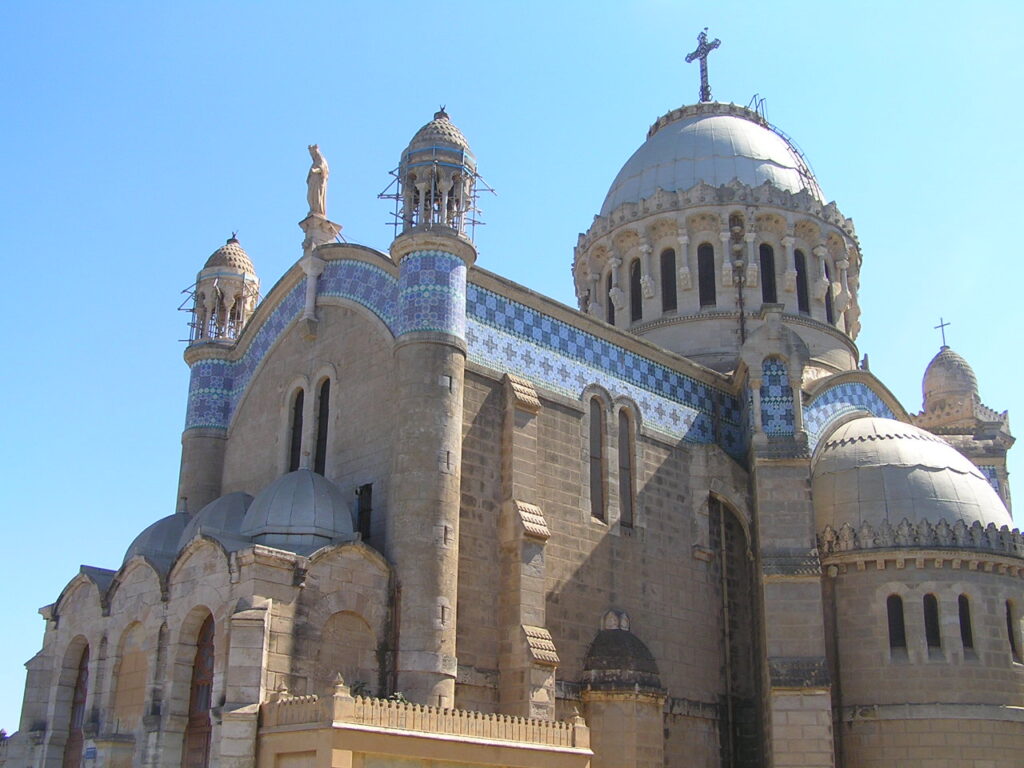
La Minor Basilica of Our Lady of Africa it rises on a cliff that dominates the bay of Algiers, in the current Archdiocese of Algiers (Latin rite). Marian devotion was consolidated in the 19th century, in a context of French presence in Algeria and intense missionary activity in North Africa. The church was inaugurated and consecrated in 1872After several years of construction, it soon became a reference place for resident Catholics and for the mission to the African continent.
Main data
Origin and history
La Minor Basilica of Our Lady of Africa it rises on a cliff that dominates the bay of Algiers, in the current Archdiocese of Algiers (Latin rite). Marian devotion was consolidated in the 19th century, in a context of French presence in Algeria and intense missionary activity in North Africa. The church was inaugurated and consecrated in 1872After several years of construction, it soon became a reference place for resident Catholics and for the mission to the African continent.
The documented story indicates that the temple was designed in Neo-Byzantine style by the French architect Jean-Eugène Fromageau (often cited in sources such as Fromegeau), within an architectural program that wanted to underline, at the same time, the Catholic identity and geographical integration in the Mediterranean and Maghreb world. Since its origins it has been associated with the title "Notre-Dame d'Afrique / Our Lady of Africa"not related to apparitions, but as an expression of Mary's spiritual motherhood on the African continent.
With regard to devotional tradition, various Catholic sources emphasize the symbolic character of this sanctuary as a "bridge" between Europe and Africa and as a place of prayer for peace and the encounter between Christians and Muslims, an idea condensed in the famous inscription of the apse: "Our Lady of Africa, pray for us and for the Muslims". This dimension of fraternity is a very deep-rooted spiritual trait, though more theological and pastoral than legendary, and has been strengthened over time with the preaching and praying practice of the sanctuary.
They do not contain, in serious sources, legends of Marian apparitions linked to this advocation in Algiers; devotion is understood rather as the fruit of pastoral and spiritual initiatives of the 19th century, consolidated by liturgical life and continued pilgrimage.
The image and the sanctuary
The headline of the sanctuary is a image of the Virgin Mary with the Child, known as Our Lady of Africa. The sources describe a bronze statue Enthroned in the sanctuary, he gained remarkable fame and was the object of particular veneration. This image is of a traditional Marian type (Mother and Son), without extraordinary exotic features, but covered with a strong symbolic meaning for its location and prayer for Christians and Muslims. In the apse of the basilica, the inscription "Our Lady of Africa, pray for us and for Muslims" visually marks the image as a sign of universal intercession.
The temple bears the official name of Minor Basilica of Our Lady of Africa (Basilica Our Lady of Africa), and is recognized as Catholic minor basilica. It belongs to the Archdiocese of Algiersin the capital of Algeria. It is located on a cliff of 124 meters highwith panoramic views over the bay and the Mediterranean Sea, which has made the place a visual symbol of the city. It is a building of Neo-Byzantine stylewith dominant dome and ornamental elements that remember both Byzantine tradition and certain local decorative features.
The sanctuary has become an important place for pilgrimage and spiritual reference not only for the Catholics of Algeria, but also for visitors from other countries, especially the Mediterranean basin and Africa.
Sponsorship and coronation
At the canonical level, the basilica has as its headline the Virgin Mary under the title of Our Lady of Africa, patron of the temple itself and strongly linked to the Archdiocese of Algiers. The sources consulted present it first of all as a great Marian sanctuary of the Algerian capital, without detailing a formal proclamation as the principal patron of the entire Algerian nation; therefore, beyond its symbolic importance for Algiers and for the Church in Algeria, no consta in revised sources explicit decree of national patronage.
As for the canonical coronation of the image venerated in Algiers, the sources consulted speak of a coronation of the bronze statue in 1876within the process of consolidation of devotion in the 19th century. However, the available texts do not clearly specify whether it was a canonical coronation in a strict sense, authorized by a short pontifical, or a solemn coronation of a local character. In the absence of an explicit reference to a short papal, pontifical delegate or canonical coronation decree in the main accessible sources: does not contain a documented canonical coronation.
It is important not to confuse this invocation of Algiers with the Our Lady of Africa of Ceuta (Spain)which does have canonical coronation documented in 1946 and official patronage of the city, but which is another different image and sanctuary.
Party and devotion
Various Marian sources point to a liturgical memory in honor of Our Lady of Africa on August 5in some local calendars and religious communities. However, the sources of the basilica itself or of the archdiocese are not explicitly cited in the documents consulted to officially confirm that date as a diocesan feast in Algiers; therefore, it can be said that the 5 August is a date of Marian celebration linked to this advocation in certain devotional fields, while does not clearly state its official liturgical status for the whole Church in Algeria.
The basilica receives pilgrims throughout the year, both Catholic faithful living in Algeria and foreign visitors. The dominant position on the bay makes the sanctuary a frequent goal of pilgrimages, spiritual visits and Marian celebrations, especially around the great Marian solemnities (Immaculate Conception, Asunción) and days of prayer for peace and interreligious dialogue. The dimension of prayer for Muslims, explicitly inscribed in the temple, has made this place a sign of fraternity and supplication for coexistence between Christians and Muslims in the Maghreb, a very important feature in contemporary devotional practice.
No official annual flow figures are available in the revised sources; however, it is repeatedly described as a "famous Marian sanctuary" and one of the most significant Catholic temples in North Africa.
Link to the Rosary
The specific sources on the Basilica of Our Lady of Africa in Algiers do not explicitly mention a of the Rosary, a rosary of this advocation or particular practices linked exclusively to the prayer of the Rosary. Within the information available, does not contain a unique and documented relationship with the Rosary that distinguishes it from other great Marian shrines.
However, as in most of the shrines dedicated to the Virgin, the Rosary It is an ordinary part of Marian piety: it is prayed with the celebration of the Eucharist, in Marian vigil and in days of prayer for peace and coexistence between peoples and religions. Under the eyes of Our Lady of AfricaThe meditation of the mysteries of the Rosary allows us to contemplate the life of Christ - from the Incarnation to the Resurrection and glory -
A flower for the Virgin
It offers a simple prayer to this advocation. Pray a Hail Mary for Algeria and for world peace.
Pray Hail MaryIs the advocation of the Virgin Mary of your people missing?
Si no encuentras la advocación mariana de tu ciudad o pueblo, cuéntanosla: la investigaremos para ubicarla y darla a conocer en este mapa del amor de la Madre por el mundo.
Propose an apvocation →