
Marian devotion
Our Lady of Aránzazu, venerated in the Chapel of Aránzazu
Marian Advocation of Guadalajara (Jalisco)
La advocación de Our Lady of Aránzazu It is native to the Basque Country (Oñate, Gipuzkoa, Spain), where tradition tells of the finding of an image of the Virgin in the middle of thorns towards the end of the 15th century and where today the famous Franciscan sanctuary of Aránzazu, patron of Gipuzkoa, is raised. This devotion was spread by the Basque Franciscans in different territories of the Hispanic monarchy, resulting in replicas and copies of the original sanctuary in America.
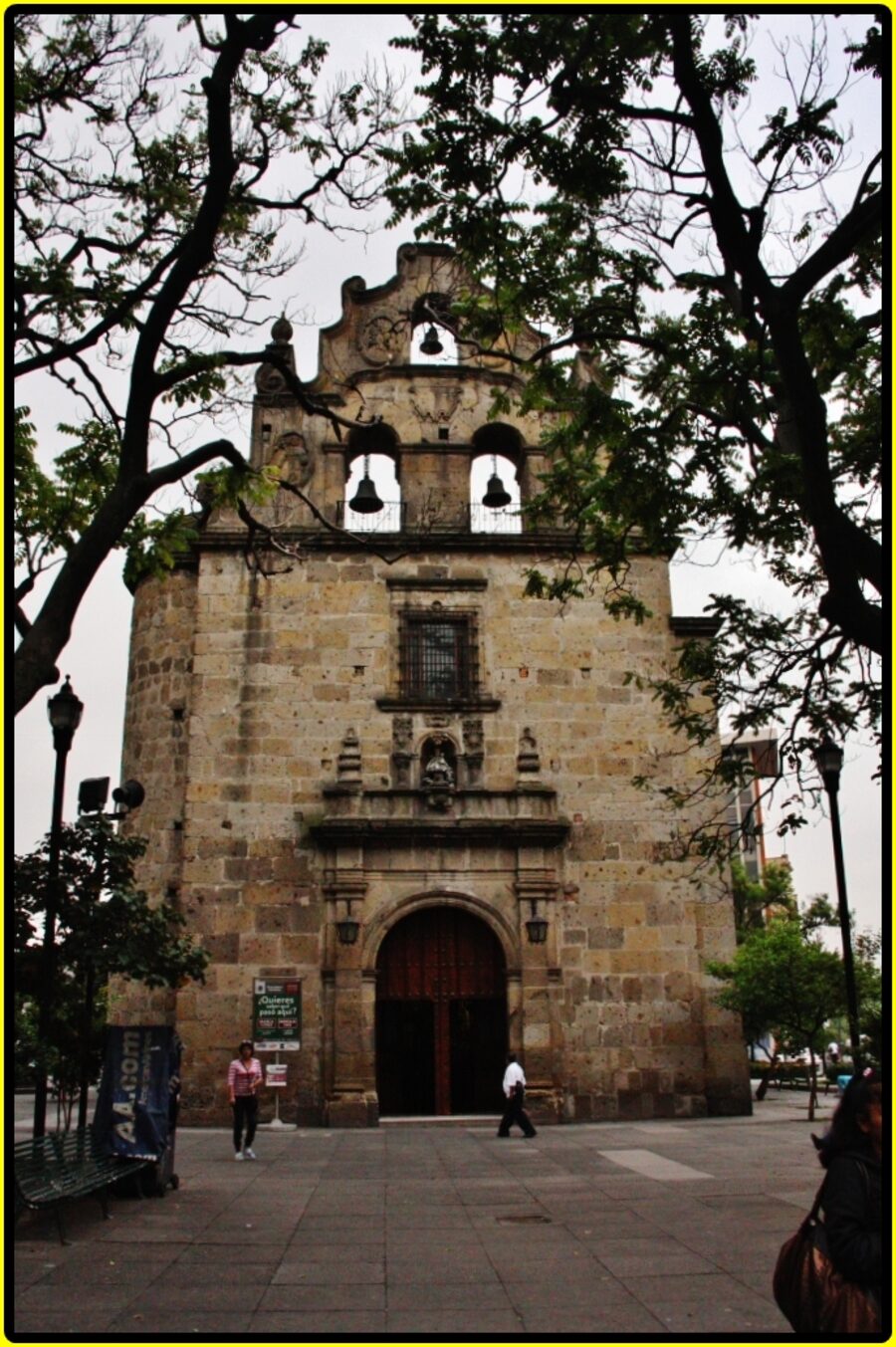
Main data
Origin and history
La advocación de Our Lady of Aránzazu It is native to the Basque Country (Oñate, Gipuzkoa, Spain), where tradition tells of the finding of an image of the Virgin in the middle of thorns towards the end of the 15th century and where today the famous Franciscan sanctuary of Aránzazu, patron of Gipuzkoa, is raised. This devotion was spread by the Basque Franciscans in different territories of the Hispanic monarchy, resulting in replicas and copies of the original sanctuary in America.
En Guadalajara (Jalisco, Mexico) the Temple of Our Lady of Aranzazu, annexed to the ancient convent of San Francisco, known today as the Chapel of Aránzazu. Tripadvisor and tourist reviews explicitly point to the Basque origin of the advocation that is venerated in this temple, indicating that it is an imported devotion and linked to the Franciscan presence. No documents have been found in open sources detailing the exact date of the introduction of this image in Guadalajara or the formal foundation of the sanctuary as the "novoHispanic reproduction" of the Basque sanctuary; historically it is likely that devotion has arrived in a vireinal era through the Franciscan of Basque origin, but no consta precise dating in the sources consulted.
La September 9 party It coincides with the traditional holiday of the Virgin of Aránzazu in the Basque Country, where the major feast of the province of Gipuzkoa is held and previous pilgrimages and novies are organized. Several shrines of America who have received this advocation have retained that same date for the celebration, as is the case, for example, with the Colombian shrine of Our Lady of Aranzazu in the Huila, where the main feast is held on September 9 with the novena, the eve and the campal mass. For Guadalajara (Jalisco, Mexico), accessible sources only make it possible to state that the title follows the traditional calendar of Aránzazu; no consta in official documents the explicit marking of the local party on the same date, although the coincidence with the Basque tradition is highly likely.
The image and the sanctuary
The sources consulted do not accurately describe the concrete image venerated in the Temple of Our Lady of Aranzazu of Guadalajara (type of size, material, size, specific iconography), so all technical details about the work should be considered as no constatado. It is known, by general iconographic studies of the Virgin of Aránzazu, that in Spanish and New Hispanic art the Virgin with the Child is often represented in the attitude of royalty and mercy, often associated with the motif of thorns and, in some cases, with Marian attributes such as the rosary and the moon. However, these general features do not ensure that the concrete image of Guadalajara reproduces exactly these details; by rigor, no consta a documented technical description of the local piece.
The place of worship is the Temple of Our Lady of Aranzazulocated next to the old convent of San Francisco in the historic centre of Guadalajara. Tourist reviews describe it as a "romantic site very used at weddings," highlighting its integration with the Franciscan ensemble, where the temple of San Francisco is one of the most monumental and best facade of the city. No mention has been found in the consulted sources that the temple of Aranzazu has been erected as minor basilica, National sanctuary o diocesan sanctuary by formal decree; therefore, from an accessible canonical point of view, it is a local parish temple / auxiliary, historically linked to Franciscan presence, but no consta a higher official title (basilica, national sanctuary, etc.).
Sponsorship and coronation
In Spain, the Virgin of Aránzazu is Patron of the province of Gipuzkoa, declared as such in 1913, after being canonically crowned in 1886. This condition of patronage and coronation belongs to the original shrine of Oñate, not to the temple of Guadalajara.
For the specific case of Guadalajara (Jalisco, Mexico):
– PatronageNo official references have been found to present her as the principal patron of the city, municipality or diocese. Various devotional pages mention his devotion in different parts of America, but without attributing him titles of canonical patronage to Guadalajara. It should therefore be stated that no consta a specific canonical patronage of Our Lady of Aránzazu over Guadalajara, the state of Jalisco or the archdiocese, beyond the historical devotion linked to the temple.
– Canonical coronationNo news has been found of a canonical coronation of Guadalajara's image, either by pontifical decree or by episcopal delegation. The documented coronation corresponds to the Basque image of Oñate. For the guadalajareña image, therefore, it must be expressly indicated: does not contain a documented canonical coronation.
Party and devotion
In the Basque tradition, the feast of Our Lady of Aránzazu is celebrated on September 9with an intense influx of pilgrims and liturgical celebrations that have become one of the main religious events of Gipuzkoa. This same date is preserved in some Latin American shrines under this title, such as the Sanctuary of Our Lady of Aranzazu in Huila (Colombia), where the feast of 9 September is preceded by a novena and eve, and the main day includes continuous masses and a campal mass presided over by the bishop.
Para Guadalajara (Jalisco, Mexico)the accessible sources do not provide a detailed program of the feast or the parish calendar, but is consistent with the general tradition that the main party is held around 9 Septemberin accordance with the universal celebration of the advocation; however, in the absence of explicit confirmation, it must be stated that the specific local date no consta Documentally.
As for the devoción local, the Temple of Aranzazu is described as a "very used place at weddings," which indicates a strong affective connection with the family and sacramental life of the Guadalajarean faithful. The proximity to the historic temple of San Francisco and the Basque origin of the advocation suggest a deep-rooted devotion, linked to both the Franciscan memory and the presence of families of Basque origin in the region, but no constan, in the sources consulted, annual statistical data, no detailed description of mass pilgrimages or other specific popular traditions (Romeries, Patronal Processions, etc.) similar to those documented in Aránzazu (Spain) or in the shrine of Huila (Colombia).
Link to the Rosary
In the iconographic studies on the Virgin of Aránzazu it has been noted that, at least in some historical representations, the image carries a rosary with roses between their attributes, along with other Marian symbols (such as the growing moon). This reflects a natural link of advocation to the spirituality of the Rosary in the whole of Catholic tradition.
Para la venerated image in Arica (Jalisco, Mexico)the sources consulted do not expressly indicate that there is a fellowship of the Rosary, specific novies with prayers of multitudinary rosaries or own practices that link of form
A flower for the Virgin
Offer a simple prayer to this Marian devotion. Pray a Hail Mary for Mexico and for all of America.
Pray Hail MaryIs the advocation of the Virgin Mary of your people missing?
Si no encuentras la advocación mariana de tu ciudad o pueblo, cuéntanosla: la investigaremos para ubicarla y darla a conocer en este mapa del amor de la Madre por el mundo.
Propose an apvocation →