
Marian devotion
Our Lady of Bardo, Guardian of the Faith
Marian title of Bardo Śląskie (Baja Silesia)
La devoción a Nuestra Señora de Bardo it dates back to the Middle Ages, in the area of Lower Silesia, region today located in the southwest of Poland. Local tradition regards this image as one of the oldest Marian representations venerated in the country, and links it very soon to the protection of the Christian faith in the area.
Main data
Origin and history
La devoción a Nuestra Señora de Bardo it dates back to the Middle Ages, in the area of Lower Silesia, region today located in the southwest of Poland. Local tradition regards this image as one of the oldest Marian representations venerated in the country, and links it very soon to the protection of the Christian faith in the area.
According to the tradition / legendthe statue would have been sculpted in the first centuries of Christianity in the region and miraculously preserved throughout the wars and conflicts, becoming a sign of special protection of the Virgin over Bardo and its inhabitants. Some tourist sources point out that the size would be from the X-XI centuries, presenting it as "the oldest wooden statue of Mary in Poland," but this data belongs to the local tradition and does not appear fully unified in historical-artistic research.
As for the documented historythe presence of the Marian sanctuary in Bardo is clearly attested since the Middle Ages, and the place was consolidated over time as a center of pilgrimages in honor of the Virgin. The current configuration of the whole - with the Baroque basilica - comes from the post-cistercian period (late 17th and early 18th century), when the temple was renewed and the old image of Our Lady was placed in a prominent place for the veneration of the faithful. Today, the Bardo shrine is recognized in the region as one of the historical Marian centers of Baja Silesia.
The image and the sanctuary
The image of Our Lady of Bardo, Guardian of the Faith es una wood size small size, style Romanesque-Gothicdating from tradition and some studies between the 12th and 14th centuries, although certain tourist materials place it even between the 10th and 11th centuries. It is a sedent figure of the Virgin Mary with the Child, in the attitude of majesty, inscribed in the iconographic type of the Sedes Sapientiae (Throne of Wisdom), characteristic of the early Romanesque and Gothic period. Polychrome wood and the sobriety of the features make it one of the most significant medieval Marian images in Poland.
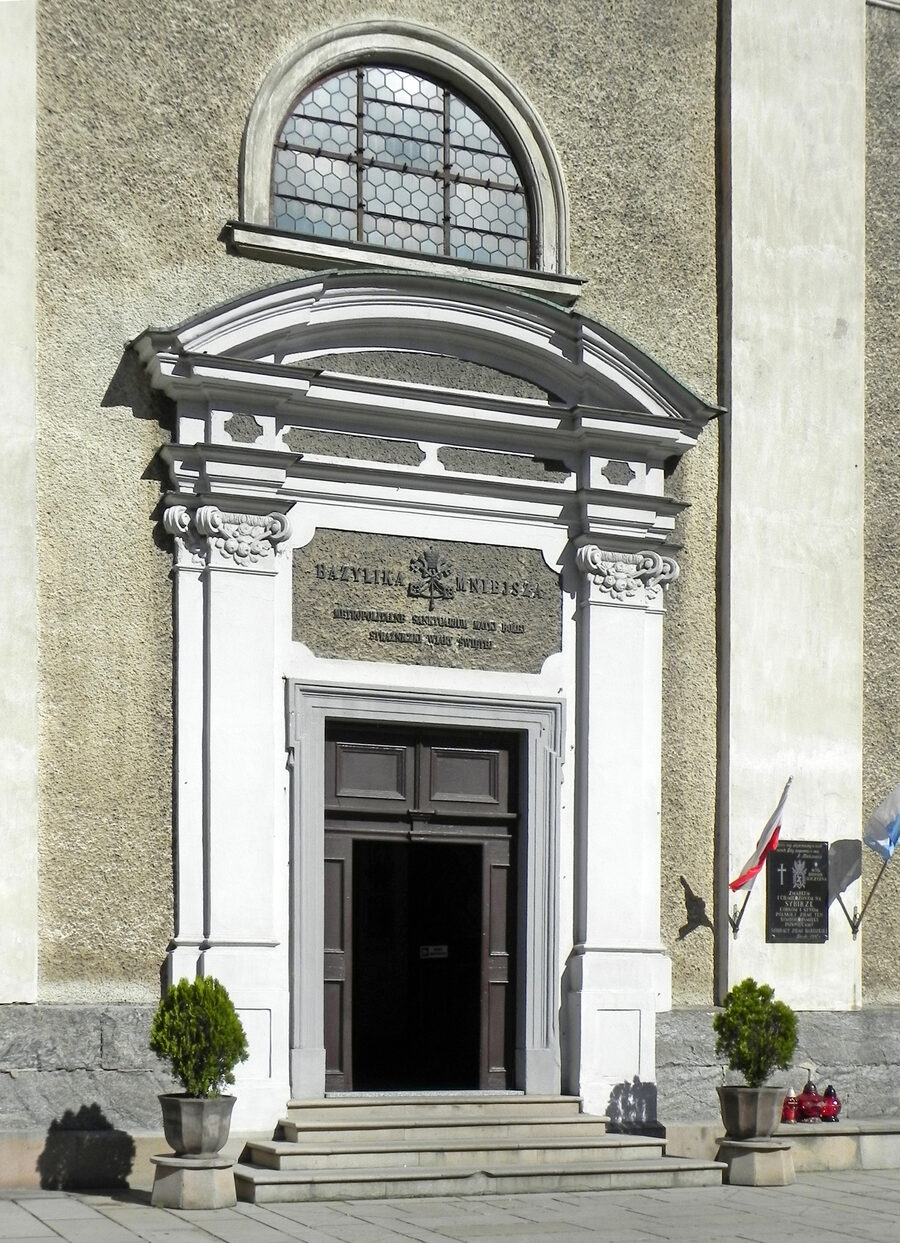
The image is venerated in the Basilica of the Visitation of the Blessed Virgin Mary en Bardo Silesia, Baroque temple that rises in the place of the ancient Cistercian monastery, today described as a post-Cistercian church. The basilica was built between 1686 y 1704, in late baroque style, and is located on the banks of the Nysa Kłodzka River. The interior shows a rich Baroque decoration and houses the image of the Virgin on the main altar, surrounded by exvotes and signs of gratitude for favors received. The temple has a range of minor basilica and works like active Marian sanctuarywith continuous pilgrimages and intense liturgical life.
Sponsorship and coronation
Our Lady of Bardo is recognized as patrona local of the city of Bardo Silesia and its environment, and is especially venerated within the region of Baja Silesia. Several sources point to its importance as one of the oldest regional Marian centres, although there is no mention of national patronage similar to that of other Polish advocates.
As for the coronationthe sources consulted on the basilica of Bardo and on the main Polish Marian devotions do not include detailed information about a specific canonical coronation of the image of Bardo (with indication of bullock, exact date and pontifical delegate), unlike other sanctuaries such as Częstochowa. An explicit record of the canonical coronation of the image with date and pontifical act has not been located in the standard documentation available. Therefore, according to accessible sources: does not contain a documented canonical coronation.
(The mention of a coronation in 1966 appears in some areas of dissemination, but no confirmation has been found in the ordinary official sources; therefore, it cannot be presented as a secure data.)
Party and devotion
The fiesta principal de Our Lady of Bardo is held in the sanctuary the Sunday after August 15thin close connection with the solemnity of the Assumption of the Blessed Virgin Mary. This day solemn liturgical celebrations, processions and acts of consecration to the Virgin are organized, bringing together the faithful of the city, the region of Lower Silesia and other parts of Poland.
The Basilica of Bardo is a place of active pilgrimageThere you can see lit candles, votive offerings and groups of pilgrims who come all year round to ask for Mary's intercession or thank you received. From the pastoral point of view, the sanctuary stands out for the influx of pilgrims especially in the summer time and around the great Marian parties, becoming a spiritual point of reference for the diocese and the region. Devotion is expressed through participation in the Eucharist, worship, confessions, Marian processions and various forms of popular piety rooted in Polish tradition.
Link to the Rosary
The specific sources on Bardo do do not indicate a particular historical relationship of the title "Guardana de la Fe" with the prayer of the Rosarynor do they refer to apparitions or messages explicitly linked to this prayer, as in other Marian shrines. Therefore, does not contain an own and documented link between this advocation and the Rosary, beyond the usual practice of Marian piety.
However, in a living Marian sanctuary like Bardo, the Rosary It is part of the ordinary devotional life: in Catholic tradition, the Rosary is a school of contemplation of the face of Christ with the eyes of Mary, and a simple way of keeping faith in the midst of difficulties. Where the Virgin is venerated as Guardiana de la Fe, the persistent prayer of the Rosary helps the faithful to deepen the mysteries of Jesus' life, to welcome the Gospel in daily life and to entrust to the Mother of God the fidelity of families, of the local Church and of all society. In this way, even if there is no specific documented historical relationship, the Rosary naturally accompanies devotion to Our Lady of Bardo and strengthens the sense of its protection over the faith of the Christian people.
A flower for the Virgin
Offer a simple prayer to this Marian devotion. Pray a Hail Mary for Poland and for world peace.
Pray Hail MaryVerified sources of this update
La a visit to Bardo provides a description of the sanctuary and a useful mapping reference for its location. As a secondary tourist source, it is not used here to affirm a decree of supernatural or to raise the ecclesial rank of the cult; these ends are expressed only when they are recorded.
Is the advocation of the Virgin Mary of your people missing?
Si no encuentras la advocación mariana de tu ciudad o pueblo, cuéntanosla: la investigaremos para ubicarla y darla a conocer en este mapa del amor de la Madre por el mundo.
Propose an apvocation →