
Marian devotion
Our Lady of Dadizele
Marian Advocation of Dadizele (Western Flanders)
La devoción a Our Lady of Dadizele goes back to the Middle Ages in the town of Dadizele, now part of the municipality of Moorslede, in West Flanders, Belgium. However, easily accessible information focuses mainly on the development of the great sanctuary of the 19th century, while the exact origins of the image and of the early medieval pilgrimage are not described in detail in the sources consulted; therefore, for the medieval stage no constan precise data on specific dates, founders or miracles.
Main data
Origin and history
La devoción a Our Lady of Dadizele goes back to the Middle Ages in the town of Dadizele, now part of the municipality of Moorslede, in West Flanders, Belgium. However, easily accessible information focuses mainly on the development of the great sanctuary of the 19th century, while the exact origins of the image and of the early medieval pilgrimage are not described in detail in the sources consulted; therefore, for the medieval stage no constan precise data on specific dates, founders or miracles.
La modern documented history of the sanctuary is closely linked to the Marian impulse after the proclamation of the dogma of the Immaculate Conception (1854). According to the historical information of the site, the construction of the basilica started in 1857, on the initiative of mons. Jean- Baptiste Malou, Bishop of Bruges, who wanted a great Marian church in his diocese. The temple was conceived as an important pilgrimage sanctuary for the Roeselare region, consolidating and structuring a devotion that already existed locally towards the Virgin venerated in Dadizele.
Throughout the 19th and 20th centuries, the sanctuary became a Marian pilgrimage centre for Western Flanders, with a strong popular roots and regular processions, especially in September. Modern sources highlight Dadizele's regional importance, but no constan - in the documentation consulted with immediate access - accounts of apparitions and a specific foundation legend comparable to other Belgian Marian claims.
The image and the sanctuary
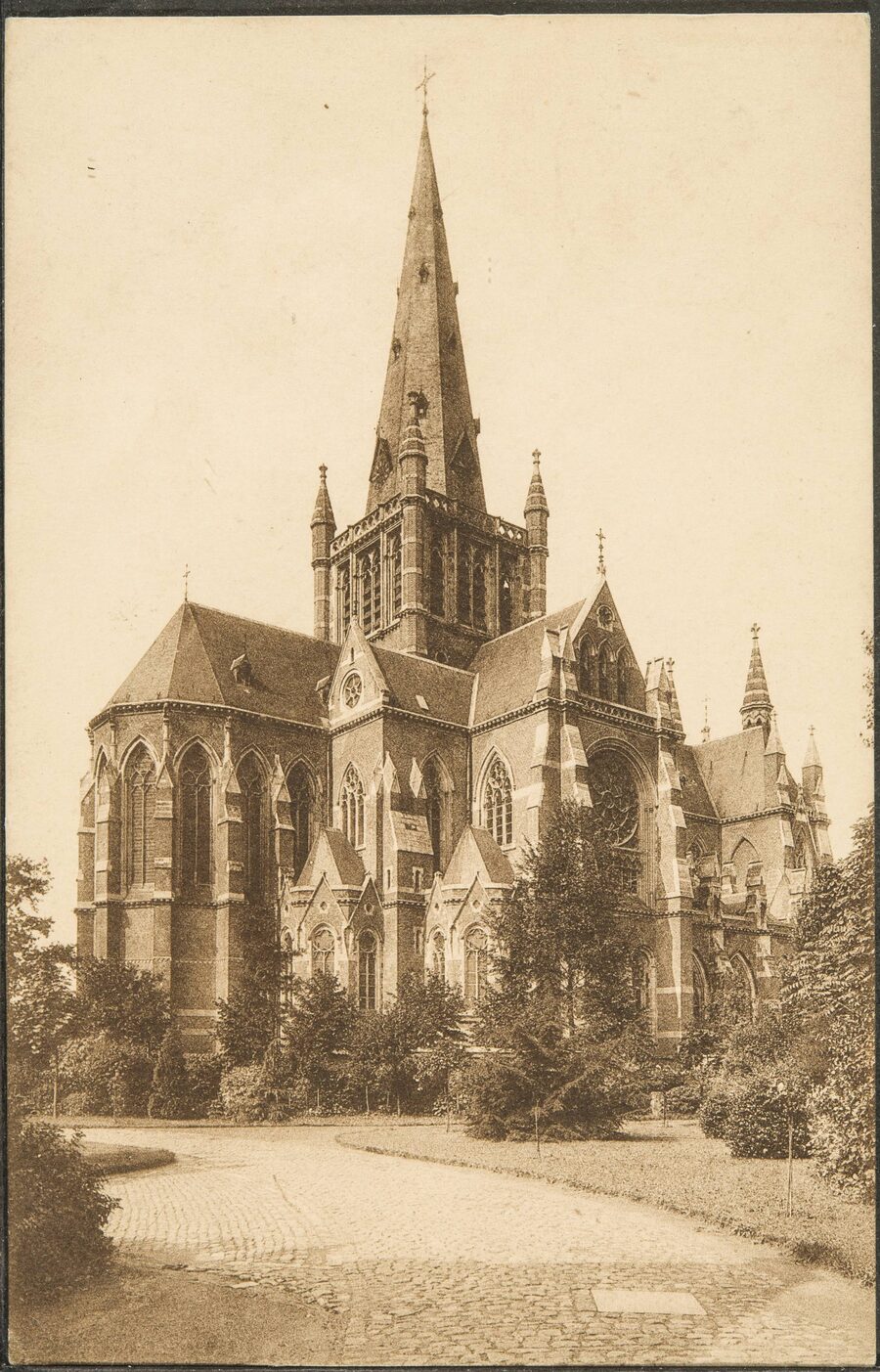
La Basilica of Our Lady of Dadizele (Our Lady Basilica of Dadizele) neogótico built as a Marian pilgrimage church. This is a minor basilica, a distinction confirmed by the information of the sanctuary itself and by the presentation of it made by the Sanctuary of Torreciudad, which explicitly indicates that it is "a minor basilica." The building is characterized by its large-scale Flemish neo-Gothic architecture, with a high tower and an interior designed to host many pilgrims. Because of its size and configuration, it is one of the main Marian shrines of Western Flanders.
The image of Our Lady of Dadizele, traditionally honored as Virgin of the Dolores. However, the sources consulted with immediate access do not provide a detailed and secure description of the sculptural typology, el material (wood, stone or other) nor the concrete iconographic elements (position of the Virgin, presence of the seven pains, Christ dead in arms, etc.). The following points should therefore be made rigorously: no constain the available documentation, a precise and verifiable iconographic description of the image.
The whole of the sanctuary includes, in addition to the basilica, spaces for pilgrims and an environment prepared to host mass celebrations, especially in the time of the great Marian pilgrimages of the Roeselare region. The place is recognized in Belgium as one of the outstanding Marian temples, along with other shrines in the country.
Sponsorship and coronation
Our Lady of Dadizele exercises a mainly local and regional sponsorship, linked to the town of Dadiceles and to the Roeselare in Western Flanders. Devotion is strongly rooted in the diocese of Bruges, but no consta in the sources consulted which have been granted an official national patronage on Belgium.
On the coronation, specialized sources indicate that the image was coronada en 1908 as a recognition of the importance of devotion and of the sanctuary. However, the accessible documentation does not specify with certainty the name of the Pontiff who granted the decree ni el Prelate delegate which executed the coronation rite, so that only the coronation year. The following should therefore be said about these specific details: no constain the sources consulted, the explicit reference to the pontifical delegate or to the formulas of the coronation decree.
Party and devotion
La principal The Feast of Our Lady of Dadizele is held in the month of Septemberin the framework of the great Marian pilgrimages of the region. The sources consulted point to this time as the culminating moment of the influx of the faithful into the sanctuary, but no consta precisely, in the information with immediate access, a specific day officially fixed for the patron party (for example, 8, 15 or 15 September); therefore, it can only be said with rigour that the main solemnity takes place in September.
Dadizele is known as a pilgrimage center for Western Flanders, and the basilica is prepared to receive large groups of pilgrims, especially Marian associations, parishes and devotional movements. Although there are no concrete figures of influx into accessible sources, it does emphasize its importance as a regional sanctuary and the continuity of a tradition of pilgrimages that goes back at least to the 19th century. Among the devotional features are the Marian processions, the solemn celebrations of the Eucharist and the veneration of the Blessed Virgin, especially in the context of suffering and personal trials.
Link to the Rosary
The sources consulted do not indicate a specific and documented link between the advocation of Our Lady of Dadizele and a particular form of devoción al Rosario (for example, the Rosary's cofradies founded there, apparitions with the rosary, own indulgences, etc.). It should therefore be stated precisely: no consta a unique historical relationship of the Dadizele shrine with a practice of the Rosary that distinguishes it from other Marian shrines.
However, because of its nature as a Pedestrian marijuana and by the centrality of the Blessed Virgin in the spirituality of the place, it is consistent that the rezo of the Holy Rosary - especially the painful mysteries - usually accompany the mercy of the pilgrims. The Church's tradition has seen a school of contemplation of the life of Christ with the eyes of Marywhich deeply harmonizes with an advocation that invites the pains of the Virgin at the foot of the cross. Thus, even if there is no particular documentation on the specific forms of Rosary in Dadizele, the prayer of the Rosary is understood as a privileged means of joining the Virgin of the Dolores of Dadizele, sharing with her the contemplation of the paschal mystery of her Son and offering, in every Hail Mary, comfort and reparation for the suffering of the world.
A flower for the Virgin
Offer a simple prayer to this Marian devotion. Pray a Hail Mary for Belgium and for world peace.
Pray Hail MaryIs the advocation of the Virgin Mary of your people missing?
Si no encuentras la advocación mariana de tu ciudad o pueblo, cuéntanosla: la investigaremos para ubicarla y darla a conocer en este mapa del amor de la Madre por el mundo.
Propose an apvocation →