
Marian devotion
Mother of God of Đunis
Marian vocation of Đunis (Central Serbia)
La advocación de la Mother of God of Đunis (Bogorodica Đuniska) It belongs to the tradition of the Serbian Orthodox Church and is linked to a sanctuary that emerged in the village of Đunis, in central Serbia, around a source considered miraculous. However, in accessible sources of an ecclesial, academic or international dissemination nature, there are no detailed studies in Spanish or a specific monograph on this advocation; the information available is fragmented and in local languages, so many data cannot be given with certainty.
Main data
Origin and history
La advocación de la Mother of God of Đunis (Bogorodica Đuniska) It belongs to the tradition of the Serbian Orthodox Church and is linked to a sanctuary that emerged in the village of Đunis, in central Serbia, around a source considered miraculous. However, in accessible sources of an ecclesial, academic or international dissemination nature, there are no detailed studies in Spanish or a specific monograph on this advocation; the information available is fragmented and in local languages, so many data cannot be given with certainty.
According to the local traditionthe Virgin would have appeared to 1915 a young pastoralist with a fountain in Đunis, in a historical context marked by the First World War and the suffering of the Serbian population. Following this alleged apparition and the favors attributed to the water of the source, the place began to attract pilgrims who came to seek spiritual comfort and physical healing. This tradition is part of the popular piety and devotional heritage of the region, but there is no official process of recognition of the apparition in the terms in which the Catholic Church understands it; in Orthodox praxis, the dissemination of veneration and recognition by the faithful people and the local episcopate often play a decisive role.
As for the documented history, it is noted that in Đunis there is a Marian Orthodox sanctuary consolidated as a place of regional pilgrimage in central Serbia, with a church and a source associated with the Mother of God, visited especially at the great Marian festivals of the Byzantine-Slavic calendar. However, there are no precise chronological data on the construction of the first chapel or church in the sources consulted, no formal erection decrees such as diocesan or national sanctuary, no references to patriarchs' visits or synodal decisions to set exact dates. So many specific historical aspects no constan with documentation accessible in the usual sources of reference (encyclopedia, official pages of dioceses or patriarchs, or Catholic or generalist press in Western languages).
The image and the sanctuary
The easy to access sources do not provide a detailed and verifiable description of the image concrete of the Mother of God of Đunis: it does not contain with certainty the type of representation (Virgin with the Child, Hodigitria, Eleusa, etc.), the material (icon painted on table, mural icon, sculpted image), or specific iconographic details that distinguish it from other Marian representations of Byzantine tradition. In the absence of reliable data, it can only be noted that, in the case of a place of Serbian Orthodox worship, devotion is most likely to be expressed mainly by one or more iconos of the Theotokos, but this statement is general in nature and does not replace a specific description: on the specific image of Đunis, no consta information that is sufficiently accurate.
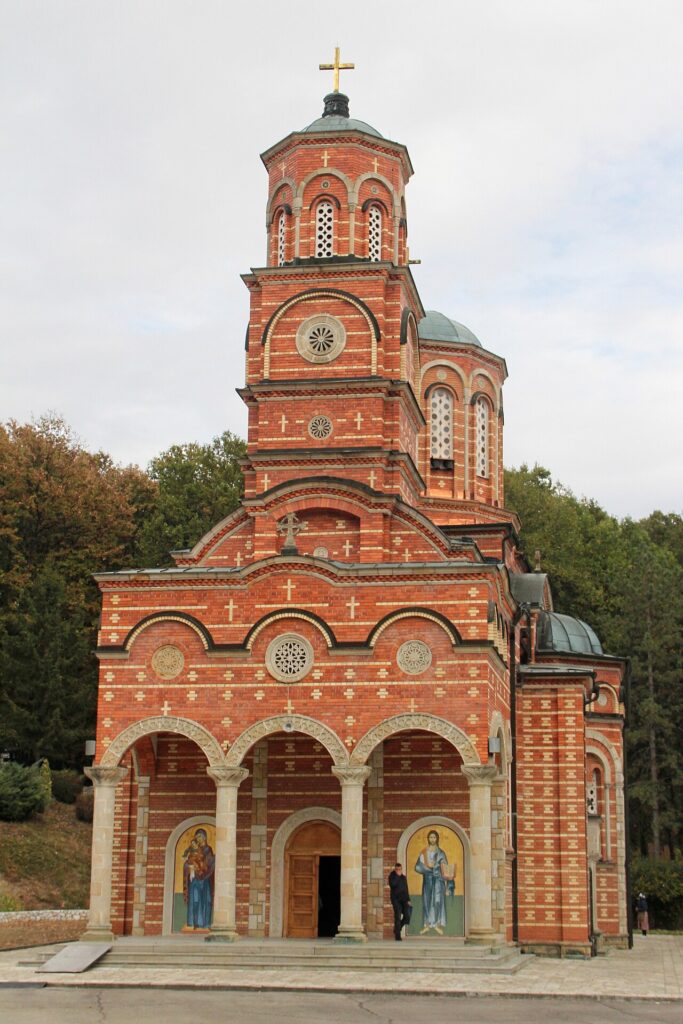
As regards sanctuary, it is an Orthodox church dedicated to the Mother of God in Đunis, close to the fountain held by miraculous. It does not contain in the documentation consulted the exact official name in Serbian (for example, if it is dedicated to a specific Marian feast such as the Nativity of the Theotokos, the Protection of the Mother of God, etc.), nor its legal rank within the structure of the Serbian Orthodox Church. It does not appear in the usual sources as a minor basilica (title of Catholic discipline) or as a national sanctuary; at most it can be considered a local or regional shrine of pilgrimage. Nor do they contain, with certainty, data on architectural style, the date of construction of the current building or major reforms; these aspects should therefore be left open with the explicit mention that no constan verifiable data.
Sponsorship and coronation
No documented mention has been found that the Mother of God of Djunis is proclaimed official employer of a city, municipality, diocese or Serbia at national level. It is likely to be a significant centre of devotion for the region of central Serbia and for faithful from different parts of the country, but there is no specific decree of patronage that can be cited with certainty. As a result, the formal patronage of this vocation no consta.
In the Serbian Orthodox tradition, the Latin legal figure of canonical coronation as practised in the Catholic Church, and in available sources there is no reference to a solemn coronation of the image or icon of Đunis by Catholic authorities. Therefore, in strictly canonical terms: does not contain a documented canonical coronation.
Party and devotion
The sources consulted do not indicate a fecha propia de fiesta litúrgica exclusive for the Mother of God of Đunis within the official calendar of the Serbian Orthodox Church. It is common for the Serbian Marian shrines to celebrate their main pilgrimages coinciding with great feasts of the Mother of God (for example, the Nativity of the Theotokos, the Sleeping, or the sponsorship of the Mother of God), but in the specific case of Đunis, the main date of pilgrimage no consta with certainty in the accessible documentation.
What can be said in general is that the shrine of Đunis has become a place of pilgrimage for the Orthodox faithful of the region, especially attracted by the source linked to the traditional apparition and by the reputation of its miraculous waterwhich many pilgrims use as a sign of confidence in the intercession of the Mother of God and as a sign of spiritual and body healing. However, there are no official annual inflow figures or detailed descriptions of the main popular traditions (processions, night vigil, water blessing, etc.), so any precise numerical or custom data should be considered no constatado.
Link to the Rosary
En la devoción a la Mother of God of Đunis, inscribed in the spirituality of the Serbian Orthodox Church, the axis of Marian prayer is the Byzantine liturgical celebrationsthe hymns and pleas of the Eastern tradition (akáthistos, paraklesis, etc.), rather than the prayer of the Rosary in its Latin form. There is no specific relationship of this advocation with the Rosary as is said in the Roman Catholic Church, not a practice of this sanctuary that directly links it to this prayer; therefore, it can be said that there is no particular documented link between the Mother of God of Đunis and the Rosary.
However, from a broader Marian perspective, the devotion of the Rosary It can perfectly accompany the veneration of the Mother of God of Đunis by Catholic faithful or communities who, respecting the Orthodox tradition, wish to contemplate the mysteries of the life of Christ at the hand of Mary. The Rosary, by going through the mysteries of the Incarnation, Passion, Death and Resurrection of the Lord, deeply harmonizes with the veneration of Mary as Theotokos (Mother of God) that the Serbian tradition keeps in this sanctuary: where the faithful come to the source to ask for the grace of healing and conversion, the paused meditation of the mysteries of the Rosary can become a privileged channel to welcome, in faith, the intercession of the Mother of God and to join Christ, the source of all grace.
A flower for the Virgin
It offers a simple prayer to this advocation. Pray a Hail Mary for Serbia and for world peace.
Pray Hail MaryIs the advocation of the Virgin Mary of your people missing?
Si no encuentras la advocación mariana de tu ciudad o pueblo, cuéntanosla: la investigaremos para ubicarla y darla a conocer en este mapa del amor de la Madre por el mundo.
Propose an apvocation →