
Marian devotion
Our Lady of Fatima of Wiltz, venerated in the open-air sanctuary "Op Baessent," over Wiltz
Patron of Grand Duchy since the 17th century
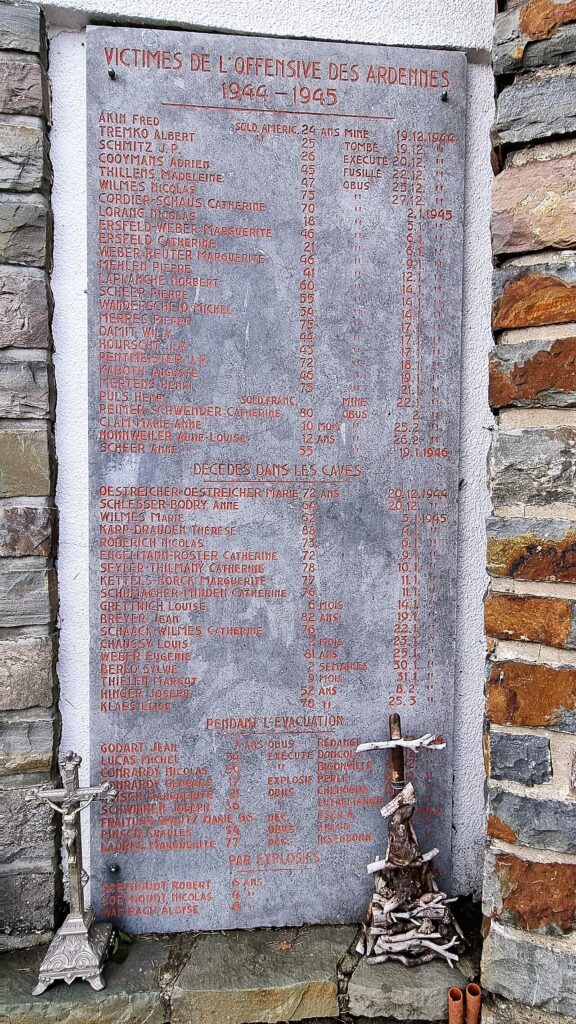
La devoción a Our Lady of Fatima in Wiltz ("Op Baessent" sanctuary) was born in the dramatic context of the end of World War II, during the battle of the Ardenas, in the winter of 1944-1945. In those months, a small group of Wiltz inhabitants took refuge in a winery of the parish-dean house; there, in the midst of the fighting and the anguish, they made a promise to the Virgin of Fatima, explicitly linking their protection to the advocation born in Portugal in 1917. That promise and subsequent gratitude for the liberation and end of war are at the spiritual origin of the future national sanctuary of Fatima in Luxembourg.
Main data
Origin and history
La devoción a Our Lady of Fatima in Wiltz ("Op Baessent" sanctuary) was born in the dramatic context of the end of World War II, during the battle of the Ardenas, in the winter of 1944-1945. In those months, a small group of Wiltz inhabitants took refuge in a winery of the parish-dean house; there, in the midst of the fighting and the anguish, they made a promise to the Virgin of Fatima, explicitly linking their protection to the advocation born in Portugal in 1917. That promise and subsequent gratitude for the liberation and end of war are at the spiritual origin of the future national sanctuary of Fatima in Luxembourg.
According to the diocesan documentation of Luxembourg, after the war, the construction of an open-air Marian cult site on the hill over Wiltz, known as sanctuary of Our Lady of Fatima "Op Baessent", which gradually became the main Marian pilgrimage center of the country linked to Fatima. Since the mid-20th century a great national pilgrimage on the Thursday of Ascensionwhich has over time become a major religious event in Luxembourg. They do not contain, in the sources consulted, previous legends or pre-Christian traditions specifically linked to this place of Marian devotion: the origin of the invocation in Wiltz appears clearly associated with the events of World War II and the contemporary spread of the message of Fatima.
The image and the sanctuary
La imagen venerada en “Op Baessent” es una image of Our Lady of Fatimainspired by the classic iconographic model of Fatima: Our Lady standing, with white and rosary cloak in her hands, according to the vision of the pastoralists in 1917. The available diocesan and divulgative sources describe the place as sanctuary to the libre airewithout precise detail of the material of the statue or offering a complete art sheet; therefore, it is not documented if it is a wood, stone or other material. There is also no mention of a work of a specific author in the sources consulted.
The sanctuary is officially known as "Our Lady of Fátima in Wiltz – Op Baessent" and is located on the hill above the city of Wiltz. This is a sanctuary to heavenwith ample space for the faithful and mass celebrations, prepared to host the multitude of pilgrims of Ascension. It is not known that the place has been erected as minor basilica by the Holy See, not having the formal title of "national sanctuary" in a pontifical document; in the pastoral praxis of Luxembourg, however, it is presented as the main Marian shrine of Fatima of the country and national reference point for this advocation. There are also no detailed data on attached buildings (covered church, chapels, pilgrims' house) in the sources consulted.
Sponsorship and coronation
In relation to the patronazgothe diocesan sources describe Wiltz-Fatima as "great national pilgrimage" and the main center of devotion to Fatima in Luxembourg, but do not mention a specific canonical proclamation of Our Lady of Fatima of Wiltz as patron of the city, of the diocese or of the Grand Duchy. The traditional national patronage of Luxembourg is another Marian advocation, Our Lady Consuelo of the Afligids, patron of the Grand Duchy since the 17th century. Therefore, in the specific case of Our Lady of Fatima in Wiltz, it is mainly a center of devotion and pilgrimage, rather than a formal employer's degree.
As regards a possible canonical coronation of the image of Fatima in "Op Baessent," in the sources consulted (official page of the Church in Luxembourg, information on the pilgrimage, Catholic press available online) does not contain a documented canonical coronation with a decree of the Holy See or with explicit mention of date, Pope or Pontifical Delegate. If a devotional coronation rite was performed at the local level, it does not appear as canonical coronation in the accessible documentation.
Party and devotion
La big annual party in Wiltz is the National pilgrimage of the Thursday of Ascensionwhich in Luxembourg is a civil and religious holiday. On that day, thousands of faithful move to the "Op Baessent" sanctuary to participate in the Eucharist, Marian processions and other acts of piety, shaping one of the country's most important devotional concentrations. The civil organization provides for specific parking and shuttle transport services, a sign of the magnitude of the influx.
In addition to this great pilgrimage there is a stable devotion during the yearespecially between the Lusopona communities and the faithful of Portuguese origin living in Luxembourg, very close to the Virgin of Fatima. Devotional expressions include the prayer of the Rosary, processions with Fatima-style candles, Marian songs (such as the Portuguese "Adeus") and acts of consecration to the Virgin. There are no official annual participation figures in the sources consulted, but the planned infrastructure and the historical continuity of the pilgrimage of Ascension indicate a significant and stable flow of pilgrims over the decades.
Link to the Rosary
La advocación de Our Lady of Fatima is closely linked, from its origin in Portugal, to Holy Rosaryto the point of bearing the full title of "Our Lady of the Rosary of Fatima." In the apparitions of 1917, the Virgin insistently asked to pray the Rosary daily for the peace and conversion of sinners; hence the Rosary is the characteristic sign of this devotion and appears almost always in the hands of her image.
In the Wiltz shrine, although the sources do not detail a written devotional program, the very fatimite nature of the place causes the Rosario occupies a central place In the pilgrimages and celebrations: Marian processions, vigil and acts of piety are marked by the recitation of the Rosary, often in several languages, reflecting the cultural diversity of Luxembourg and the presence of many Portuguese faithful. There, the Rosary is lived as prayer of intercession for peace, the Church and the needs of the worldin continuity with the original message of Fatima, and as a simple and deep way to meditate on the mysteries of Christ's life from the hand of Mary.
A flower for the Virgin
It offers a simple prayer to this advocation. Pray a Hail Mary for Luxembourg and for world peace.
Pray Hail MaryIs the advocation of the Virgin Mary of your people missing?
Si no encuentras la advocación mariana de tu ciudad o pueblo, cuéntanosla: la investigaremos para ubicarla y darla a conocer en este mapa del amor de la Madre por el mundo.
Propose an apvocation →