
Marian devotion
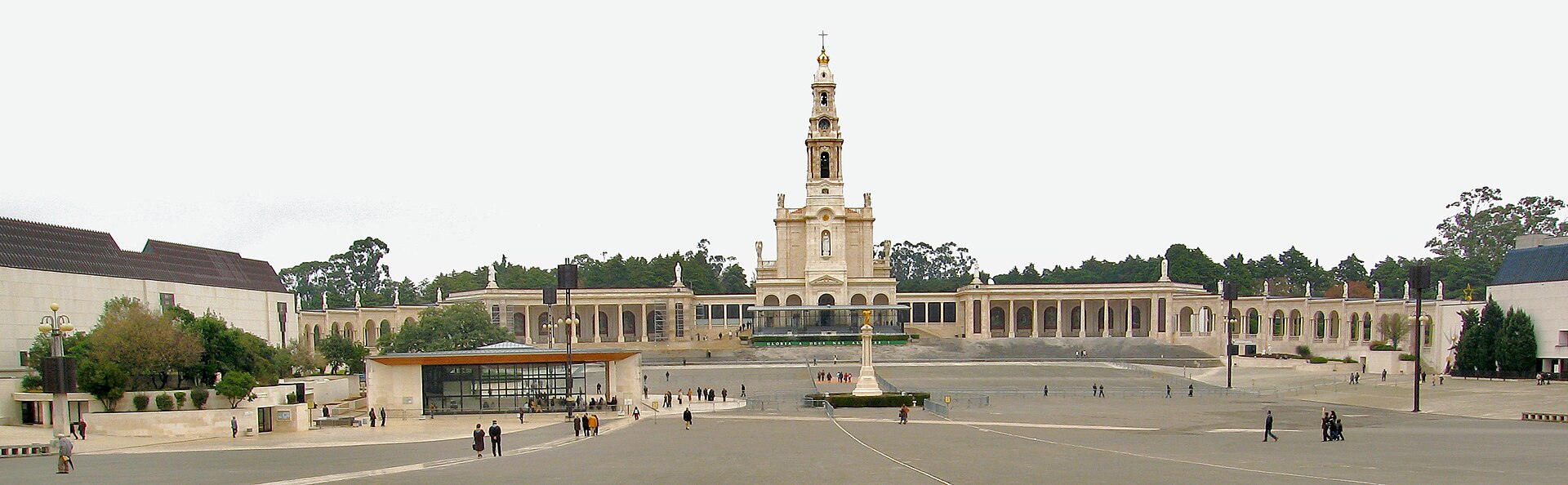
Andreas Trepte — CC BY-SA 2.5, vía Wikimedia Commons
Previous warning, and you're serious.
This page deals with what three children of ten, nine and seven years old said they had seen the 13 July 1917, and what the account of Fatima says about the eternal fate of two girls known to him.
Es private disclosure. The Catholic Church has recognized Fatima as credible, and that recognition means exactly three things, according to the formulation that Cardinal Ratzinger endorsed in the document of the Holy See of 2000:
- Congregation for the Doctrine of the Faith, "The Message of Fatima," June 26, 2000, theological commentary of the card. Joseph Ratzinger, quoting E. Dhanis.
In other words: a Catholic may not believe in the vision of Fatima's hell and remain fully Catholic. What you do believe, because it is Church doctrine and not private revelation, is another thing: that hell exists, that purgatory exists and that heaven exists. We'll see that in the end, and with the Catechism in hand, so that it doesn't get confused. what the Church teaches con what a vision describes.
PART 1: How a vision is read (and this has to be read before the text)
If you skip this section, everything else is read wrong. Cardinal Ratzinger's theological comment, published by the Holy See along with the secret, devotes an entire section to the anthropological structure of private revelations. You deserve to quote long, because it is the vault key of this page:
And then the decisive thing:
And the limit, which is what you almost never quote:
Translated to practical, and without lowering anything:
- The children really saw something, and that something had origin in God: this is what the Holy See holds.
- What you saw is not a picture of hell. It is the translation that three Portuguese children of 1917 were able to make, with their language and their images, a reality that overtook them.
- And the end of the vision was not to inform about the geography of the beyond, but to move: "para salvarlas. "The text itself says so.
Ratzinger also says this in a way that cuts any morb from root:
SEGUNDA PART: el infierno
The whole text
Tercera Memoria, p. (this is the wording published by the Holy See in 2000). Portuguese Original:
This view was a moment, and thanks to our good Mother of Heaven, who had previously warned us with the promise to take us to Heaven (in the first apparition)! If it weren't, I think we would have died of fright and dread.»
Official translation of the Holy See:
This view was a moment, and thanks to our good Mother of Heaven, who had previously warned us with the promise to take us to Heaven (in the first apparition). If it wasn't, I think we'd have died of fear and fear.»
In the narrative that the Sanctuary itself publishes, taken from the Fourth Memory, there is also a paragraph that illuminates the scene from the outside: "(it must have been when I met this view when I gave that ¡ay! They say they heard me. "That is: The crowd in the Cova heard the girl's cry without knowing why she was screaming.
What the Virgin says immediately after - and that's the key to everything.
("You saw hell where the souls of the poor sinners go; para salvarlasGod wants to establish in the world devotion to my Immaculate Heart. ")
El comentario de Ratzinger recoge precisely took turns:
And a note that's from the editor, not the seer.
Note 5 of the official edition reads: "Lucia describes very in detail her vision of Hell» (Memories, p. 121). Es editor comentario. We point it out because in Fatima the mixture between text and note is constant, and this module always separates them.
What happened to Jacinta: the real effect of vision on a seven-year-old girl
This is almost never counted, and should be counted whenever the vision is counted, because it is its consequence:
— Hell! Hell! What a pity I have of the souls who go to hell! And people there live burning like wood in the fire!
And half a trembling man kneeled, with his hands together, to pray the prayer which Our Lady had taught us. "
— III Memory, p. 122. Own translation.
— idem, pp. 122-123.
And Sister Lucia herself writes a phrase that is a whole pedagogical position, and that in 1941 was not obvious:
— III Memory, p. 122. Own translation.
And a phrase that must be well understood
— Valinhos, 19 August 1917; IV Memoria, pp. 178-179.
This phrase is constantly quoted and misinterpreted in two opposite directions:
- No dice that most men condemn themselves. There are no statistics in Fatima, or in the Church. The Church has never declared that any particular person is in hell.
- Yes, it does. something that is common Catholic doctrine: that the prayer and sacrifice of some take advantage of others. It is the communion of the saints. What Fatima does here is not to invent doctrine: it is to ask that it be practiced.
TERCERA PART: el purgatorio
In Fatima purgatory appears once, and in a brief and disconcerting scene. It's the 13 May 1917And she's a ten-year-old girl asking for two dead friends:
- And Maria das Neves is already in Heaven?
— Yes, it is.
I think she was about 16.
- What about Amelia?
— He'll be in purgatory until the end of the world.
I think he was 18 to 20.»
— IV Memoria, Memories of Sister Lucia I, pp. 172-173. Own translation. The words in italics are comments of Lucia herself, not of the apparition.
What you can say here and what you can't
What you can't say, and you always say:
- Nothing about why. The text does not give a reason, a sin, or a circumstance. All that circulates on Amelia's sins is devotional invention without any documentary basis. This module does not repeat or instill it.
- Nothing about his full identity. We know his first name, his approximate age according to Lucia's calculation, and he learned to knit at the house of the Saints. Nothing more.
What you do have to say, and it's a real difficulty:
Purgatory, by doctrinal definition, is a state Transitional: it is the purification of whom is saved. If Amelia is in purgatory, Amelia She's saved.. And "until the end of the world" does not mean "forever": it means until the end of this world, that is, until the final resurrection, when purgatory, by definition, no longer takes place.
And there is a luminous consequence that almost no one draws: if Amelia's purification lasts until the end of the world, then There's time to pray for her.and that prayer may serve. The phrase is not a condemnation: it is, if read all, one of the strongest invitations that exist to pray for the deceased.
The prayer of the rosary that Fatima left, and which is a prayer for the deceased
- IV Memory, p. 177.
Sister Lucía adds his own comment on the latter clause:
— III Memory, p. 122. Own translation.
PART 4: The sky
Heaven is in Fatima much more than hell, even if it is cited a thousand times less.
The promise, in the first apparition
— Yes, you are.
- And Jacinta?
— Also.
— ¿Y Francisco?
— Also, but you have to pray a lot of rosaries.»
- IV Memory, p. 172.
The answer about Francis deserves to be noted: the promise is not conditioned. "He has to pray many rosaries." In Fatima the sky is promised, but it never gives away without way.
The light: what the three agreed to experience
What in Fatima makes "heaven" is not a description of place, but an experience of God as light. It happens three times, when the Lady opens her hands:
- IV Memory, p. 173.
And the reaction, which is worship of Godnot to the Virgin:
In June, the light is distributed:
— IV Memory, pp. 175-176.
For the two who would soon die, the light went up; for which it would remain eighty-eight years, the light would spread on the earth. No need to force the symbol: it is in the text itself.
And the testimony of Francis, which is the greatest of the three
- IV Memory, p. 144. Own translation.
John Paul II cited him in the homily of beatification on May 13, 2000.
And what Jacinta was planning to do there
— I will love Jesus very much, the Immaculate Heart of Mary, to ask much for you, for sinners, for the Holy Father...»
- I Memory, p. 61. Own translation.
The sky, for a nine-year-old girl who was dying alone in a hospital in Lisbon, was keep wanting and keep asking. That is exactly the communion of the saints.
FIFTH PART: What the Church teaches (and this is no longer private revelation)
It is appropriate to end by putting your feet on the doctrinal floor, because it is one thing that three children saw and another that the Church teaches everyone. The second thing is in the Catechism of the Catholic Church, primera parte, sección segunda, capítulo tercero, artículo 12 («Creo en la vida eterna») — texto oficial en https://www.vatican.va/archive/catechism_sp/p123a12_sp.html (HTTP 200).
The sky (No. 1023-1029):
"This perfect life with the Most Holy Trinity, this communion of life and love with her, with the Virgin Mary, the angels and all the blessed..." (n. 1024)
Purgatory (No. 1030-1032):
Hell (No. 1033-1037):
(Cited literally on the official text of vatican.va on September 21, 2026; the cuts within a number are marked with suspensive points and no word is reconstructed.)
The doctrinal conclusion, said with all the letters:
1. Hell exists and is eternal; but Nadie es predestined to eland it is necessary to reject God freely.
2. The purgatory exists and is purification of those who are savedIn the punishment of convicts.
3. The sky exists and it is life with Christ and the TrinityIn the abstract award.
4. The Church has never declared that any particular person is condemned. None. And Fatima doesn't change that.
And one last distinction, which on this page is mandatory
Throughout all this material, who receives worship es God."O Most Holy Trinity, I love you"; "My God, I believe, I love, I hope and I love you"; "Most Holy Trinity... I love you deeply." A the Virgin He eats it, disgraced it, and is asked intercession - "I promise to assist you in the hour of death," and that intercession leads to Christ. Pope Francis himself did so in the canonization of the pastors: the Virgin "introduced them into the immense sea of the Light of God, to be adored"to Him.
In Fatima, the Immaculate Heart of Mary It's not a destination.It's a road. The June 1917 text reads: "My Immaculate Heart will be your refuge and the way that will lead you to God.»
Sources of this page
- Congregation for the Doctrine of the Faith, "The message of Fatima", 26 de junio de 2000, con el comentario teológico del card. Joseph Ratzinger:
https://www.vatican.va/roman_curia/congregations/cfaith/documents/rc_con_cfaith_doc_20000626_message-fatima_sp.html(HTTP 200). - Memories of Sister Lucia I — PDF oficial del Santuário, ficha F002:
https://www.fatima.pt/files/upload/fontes/F002_Memorias1.pdf(HTTP 200). Páginas 61, 121-123, 144, 172-178. - Santuário de Fátima, «Narrativa das aparições»:
https://www.fatima.pt/pt/pages/narrativa-das-aparicoes(HTTP 200). - Catechism of the Catholic Church, nn. 1023-1037:
https://www.vatican.va/archive/catechism_sp/p123a12_sp.html(HTTP 200).
Is the advocation of the Virgin Mary of your people missing?
Si no encuentras la advocación mariana de tu ciudad o pueblo, cuéntanosla: la investigaremos para ubicarla y darla a conocer en este mapa del amor de la Madre por el mundo.
Propose an apvocation →