
Marian devotion
Our Lady of Klokočov
Marian title of Klokočov (Eastern Slovakia)
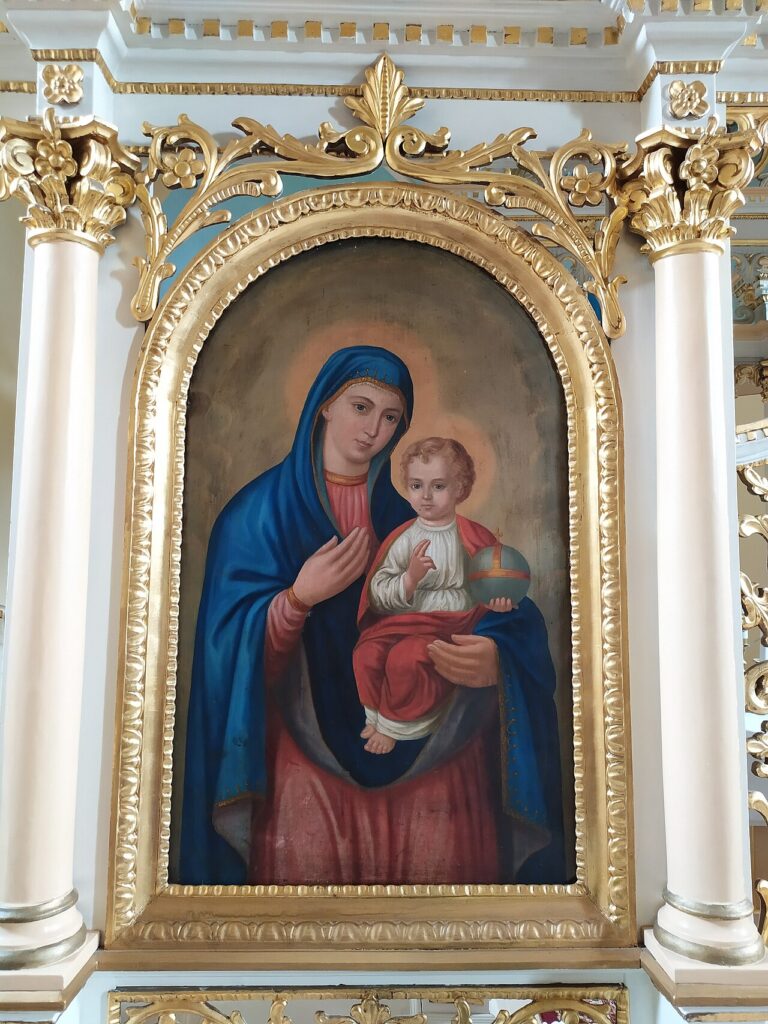
There is no extensive synthesis in Spanish about Nuestra Señora de Klokočov (Klokočovská Virgin Mary) comparable to other great Marian shrines in Slovakia; much of the reliable information is kept in Slovak, linked to the local Greek-Catholic tradition. Unlike other places like Litmanová or Šaštín, Klokočov's devotion is focused on a Marian icon venerated since the 17th century in the eastern region of Slovakia, in territory of Byzantine (Greek-Catholic) tradition. It does not appear in the main synthesis of Marian apparitions in Slovakia, which confirms that it is a sanctuary of origin iconographic and devotionalnot of recognized apparitions.
Main data
Origin and history
There is no extensive synthesis in Spanish about Nuestra Señora de Klokočov (Klokočovská Virgin Mary) comparable to other great Marian shrines in Slovakia; much of the reliable information is kept in Slovak, linked to the local Greek-Catholic tradition. Unlike other places like Litmanová or Šaštín, Klokočov's devotion is focused on a Marian icon venerated since the 17th century in the eastern region of Slovakia, in territory of Byzantine (Greek-Catholic) tradition. It does not appear in the main synthesis of Marian apparitions in Slovakia, which confirms that it is a sanctuary of origin iconographic and devotionalnot of recognized apparitions.
According to traditionduring the wars of the 17th century - around the year 1670- the icon of the Mother of God venerated in Klokočov would have shed tears, interpreted by the faithful as a sign of the Theotokos' pain at the suffering caused by armed conflicts in the region (wars and tensions between the powers of the time). This tradition of the "weeping image" has been transmitted in the Slovak and Ruthenian (russian) field as the origin of the miraculous character of the icon, promoting veneration to the place and motivating local pilgrimages. As it is an ancient story of popular piety, there is no contemporary document to the facts that allows for the precise reconstruction of the historical context or the details to be verified; it is therefore a question of Pious tradition, in hecho historically demonstrated.
As for the documented historyit is clear that in the eastern region of Slovakia (now Greek-Catholic eparchia) a network of Marian shrines of Byzantine rite has been consolidated since the Modern Age, with a strong presence of Slovak and Romanian faithful. In this context, the Klokočov shrine was developed as a local pilgrimage place around an icon considered special by tradition, although it is not at the level of national notoriety of other Slovak sanctuaries well documented by the universal Church (such as the Virgin of the Seven Dolores, in Šaštin, or the Immaculate Purity of Litmanová). In the easily accessible sources, there are no long and detailed old decrees on Klokočov, so many specific historical aspects. no constan in a public or verifiable manner.
The image and the sanctuary
Devotion focuses on a icon of the Theotokos (Mother of God), in the style of tradition bizantina- Slava. For the context and Greek-Catholic practice of the region, it is very likely to be a painted table (icon) according to traditional technique, but in the sources consulted No explicitly stated material (wood, technique, etc.), so it cannot be safely affirmed. There is also no detailed iconographic description (exact type of icon: Hodegetria, Eleousa, etc.) in easily accessible sources, so it can only be said that it is a Marian icon venerated as miraculous image; more specific details no constan.
The sanctuary is located in Hatters, en la Košice regionin the eastern part of Slovakia, within the Greek-Catholic field. This is a Greek-Catholic sanctuary in which the icon is venerated in the local church (parish temple / sanctuary), integrated into Byzantine liturgical life. The sources consulted do not specify the full official name of the temple (parochial title, exact liturgical dedication) do not provide a detailed architectural description; therefore, these data no constan in accessible documentation. It is also not mentioned among the large national basilics or sanctuaries usually collected in the general repertories on Slovakia, which indicates that it is mainly a regional or eparquial sanctuary, much appreciated by Slovaks and Ruthenos of the area, but without title of minor basilica or national sanctuary that can be verified.
It is not recorded in the documents consulted that the church of Klokočov has received the title of minor basilicaor that it has been declared National sanctuary by the Episcopal Conference, nor a special status of a national nature comparable to that of other Marian centres in the country. It can therefore be considered a Greek-Catholic local/regional sanctuarywith strong roots in the mercy of the faithful of Byzantine rite.
Sponsorship and coronation
In revised public access sources no consta a formal declaration proclaiming Our Lady of Klokočov as patron of a city, municipality, diocese / eparchia or of the Slovak nation. The advocation has, rather, a de facto patronage on the local community and the Slovak and Romanian pilgrims who come to the sanctuary, but no specific decree has been found to establish a higher canonical patronage.
On the canonical coronation of the icon, the sources consulted do not mention any coronation officially approved by the Holy See (pontifical canonical coronation) or by the eparquial authority with public recognition similar to that of other Slovak sanctuaries. As it does not appear in regular lists of crowned images or in press releases or official documents, it should be stated: does not contain a documented canonical coronation.
Party and devotion
The sources available in English and Spanish do not clearly specify a fecha de fiesta litúrgica propia of Our Lady of Klokočov. In the Greek-Catholic context, the veneration of a Marian icon is often integrated into the great Marian parties of the Byzantine calendar (such as the Sleeping, the Nativity of the Mother of God or the Protection of the Theotokos), but in this case a particular memory with specific date for Klokočov no consta in accessible documents.
It is known from the general studies on Marian shrines in Slovakia that the eastern region of Byzantine rite maintains a deep-rooted tradition of pilgrimages to various Marian places, especially during the great Marian solemnities. It is reasonable to place Klokočov within this map of regional pilgrimages: Slovak and Romanian faithful come to pray to the icon, ask intercession in times of difficulty, and thank you for the favors received. However, specific data on Annual flow, approximate number of pilgrims or organization of major specific roseries of Klokočov no constan in verifiable sources.
Devotion is characterized by features of the Greek-Catholic world of Eastern Europe: participation in the Divine Liturgy, singing of Marian hymns of Byzantine tradition, veneration of the icon with kisses and incense, and frequent practice of confession and communion in the framework of the pilgrimages (by analogy with other sanctuaries of the well documented area). All this places this advocation in the heart of the Slavic Marian spirituality, marked by confidence in the maternal intercession of the Theotokos.
Link to the Rosary
In the sources consulted no consta a specific, institutional or historical link between Our Lady of Klokočov and the prayer of the Rosary as a distinctive practice of the sanctuary (unlike other places where the Rosary is explicitly requested or promoted). The context itself is that of a Greek-Catholic church of Byzantine rite, where typical Marian prayer is often the Acathistos, las paraclesis and other forms of praise to the Mother of God, more than the Rosary in its classical Latin form.
However, from a general Marian perspective, the Rosary can be a very appropriate way to accompany this devoc
A flower for the Virgin
Offer a simple prayer to this Marian devotion. Pray a Hail Mary for Slovakia and for world peace.
Pray Hail MaryIs the advocation of the Virgin Mary of your people missing?
Si no encuentras la advocación mariana de tu ciudad o pueblo, cuéntanosla: la investigaremos para ubicarla y darla a conocer en este mapa del amor de la Madre por el mundo.
Propose an apvocation →