
Marian devotion
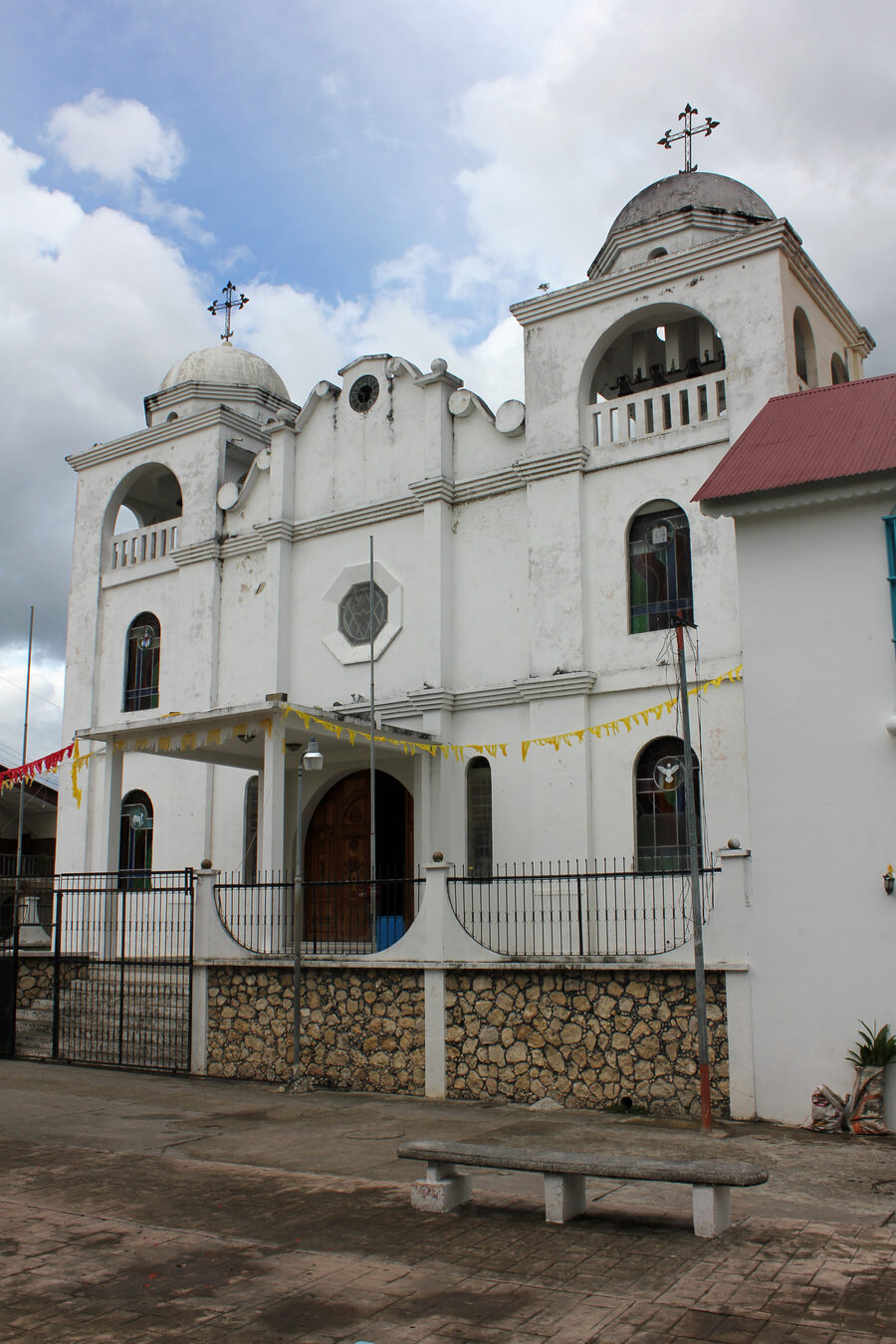
Our Lady of Remedies of Petén, headline and patron of the Cathedral of Our Lady of Remedies and Saint Paul Apostle of Flowers
Marian Invocation of Flowers (Petén)
En la localidad de Flowersthe capital of the department of Petén (Guatemala), there is the Cathedral of Our Lady of Remedies and St. Paul the Apostlethe seat of the diocese of Petén, built on the island on Lake Petén Itzá; this cathedral inherits the evangelizing work carried out in the region following the conquest and pacification of the itzai peoples and other Mayan groups. However, there is no specific historical narrative or official monograph on the local advocation of Our Lady of the Remedies of Petén nor about the exact moment when this advocation was erected as the head of the temple and patron of the city or of the diocese.
Main data
Origin and history
En la localidad de Flowersthe capital of the department of Petén (Guatemala), there is the Cathedral of Our Lady of Remedies and St. Paul the Apostlethe seat of the diocese of Petén, built on the island on Lake Petén Itzá; this cathedral inherits the evangelizing work carried out in the region following the conquest and pacification of the itzai peoples and other Mayan groups. However, there is no specific historical narrative or official monograph on the local advocation of Our Lady of the Remedies of Petén nor about the exact moment when this advocation was erected as the head of the temple and patron of the city or of the diocese.
By the general history of evangelization in Petén, it is likely that Marian devotion under the title of “de los Remedios” It was spread with Spanish missionaries, as was the case in many other regions of America, where this advocation was often associated with protection in times of illness, war or danger. However, this is a inferencia general based on the expansion of Marian advocacy during colonization and no consta as specific and documented data for the case of Flores-Petén.
As for local traditions or legends of origin (apparition, miraculous finding of the image, prodigious intervention in the history of the city, etc.), no reliable sources have been found (diocese, parish / cathedral, Catholic press or academic publications) that allow a strict distinction between tradition / legend and historically documented facts. This fact sheet should therefore state clearly: does not contain, in accessible and verifiable sources, a documented story of the advocation of Our Lady of the Remedies of Petén, beyond his status as the headline of the cathedral.
The image and the sanctuary
The available sources only allow to identify the main temple of devotion: Cathedral of Our Lady of Remedies and St. Paul the Apostlelocated on the island of Flores, on Lake Petén Itzá, and the seat of the diocese of Petén. No recognition as minor basilicaor explicit declaration as a national sanctuary or a diocesan Marian sanctuary; by the information consulted, it is the diocesan catedral, with the Marian title of the Remedies attached to the Apostolic Church of Paul.
On the image concrete of Our Lady of Remedies venerated in this cathedral, no verifiable data: no reliable description of the type of image (package sculpture, dress size, candlestick image, painting), material (wood, plaster, canvas, etc.) and iconography (position, attributes, presence or not of the Child, crown, scapular, etc.) has been found. In the same way, there is no information about author, time of realization or any restoration or change of location within the temple. In the absence of sources, any attempt to describe would be conjectural and should therefore be strictly indicated: does not contain a documented description of the Marian image in the sources consulted.
Sponsorship and coronation
To the extent that the main temple bears the title of Cathedral of Our Lady of Remedies and St. Paul the Apostlecan be stated, based on the common ecclesial praxis, that Our Lady of Remedies is the owner of the temple and, in a particular way, the patron of the cathedral.. However, there are no accessible documents that canonically define the Official patronage on:
– la city of Flores, – el town of Flores, – el Department of Petén, o – la diócesis de Petén as a principal employer.
There may be a local de facto patronage (by tradition and liturgical-popular use), but no clear decrees or references are found in diocesan sources or in accredited publications: does not contain, in verifiable sources, the official declaration of this advocation as patron of the city, department or diocese.
In relation to a canonical coronationthe sources consulted do not offer news of:
– decreto de la Santa Sede, – delegación pontificia, – fecha solemne de coronación, ni – reconocimiento por parte de la Conferencia Episcopal.
Therefore, following the requested rule: does not contain a documented canonical coronation for the image of Our Lady of the Remedies of Petén.
Party and devotion
In the revised sources (institutional, devotional or Catholic outreach sites), the exact date of the main party of Our Lady of Remedies in the Cathedral of Flores. In the general Roman calendar there is no universal memory of "Our Lady of Remedies," and the parties under this title are often of each placewith variable dates (for example, in other countries they are held in September or other dates, but these data cannot be moved to Petén only). Without a particular published liturgical calendar or an official reference of the diocese, it should be clearly stated: does not know the date of the main feast for this advocation in Flores-Petén.
Similarly, no specific and verifiable data on:
– organización de pilgrimages diocesanas o regionales a la catedral en torno a esta advocación, – afluencia estimada de fieles, – procesiones marianas propias (terrestres o lacustres en el lago Petén Itzá), – novenas tradicionales o promesas características de los devotos, – u otras popular demonstrations expressly linked to "Our Lady of the Remedies of Petén."
It is reasonable to assume that, as a cathedral temple and being located in a geographically unique place (an island on the lake), there is a stable Marian devotional life, with Eucharistic celebrations, novena and possibly processions; however, such practices are not described in detail or documented in accessible sources. By fidelity to the data, it must be recorded that no specific information on popular traditions and the influx of faithful of this advocation is available in Flores-Petén.
Link to the Rosary
The sources consulted do not mention a specific and documented relationship between the advocation of Our Lady of the Remedies of Petén and the rezo of the Holy Rosary: there are no explicit co-fradies of the Rosary associated with the cathedral, nor official statements that link this Marian title to the rosary in a particular way (such as, for example, in asvocations of the Rosary or other directly linked to this form of prayer).
However, in today's Catholic spirituality, the Rosary is one of the privileged ways to contemplate Christ with the eyes of Mary and to grow in Marian devotion in any advocation. The Mariological reflection stresses that:
– El Rosario es una and Marian prayer a la vez: al meditar los misterios de la vida de Cristo con María, se recorre el centro de la fe. – Las advocaciones marianas, incluso las de origen estrictamente local o histórico (como las ligadas a una catedral o a un antiguo proceso de evangelización), encuentran en el Rosario un soporte espiritual cotidiano que ayuda a los fieles a unir su vida con la de Cristo por intercesión de la Virgen. – Allí donde María es venerada con un título particular —como Our Lady of Remedies- the faithful prayer of the Rosary becomes a concrete way to ask for its "remedies": comfort and
A flower for the Virgin
Offer a simple prayer to this Marian devotion. Pray a Hail Mary for Guatemala and for all of America.
Pray Hail MaryIs the advocation of the Virgin Mary of your people missing?
Si no encuentras la advocación mariana de tu ciudad o pueblo, cuéntanosla: la investigaremos para ubicarla y darla a conocer en este mapa del amor de la Madre por el mundo.
Propose an apvocation →