
Marian devotion
Our Lady of Luxembourg, Consoladora de los Afligidos
Marian title of Luxembourg (Luxembourg)
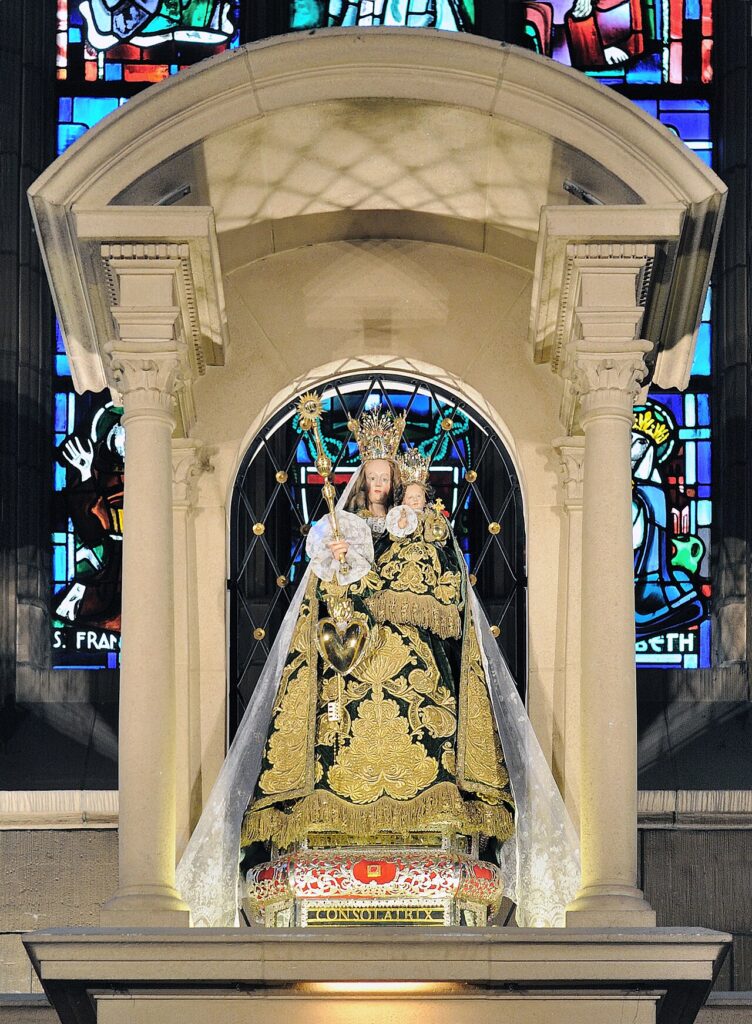
La advocación de Our Lady of Luxembourg, Consolatrix Afflictorum It is linked to the presence of the Jesuits in the city of Luxembourg in the early 17th century, in a context of wars and epidemics that led to an intense Marian devotion of a pleading and penitential character. The image was placed at the Jesuit school and, from there, the population went to Ella as a protector of the city and the country.
Main data
Origin and history
La advocación de Our Lady of Luxembourg, Consolatrix Afflictorum It is linked to the presence of the Jesuits in the city of Luxembourg in the early 17th century, in a context of wars and epidemics that led to an intense Marian devotion of a pleading and penitential character. The image was placed at the Jesuit school and, from there, the population went to Ella as a protector of the city and the country.
La documented history states that, in the face of the dangers that threatened the territory, the civil and ecclesiastical authorities began to make official use of the Virgin under this title, until it was proclaimed patron of the Grand Duchy and the city of Luxembourg in the 17th century. Since then, devotion has been consolidated around its main sanctuary, the present Cathedral of Notre-Dame de Luxembourgwho took over from the early Jesuit school.
Around this advocation have emerged pious traditions they present the Virgin as a special protector in times of war, plague and calamity, and as a consolation of the Luxembourg people in the successive occupations and conflicts that marked the history of the country; these interpretations are devotional in nature and are not always based on miraculous facts strictly documented, but they express the way in which the believing people have read their own history in the light of the intercession of Mary Consoladora of the Aflids.
The image and the sanctuary
The image venerated as Our Lady of Luxembourg, Consoladora de los Afligidos es una sculpture of the Virgin with the Child, of small size, originally taken by the Jesuits and later moved to the temple which today is the cathedral of Luxembourg. This is an image of clothing, richly ornate with blankets and crowns, following the Central European typology of the patronal virgins, and it is usually presented surrounded by exvotes and offerings of the faithful; the precise technical details (author, exact date, original material) do not clearly record in the ordinary sources consulted, so it is simply indicated that it is an image historical, Baroque era, maintained and restored over the centuries.
The sanctuary where it is venerated is the Cathedral of Notre-Dame de Luxembourg (Cathédrale Notre-Dame), in the city of Luxembourg. It was originally the church of the Jesuits' school and, after the suppression of the Company and the evolution of the diocese, it became a cathedral of the country. The temple is a late Gothic-style church with Renaissance elements and subsequent enlargements, which today constitutes the main Marian sanctuary of the Grand Duchy and center of the great national pilgrimage to the Consolatrix Afflictorum during Our Lady's Eighth.
Sponsorship and coronation
Our Lady of Luxembourg, Consoladora de los Afligidos, is Head of the Grand Duchy of Luxembourg y de la the city of Luxembourg since the 17th century. This status as a national patron is reflected in the participation of the State authorities and the Casa Gran Ducal in the celebrations of the Eighth, as well as in the official recognition of the feast in the civil and religious calendar.
As for a canonical coronation of the image, in the sources consulted of a general character (compilations of advocations, historical synthesis) the year and the Pontiff or legacy that made it are not clearly documented; therefore, following the criterion of historical rigour requested, it must be indicated: does not contain a documented canonical coronation.
Party and devotion
The fiesta principal de Our Lady of Luxembourg, Consoladora de los Afligidos is held in the framework of the National pilgrimage of the Eighth (Eighth)which takes place every spring, between the third and the fifth Sunday after Easter. This Eighth - which in practice extends beyond the eight liturgical days - is the central moment of the religious life of the country: parishes, religious communities and pilgrims from all over Luxembourg (and from neighbouring countries) go to the cathedral to pay tribute to their Patron.
Durante at Octave is realized Solemn masses, processions, confessions, blessings and Marian actsin which the image of the Consolador of the Afligids is exposed in an outstanding way to the veneration of the faithful. The pilgrimage combines religious and popular elements: the participation of national authorities, the festive environment in the city, the presence of associations, movements and ethnic groups that express the diversity of the country, and a strong component of prayer for the needs of the nation, of Europe and of the world. Throughout the year, devotion is maintained through individual visits, burning of candles, offering of flowers and prayers in silence before the image of the Patron.
Link to the Rosary
Sources consulted on the Consolador de los Afligidos en Luxembourg focus mainly on the Eighth, national patronage and the history of the sanctuary; and there is no specific and documented link with a Rosary fellowship or a Rosary-specific feast linked exclusively to this advocation.
However, in the Catholic tradition, the Rosary It is one of the most common ways of expressing Marian devotion also in Luxembourg: many pilgrimages, vigil and acts of the Eighth include the prayer of the Rosary or at least some mysteries, as pleads for the afflicted and thanksgiving for the favors received. In the context of Consolatrix AfflictorumThe Rosary takes on a particularly comforting tone: by meditating on the mysteries of Christ with Mary, the faithful present their suffering, anguish and hope to the Mother who sustains her people in the test, and join the long tradition of those who, in times of war, disease or uncertainty, have found in the Rosary's accounts support for faith and a way of confidence in the intercession of the Patron of Luxembourg.
A flower for the Virgin
It offers a simple prayer to this advocation. Pray a Hail Mary for Luxembourg and for world peace.
Pray Hail MaryIs the advocation of the Virgin Mary of your people missing?
Si no encuentras la advocación mariana de tu ciudad o pueblo, cuéntanosla: la investigaremos para ubicarla y darla a conocer en este mapa del amor de la Madre por el mundo.
Propose an apvocation →