
Marian devotion
Our Lady of Mary Luggau
Marian Advocation of Mary Luggau (Carinthia)
La advocación de Our Lady of Mary Luggau (also called Maria Schnee, Virgin of the Snow) is linked to the small village of Mary Luggau, in the valley of Lesach, in the state of Carintia (nuclear), Austria. [] According to the local traditiontowards the end of the 16th century a peasant called Helena (Helene) habría recibido una vision of the Virgin Marywhere he was told the place where a chapel or church should be erected in his honor, under the title of "Our Lady of the Snow." This revelation is also linked to the invitation to pray and to the trust of the peasant population in the protection of the Virgin over the valley. The details of the apparition fall within the scope of the popular piety and they are not recorded as an approved apparition with a historical-theological dossier similar to Lourdes or Fatima; they are known mainly for local chronicles and devotional accounts.
Main data
Origin and history
La advocación de Our Lady of Mary Luggau (also called Maria Schnee, Virgin of the Snow) is linked to the small village of Mary Luggau, in the valley of Lesach, in the state of Carintia (nuclear), Austria. [] According to the local traditiontowards the end of the 16th century a peasant called Helena (Helene) habría recibido una vision of the Virgin Marywhere he was told the place where a chapel or church should be erected in his honor, under the title of "Our Lady of the Snow." This revelation is also linked to the invitation to pray and to the trust of the peasant population in the protection of the Virgin over the valley. The details of the apparition fall within the scope of the popular piety and they are not recorded as an approved apparition with a historical-theological dossier similar to Lourdes or Fatima; they are known mainly for local chronicles and devotional accounts.
In the plan of the documented history, it is known that towards the end of the 16th century a focus of Marian devotion focused on a image of the Virgin with the Childwhich favored the construction of a sanctuary. [] The present church rose and was expanded in the 16th and 17th centuries, and later added the convent of the Servants of Mary (Servants)who took the pastoral care of the sanctuary and the care of the pilgrims. [] Over time, the place was recognized as principal Marian sanctuary of the valley of Lesach and one of the most important Marian pilgrimage centers in this Alpine area of Carinthia. [...]
The image and the sanctuary
In the sanctuary of Mary Luggau a Marian image traditional, representing the Virgin Mary with the Child Jesus, associated with the "María Schnee" (Mary of the Snow)[] The specific iconography (material, size, author) is known mainly at the local level and in specialized publications; in the most accessible sources the material and authorship do not contain in a detailed way, and therefore are not certain these data in the general documentation. If it is indicated that it is a type image devotional, situada en el main altar of the sanctuary, center of the veneration of the pilgrims. [...]
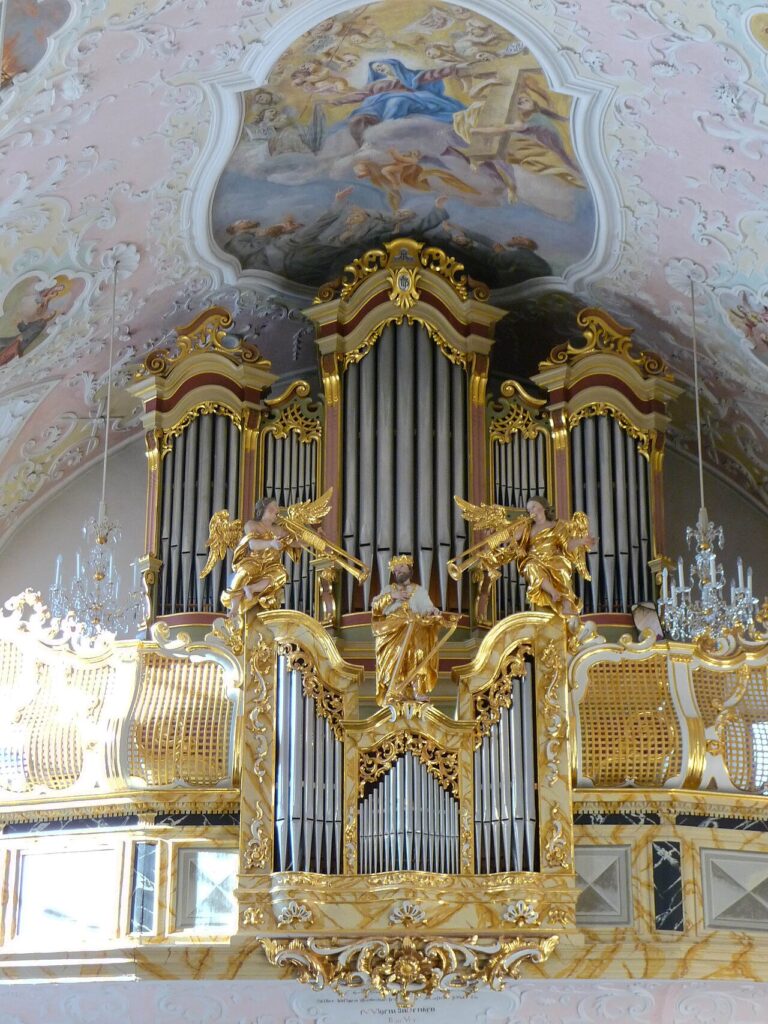
The temple where this advocation is venerated is the basilica María Luggau (basilica of Mary Luggau), with the kloster der Serviten (convent of the Servants of Mary). [] The complex includes the church of pilgrimage and the conventual servite dependencies, forming a very characteristic Baroque set in the landscape of the valley. [] The church is recognized as minor basilicaThis pontifical dignity underlines the liturgical and pastoral importance of the sanctuary in the region. [] The sanctuary is in the town of Maria Luggau, en el Lesach Valley, within the federal state of Carintia, Austria.[ ]
Sponsorship and coronation
Our Lady of Mary Luggau is considered main Marian patron of the valley of Lesach and one of the references of Marian devotion in Carinthia. [] The invocation is very linked to the local population of Maria Luggau and the rural communities of the area, which call it especially as a protector of the fields, families and pilgrims who cross the Alps. [] It is not clear that it is officially proclaimed as patron of the whole diocese or at national level; its scope of patronage is above all regional (Lesach valley and environment).
As regards the canonical coronation, the sources consulted (information of the sanctuary, diocesan reviews and general resources on Marian shrines) do not explicitly mention a documented canonical coronationwith date and pontifical delegate. [] Therefore, according to the rule of historical rigour: does not contain a documented canonical coronation for the image of Our Lady of Mary Luggau / Mary Schnee.
Party and devotion
The advocation of Our Lady of Mary Luggau is celebrated mainly on two dates linked to Marian tradition:
– 5 August: Our Lady of the Snow (Mary Schnee), en sintonía con la memoria de Santa María la Mayor en Roma, tradicionalmente asociada al milagro de la nieve.[ ] – August 15: solemnidad de la Assumption of the Virgin Marywhich in the sanctuary of Mary Luggau has a special festive character and a great influx of pilgrims. [...]
The sanctuary is a place of pilgrimage regional and interregional; pilgrims from Carinthia and other neighbouring states walk or in organized groups, especially in the summer months and around these parties. [] They are held Solemn Eucharist, Marian processions and blessings of Alpine piety, and devotion is characterized by the trust of the faithful in the intercession of the Virgin in the family difficulties, in the disease and in the work of the field. [] In some chronicles are mentioned. popular traditions like the participation of shooting associations, traditional music groups and Marian co-fradies in the great celebrations, underlining the strong roots of this advocation in local culture. [] There are no precise and recent figures of inflow, but the sanctuary is usually described as the principal Marian centre of the Lesach valley and one of the Marian shrines most frequented in the region.[ ]
Link to the Rosary
In the available documentation about Maria Luggau there is no specific and unique relationship of the sanctuary with the prayer of the Rosary (for example, a historical fellowship of the Rosary of great relevance or apparitions with explicit message about this prayer). [] Devotion focuses on the veneration of the Virgin under the title of Maria Schnee and on the Marian pilgrimages of the Alpine region.
However, in the spiritual life of the pilgrims and of the Servite community, the Rosary is part of the ordinary Marian piety of the ChurchIt is a privileged way to meditate on the mysteries of Christ with Mary, to intercede for the needs of the valley and to give thanks for the favors received. In this way, although there is no documented exclusive feature, the prayer of the Rosary is naturally integrated into the devotion to Our Lady of Mary Luggauas a school of contemplation of the life of Jesus with the eyes of the Mother and as a simple way to entrust to the Virgin the joys and trials of families and pilgrims.
A flower for the Virgin
Offer a simple prayer to this Marian devotion. Pray a Hail Mary for Austria and for world peace.
Pray Hail MaryIs the advocation of the Virgin Mary of your people missing?
Si no encuentras la advocación mariana de tu ciudad o pueblo, cuéntanosla: la investigaremos para ubicarla y darla a conocer en este mapa del amor de la Madre por el mundo.
Propose an apvocation →