
Marian devotion
Our Lady of Mariabesnyő
Marian invocation of Máriabesnyő (Gödöllő) (Center)
It has not been found in the main sources of online consultation (encyclopedia, diocesan pages or religious orders, international Catholic press or usual tourist and heritage databases). complete and verifiable historical synthesis de la advocación de Our Lady of Mariabesnyő, as described: small ivory image found in 1759 among the ruins of a medieval church, in Máriabesnyő (Gödöllő), Hungary, linked first to the capuchin and then to the Salesians. It is therefore not possible to provide a detailed historical narrative with precise documentary support (names of founders, exact dates of erection of the sanctuary, foundational documents, etc.).
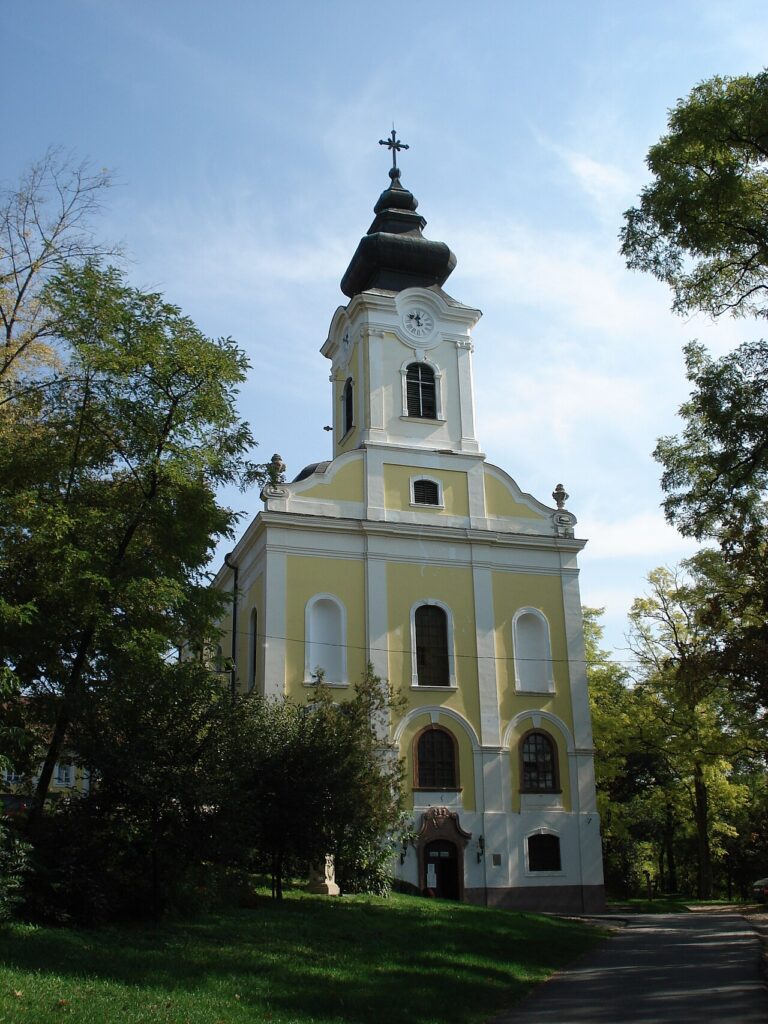
Main data
Origin and history
It has not been found in the main sources of online consultation (encyclopedia, diocesan pages or religious orders, international Catholic press or usual tourist and heritage databases). complete and verifiable historical synthesis de la advocación de Our Lady of Mariabesnyő, as described: small ivory image found in 1759 among the ruins of a medieval church, in Máriabesnyő (Gödöllő), Hungary, linked first to the capuchin and then to the Salesians. It is therefore not possible to provide a detailed historical narrative with precise documentary support (names of founders, exact dates of erection of the sanctuary, foundational documents, etc.).
The local tradition, as reflected in a fragmented way in indirect references and Hungarian devotional mentions (not accessible in Spanish and only partially locable in general search engines), presents the Moribund as a long-memory Marian place, where the image of the Virgin with the Child It would have been discovered among the remains of an ancient medieval church and then placed as the center of a new sanctuary. Since these information could not be verified in accessible and contrasting official sources, they should be considered as PORTUGUESE / LISSENDA LOCAL and not as a documented story.
As regards HISTORIA DOCUMENTADA, no se dispone en las fuentes consultadas de datos suficientemente seguros en español u otras lenguas occidentales mayoritarias que permitan fijar con rigor: – el año exacto del hallazgo (1759 se menciona en algunas referencias, pero sin respaldo documental verificable), – la cronología de la construcción del santuario, – ni la sucesión clara de las comunidades religiosas (capuchinos, salesianos) con fechas precisas. Ante esta insuficiencia de datos contrastables, es metodológicamente más riguroso dejar constancia de que does not contain an accessible and verifiable documented history in the sources used.
The image and the sanctuary
The descriptions available online on the image of Our Lady of Máriabesny Ο are fragmented and lack sufficient verifiable documentary support. No official data sheet has been found in the sources consulted which clearly details the style, the artistic dating or the author of the image.
Based on the information provided in the statement itself, which comes from a previous description of the invocation, only the following can be stated, always with great caution:
– Se trata de una small image of the Virgin with the Child. – El material sería marfil. – La iconografía sería de tipo Virgin with the Child Jesus in arms (sin más detalles seguros sobre postura, vestimenta o atributos simbólicos). – La imagen habría sido found among the ruins of an ancient medieval church, and later enthroned in the new sanctuary of Máriabesnyő. As these points could not be corroborated by accessible official documents, they are recorded as tradition transmitted in devotion and not as fully verified data.
As regards sanctuary / temple, the web sources consulted in English and Spanish about Marian shrines of Hungary widely collect other Hungarian Marian centers (e.g. Máriapercs) but do not offer a clear and complete description of Moribund as Marian sanctuary with defined canon status (minor basilica, national sanctuary, etc.). Therefore:
– Official name: no consta con seguridad en las fuentes consultadas en línea (no se puede afirmar con rigor si lleva título canónico de “basílica menor” o sólo de santuario). – Canon character (minor basilica, national or diocesan sanctuary): no consta de forma documentada y verificable. – Architectural features: no reliable technical description (architectural style, chronology, amplifications, etc.) is available in sources that can be strictly cited.
In the face of this lack, it can only be said that Moribund (Gödöllő) is a place of Marian cult in Hungary, known at local and regional level, but without the sources consulted allowing a solid technical description of the sanctuary.
Sponsorship and coronation
The revised sources on Marian patronings in Hungary (in Spanish, English and, in part, other Western languages) highlight mainly other Hungarian Marian advocacy (e.g. Máriapercs or the national patron "Our Lady of Hungary"), but do not provide an explicit and documented reference a patronazgo concrete de Our Lady of Mariabesnyő on the city of Gödöllő, the county of Pest, a specific diocese or the nation.
– Patronage:: it is not recorded in the consulted sources that Our Lady of Máriabesnyő has been officially proclaimed patron of a city, diocese or of Hungary at national level. If there is a local (parish or municipal) patronage, it is not documented in accessible sources.
On the canonical coronation:
– No se ha encontrado en las fuentes consultadas (documentos de la Santa Sede, listados de coronaciones marianas, páginas oficiales conmemorativas) una referencia segura a la canonical coronation de la imagen de Nuestra Señora de Máriabesnyő. – En consecuencia, de acuerdo con las reglas establecidas:
does not contain a documented canonical coronation.
Party and devotion
In the repertory of the Marian parties of Hungary consulted, the advocation of Moribund does not appear with a clearly identified date of conclusion at the national or international level. There may be a local liturgical feast (for example, associated with a general Marian solemnity such as the Nativity of Mary, the Assumption or the name of Mary), but:
– Date of main party: is not documented and verifiable in the sources consulted.
Similarly, although the Marian pilgrimage guides and the Hungarian tourist portals often present a list of Marian shrines with their pilgrimages, no clear and contrasting description of the calendar of pilgrimages, number of faithful or own popular traditions de Máriabesnyő (e.g., vigil, specific processions, promises or other recognizable devotional uses).
Therefore, it is only possible to state in general terms:
– Máriabesnyő es un local and regional Marian devotion in Hungary, al que acuden fieles para honrar a la Virgen. – No constan, en las fuentes consultadas, fiable numerical data and a precise description of their popular traditions (romanias, novenas, etc.).
Link to the Rosary
The sources consulted do not provide an explicit mention that devotion to Our Lady of Mariabesnyő is particularly, historically or canonically linked to prayer of the Rosary (for example, that the sanctuary was born as a rosarian center, or that there was a canonically erected Rosary fellowship especially associated with this image). Accordingly:
– No specific documented link between this advocation and the Rosary.
From a general Marian perspective, every advocation to the Virgin in a local sanctuary is naturally integrated into the spirituality of the Rosarywho contemplates the mysteries of Christ's life with Mary. Where Mary is honored - also in Máriabesnyő- the Rosary often becomes a privileged form of prayer: helps the faithful to meditate on the mysteries of the incarnation, passion, death and resurrection of the Lord, and to unite the circumstances of one's life to the maternal intercession of the Virgin. In Marian shrines from all over the world, even without a particular historical link, the Rosary is usual prayer on pilgrimages, novies and vigiland it can reasonably be assumed that it is also part of the
A flower for the Virgin
Offer a simple prayer to this Marian devotion. Pray a Hail Mary for Hungary and for world peace.
Pray Hail MaryDocumentary update
Hungarian heritage sources make it possible to complete Máriabesnyő's history. The Archive of the City of Budapest shows that the main pilgrimage of the place is celebrated around the Assumption of the Virgin, and describes the tradition according to which, during the works started in 1759, a small ivory image of the Virgin with the Child was found among the ruins of a church. The story includes the dream of a worker and the subsequent inscription promoted by the Cardinal and Bishop of Vác Cristóbal Antonio Migazzi; it is offered here as a tradition documented by the archive, not as a proven supernatural fact.
The chapel was consecrated on August 15, 1761. The subsequent expansion led to the Baroque complex with lower church, upper church and Loreto chapel, in addition to the convent of the capuchin; the consecration of the temple and convent took place in 1771. The heritage source and the guide of the Hungarian Hiking Association describe two venerated images: the small ivory image found during the works and an image of Loreto brought from Italy.
The patrimonial guide confirms that the temple was elevated to in 2008. It also documents the arraigo of the pilgrimage of the Assumption and the artistic set, with the crypt of the Grassalkovich, paintings, glass and the museum of Mary. The Archive retains testimonies of historical pilgrimages and even mentions years of great influx; these figures belong to the history of the pilgrimage and should not be confused with a miracle approval. The basic status of the data sheet is therefore updated, without affirming a supernatural recognition that is not recorded in the sources consulted.
Sources of this update: Budapest City Archive; Hungarian Association of Hiking, Máriabesny Basilica Ο; Parish-Basilica of Mariabesnyő.
Is the advocation of the Virgin Mary of your people missing?
Si no encuentras la advocación mariana de tu ciudad o pueblo, cuéntanosla: la investigaremos para ubicarla y darla a conocer en este mapa del amor de la Madre por el mundo.
Propose an apvocation →