
Marian devotion
Our Lady of Marikina's Defenceless
Marikina Marian Invocation (Luzon)
La advocación de Our Lady of Marikina's Defenceless It is linked to the dissemination in the Philippines of the devotion to the Virgin of the Unprotected of Valencia (Spain), introduced into the archipelago by Spanish missionaries between the XVII-XVIII centuries, although for Marikina there is no precise date of implementation or a founding act of local devotion.
Main data
Origin and history
La advocación de Our Lady of Marikina's Defenceless It is linked to the dissemination in the Philippines of the devotion to the Virgin of the Unprotected of Valencia (Spain), introduced into the archipelago by Spanish missionaries between the XVII-XVIII centuries, although for Marikina there is no precise date of implementation or a founding act of local devotion.
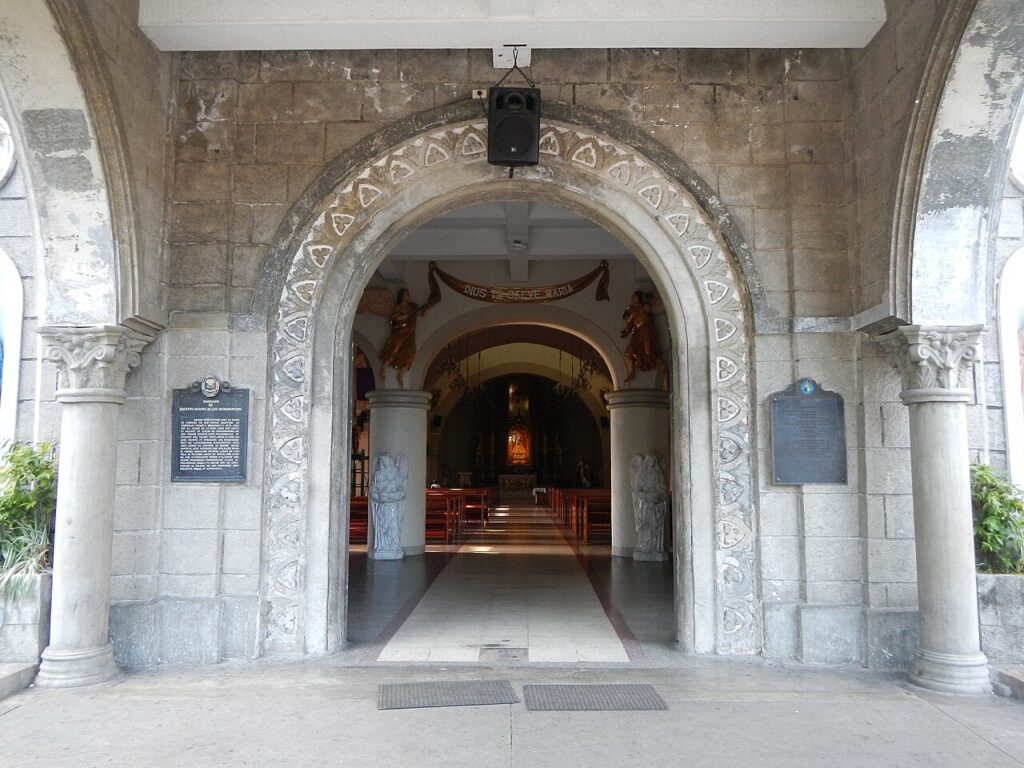
According to the documented history, la Church of Our Lady of the Unprotected of Marikina was built by the Augustines towards the year 1700and is considered one of the ancient temples of the city. The parish developed around this church, which over time became the focus of local Marian devotion. During Philippine-American War (1898), the primitive image and ancient documents concerning devotion were lost or destroyed, which explains the lack of written data on the exact origins of Marian devotion in the city.
As for the TRANSITION, it maintains that the current headline image would have been carved to 1902 to replace the image destroyed in the war, although no official documents are kept to prove it; this is a devotionally accepted but not fully demonstrated dating. Popular devotion identifies the Virgin as a constant protector of Marikina over the centuries, linking her protection to the city's resistance to calamities, social crises and diseases, within a framework of popular piety rather than formal historical chronicle.
—
The image and the sanctuary
The image of Our Lady of Marikina's Defenceless It is a Marian representation of a processing type, of a traditional Filipino-Hispanic style, very venerated by the faithful; however, there is no available technical description (exact type of size, materials, specific iconography beyond identification with the Virgin of the Unprotected). Local tradition indicates that the current image was made in 1902 to replace the original destroyed in the war, but, as indicated, it is a dating maintained by devotion rather than by official documentation.
The image is venerated in the Diocesan Sanctuary of Our Lady of the Unprotected, also known as Our Lady of the Abandoned Parish / Marikina Church, in the city of Marikina, in the region of Gran Manila, island of Luzon. This is a iglesia católica de rito Latin, originally erected by the Augustines around 1700, which has been renovated and rebuilt (an important renovation is mentioned in 1957), preserving the character of the historic temple of the city. The temple is officially diocesan sanctuarydedicated to the local image of Our Lady of the Unprotected; it is not known that she has the title of a minor basilica or a national sanctuary.
—
Sponsorship and coronation
Our Lady of the Unprotected of Marikina is recognized, in the field of popular piety and local ecclesial life, as patron and protector of the city of Marikina. Devotion is strongly rooted in the community, to the point of being considered the "Queen of Marikina" in devotional language. It is not clear, in verified sources, that the advocation has a broader diocesan patronage or specific national recognition; its patronage is located mainly at the local level of the city and parish.
As for the canonical coronationin the available information, there is no safe reference to a decree of canonical coronation issued by the Holy See or to a pontifical coronation documented with date, delegated authority and corresponding record. Therefore, according to the data consulted, does not contain a documented canonical coronation.
—
Party and devotion
La main party of Our Lady of the Unprotected of Marikina is celebrated the Mayo’s second Sunday, coinciding with Mother's Day, which highlights the Mother's character in local devotion. In addition, a special devotional day each fourth Saturday monthand Novies and processions in honor of the Virgin.
The devotion is intense and continuous: many faithful regularly go to the sanctuary to pray before the image, thank for favors and ask for intercession, shaping a constant flow of pilgrims and devotees, mainly at the local and regional levels. The devotional features identified by local sources include trust in the Virgin as protection of the poor, the sick, the condemned and the "homeless" in a broad senseand the attribution of favors and cures who feed the fame of the image as miraculous. The loving title “Mama Ola” - family appeal with which many devotees invoke it - reflects the affective and close dimension of this Marian devotion in the daily life of the faithful of Marikina.
—
Link to the Rosary
The specific sources consulted on Our Lady of Marikina's Defenceless do not expressly mention a propia or distinctive práctica related to the prayer of the Rosary (as cofradies of the Rosary formally erected, great characteristic public rosaries or particular promises linked to this advocation). Therefore, no consta a unique rosarian tradition linked to this image that can be accurately documented.
However, in the Philippine context and in the Marian spirituality of Latin rite, the Rosary It is a regular part of the life of the Marian shrines and parishes: it accompanies the novies, processions and vigil, and helps to contemplate the mysteries of Christ's life with Mary. In this sense, although no exclusive practice is pointed out, devotion to Our Lady of Marikina's Unprotected is naturally aligned with the prayer of the Rosary, which allows the faithful to meditate, together with the Virgin, on the mystery of God's mercy towards those who feel unprotected, and to ask for the specific needs of the city and its poor, sick and far away.
A flower for the Virgin
Offer a simple prayer to this Marian devotion. Pray a Hail Mary for the Philippines and for world peace.
Pray Hail MaryIs the advocation of the Virgin Mary of your people missing?
Si no encuentras la advocación mariana de tu ciudad o pueblo, cuéntanosla: la investigaremos para ubicarla y darla a conocer en este mapa del amor de la Madre por el mundo.
Propose an apvocation →