
Marian devotion
Panagia of Patmos, venerated on the island of Patmos
Marian Advocation of Patmos (Dodecanese)
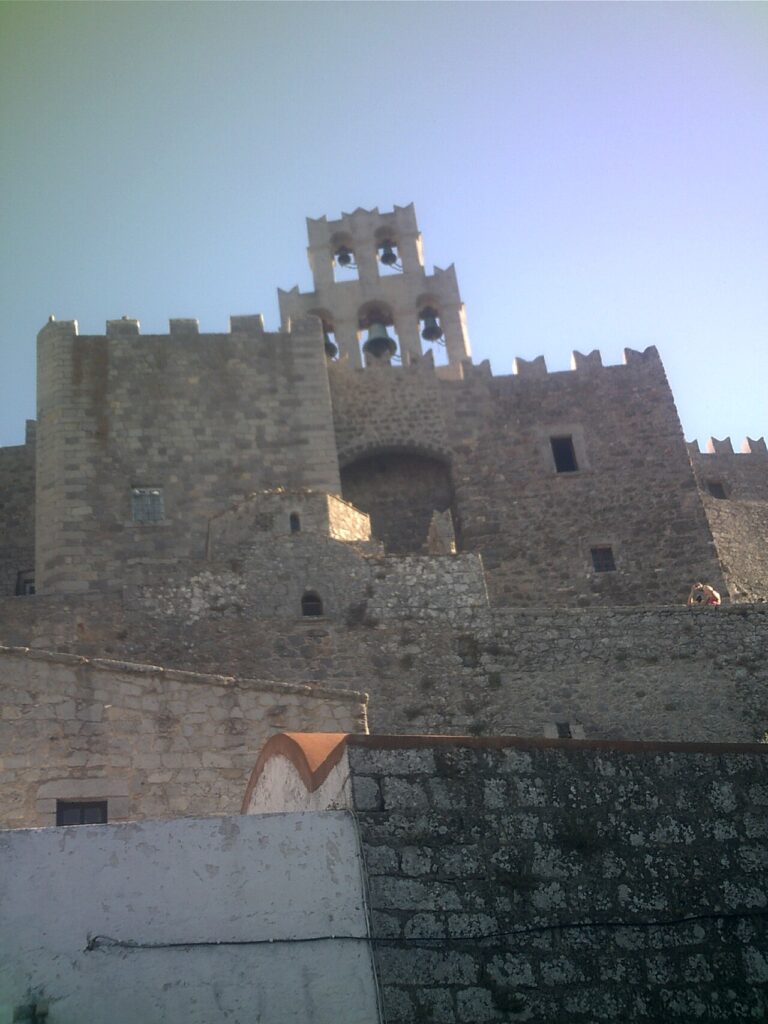
Patmos, in the Dodecanese archipelago, is known in the Christian tradition as the "island of the Apocalypse," where St. John received and wrote the book of the Apocalypse, according to the ancient tradition maintained by the Churches of the East and the West. On the island the Monastery of San Juan the Theologianfounded in the 11th century by Saint Christopher the Latrense (1088), which became a spiritual center of primary importance for the Orthodox world. In this monastic and biblical context, devotion to the Panagia (Greek title for the Virgin Mary, "All Holy").
Main data
Origin and history
Patmos, in the Dodecanese archipelago, is known in the Christian tradition as the "island of the Apocalypse," where St. John received and wrote the book of the Apocalypse, according to the ancient tradition maintained by the Churches of the East and the West. On the island the Monastery of San Juan the Theologianfounded in the 11th century by Saint Christopher the Latrense (1088), which became a spiritual center of primary importance for the Orthodox world. In this monastic and biblical context, devotion to the Panagia (Greek title for the Virgin Mary, "All Holy").
Since Byzantine times, the presence of icons of the Virgin in the monasteries and parishes of Patmos is part of the usual piety of the Greek Orthodox Church, which venates to Mary with multiple titles under the name of Panagia. The advocation of the Panagia de Patmos it does not refer to a single historical event or apparition, but to Marian veneration on the island, linked to the great centres of veneration: Monastery of San Juan the Theologian and the monastery of Zoodochos Pigi ("Source of Life"), places where important Marian icons are guarded. On concrete accounts of apparitions or miracles associated with a particular image of the Panagia of Patmos, there are no documented historical data in the main sources consulted; the possible local traditions are therefore in the field of piety and oral legend not documented.
The image and the sanctuary
La devoción a la Panagia de Patmos se expresa principalmente a través de Orthodox iconos of the Virgin, painted according to Byzantine tradition. These icons are usually tempered technique on wooden board, often partially or fully coated with a riza or metal coating (silver, sometimes golden), leaving the faces and hands visible, in accordance with the usual style of the Greek Marian icons. In them the Virgin appears as Theotokos (Mother of God), either in the iconographic type of the Hodigitria (which points to Christ) or Eleusa (Virgin of tenderness); however, there is no detailed technical description in the revised sources of a single "main" icon under the title of Panagia de Patmos, so an exclusive iconographic model cannot be specified.
The main framework of this devotion is the Monastery of San Juan the Theologianlocated in the upper part of Chorá, declared World Heritage by UNESCO along with the Grotto of Revelation and the historical core. It is a fortified monastery, of great historical and artistic value, with monastic church (katholikon), cloisters, chapels, library and liturgical treasures, among which are ancient icons of Christ and of the Panagia. On the island there is also the monastery of Zoodochos Pigi ("Source of Life"), dedicated to the Virgin as the source of divine life; in it are also venerated Marian icons, in a liturgical and monastic context that is typical of the Orthodox tradition. It is not known that none of these temples currently have the Catholic title of a minor basilica or that they have been proclaimed "national sanctuary" in Latin-Catholic key; in the Orthodox field they are monasteries of great relevance, but with a different canonical configuration.
Sponsorship and coronation
The revised sources do not contain a Official patronage of the Panagia of Patmos on a Catholic diocese, not a canonical recognition in Latin terms (e.g. patron of a city or country) similar to that of other Marian asvocations of Greece, such as the Panagia Evangelistria of Tinos. In the Orthodox context, the Virgin as Panagia is considered a protector of the island and its inhabitants, in continuity with the strong Christian identity of Patmos, known as the "Jerusalem of the Aegean." However, there are no specific documents that formally define the Panagia de Patmos as the only and official patron of the island in legal terms.
On a canonical coronation, does not contain a canonical coronation documented according to the criteria of the Latin Catholic Church (decree of the Holy See, year, pontiff or delegate). There are also no clear references to a solemn coronation in the orthodox style (with specific rite and panoramic recognition) of a particular icon of the Patmos Panagia in the main sources consulted. The formula should therefore be maintained: does not contain a documented canonical coronation.
Party and devotion
The Orthodox liturgy celebrates several Marian parties common to the whole Church, with special emphasis on the Sleeping of the Theotokos (15 August, according to the Gregorian calendar), very rooted in Greece and celebrated in numerous shrines of the Panagia. In the case of Patmos, devotion to the Virgin is integrated into the general liturgical calendar of the Orthodox Church, particularly in the context of the festivities of the Theotokos and the great solemnities linked to the monastery of St. John and to the Apocalypse. However, there is no own and exclusive party of the "Panagia de Patmos" with a date set and recognized beyond the local level; therefore, a specific liturgical day for this advocation cannot be safely indicated.
The island of Patmos receives numerous pilgrims and visitors for its character as a biblical and monastic place. Many of them participate in the Orthodox liturgy, visit the Grotto of the Apocalypse and the monastery of St. John, where they venerate the icons of Christ and of the Panagia, in a climate of silent prayer and respect. Marian devotion is expressed in the kiss of the icon, the burning of candles, the use of votive lamps and the recitation of prayers of the Eastern tradition (hymns, akatystos, paraklysis). There are no official figures of specifically Marian influx, but the spiritual importance of Patmos as a Christian pilgrimage centre is widely recognized.
Link to the Rosary
No consta un specific historical link between the Panagia of Patmos and the prayer of the Rosary in the Latin-Catholic sense. The devotion in Patmos is especially part of the Orthodox spirititywhich has its own tradition of Marian prayer: the Himno Akathistos, las paraquis (pleas to the Mother of God) and the use of the komboskini (prayer cord) mainly for the Prayer of Jesus, rather than for a Marian rosary in the Western style.
However, from a Marian Catholic perspective, the Rosary offers a way of uniting the contemplation of the mysteries of Christ with the faith of the Church who has guarded in Patmos the testimony of John and the Revelation. Who approaches devotional to the Panagia de Patmos He can be guided by the Rosary to meditate, together with Mary, on the mystery of the pilgrim Church, called to fidelity in the midst of the trial, as it appears in the Revelation. In this way, the Rosary acts as a spiritual bridge: it unites the Latin tradition of Marian prayer with the biblical and monastic memory of the island, where the Mother of God is venerated as Panagia, discreet and praying presence next to the pro word
A flower for the Virgin
Offer a simple prayer to this Marian devotion. Pray a Hail Mary for Greece and for world peace.
Pray Hail MaryIs the advocation of the Virgin Mary of your people missing?
Si no encuentras la advocación mariana de tu ciudad o pueblo, cuéntanosla: la investigaremos para ubicarla y darla a conocer en este mapa del amor de la Madre por el mundo.
Propose an apvocation →