
Marian devotion
Our Lady of the Immaculate Conception of Beijing
Marian vocation in Beijing (Beijing)
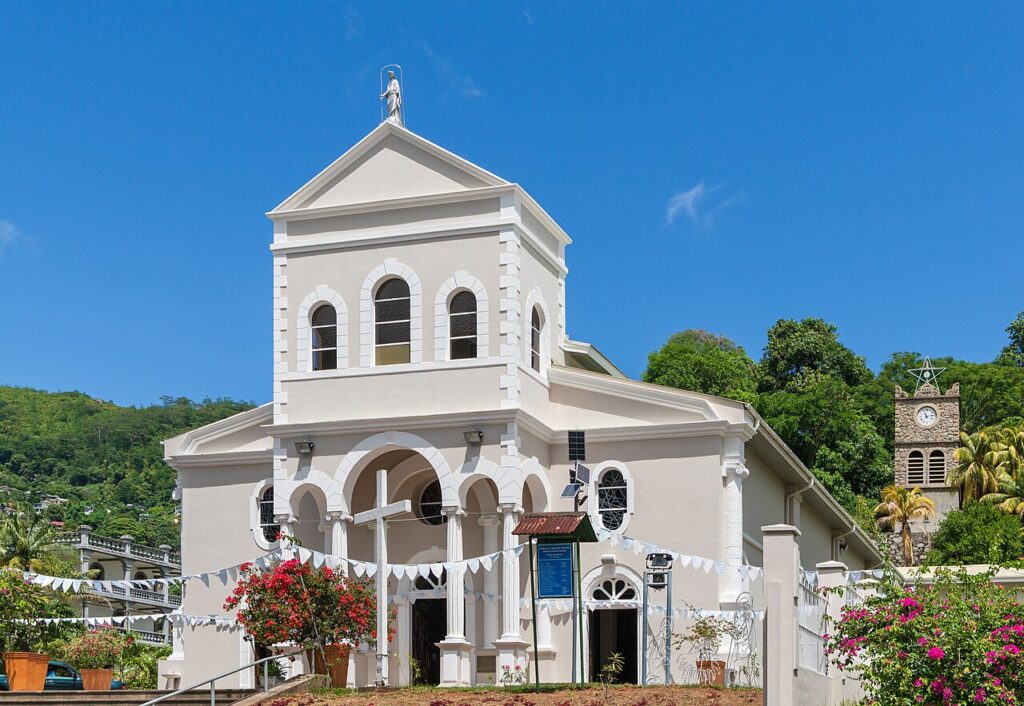
La Cathedral of the Immaculate Conception of Beijing (known as Catedral del Sur, Singing, in Xuanwumen) is the oldest Catholic temple in the Chinese capital with a presence permanent and stable, although its current configuration is the result of several reconstructions. The first church in this place dates back to the early 17th century, in the context of the Jesuit mission led by Matteo Ricci and his successors in the imperial court of Beijing. It is the main Marian temple of the city dedicated to the Immaculate Conception in the Latin rite; in it is celebrated the feast of the Immaculate 8 December, conform to the Roman calendar.
Main data
Origin and history
La Cathedral of the Immaculate Conception of Beijing (known as Catedral del Sur, Singing, in Xuanwumen) is the oldest Catholic temple in the Chinese capital with a presence permanent and stable, although its current configuration is the result of several reconstructions. The first church in this place dates back to the early 17th century, in the context of the Jesuit mission led by Matteo Ricci and his successors in the imperial court of Beijing. It is the main Marian temple of the city dedicated to the Immaculate Conception in the Latin rite; in it is celebrated the feast of the Immaculate 8 December, conform to the Roman calendar.
As for the documented historythere are clear references to the presence of the Jesuits in Beijing since the late 16th and early 17th century, as well as to the erection of a stable place of worship that became the primera iglesiaimporta de la capital linked to the Catholic mission. However, the precise details of the exact date of foundation of the original building, its primitive architectural configuration and some intermediate stages of its reconstructions appear with gaps or fragmentary data in the available sources; it does, on the other hand, show that the temple was destroyed and rebuilt on several occasions, following the vicissitudes of Chinese history (fires, conflicts, regime changes), until it acquired its current physionomy as a diocesan cathedral.
In the plan of the traditionthe local Catholic memory generally links the origin of this church to the figure of Matteo Ricci and to the first phase of sympathy and cultural dialogue between the imperial court and the missionaries, considering the temple as the fruit of the favor granted by the authorities to the Christian community. However, the detail of certain personal interventions, specific donations or oral edifying episodes is not supported by accessible documentation and is therefore considered a pious tradition and not a verified history.
The image and the sanctuary
The advocation that is venerated in this place is Our Lady of the Immaculate Conception, titular de la Cathedral of the Immaculate Conception of Beijing (Xuanwumen / Nantang). The church belongs to the Catholic diocese of Latin rite based in Beijing and functions as a diocesan cathedral; it does not know that it enjoys the title of minor basilica nor a formal recognition as a Marian national sanctuary of China, although it is one of the most significant Catholic temples in the country.
On the concrete image of the Immaculate which presides over the cathedral, in the sources consulted no consta a detailed and uniform description (type of size, material, author, date). There are no documentary data on whether it is a wood sculpture, plaster or other material, or on its precise artistic style (baroque, neoclassical, etc.). It is therefore only possible to say with rigour that the cathedral, as such, is dedicated to the Immaculate Conception and that, according to the usual iconography, the Virgin is represented as Mary without blemish, associated with the mystery defined dogmatically by the Church, without being able to specify more details without incurring conjectures.
The Catedral del Sur is one of the four great historical temples of Beijing and presents a fisonomy that combines Western elements (plant and facade of European style) with features adapted to the Chinese context. It has been restored and rebuilt several times, so the current building is the result of these successive interventions, maintaining its function as a nerve center of Catholic life in the city.
Sponsorship and coronation
In accessible sources no consta un Official patronage of Our Lady of the Immaculate Conception of Beijing as the principal patron of the city, the diocese or the Chinese nation with a specific decree of the Holy See. The cathedral is, however, the episcopal thirst de Beijing and its Marian headline enjoy an obvious centrality in the liturgical and devotional life of the local faithful.
In relation to a canonical coronation, does not contain a documented canonical coronation of the image of the Immaculate Conception venerated in the Southern Cathedral, neither by a Pontifical Decree nor by an explicit delegation of a representative of the Pope. In the absence of verifiable data (year, pontiff, delegate), it is not possible to strictly attribute an act of canonical coronation according to the rules of the Church.
Party and devotion
La main party of this advocation is that of the Immaculate Conception, celebrada el 8 December according to the liturgical calendar of the Latin rite. In the Cathedral of the Immaculate Conception of Beijing this day has a particularly solemn character: the seasonal mass is celebrated, with significant participation of the local Catholic community and the usual presence of the diocesan clergy. There are no precise and official statistical data of influx, but recent tradition indicates that the participation of the faithful is numerous, considering that it is the owner of the main Marian temple of the city.
As regards organized pilgrimages at the national or international level, no consta that the cathedral is formally recognized as the center of great Marian pilgrimages comparable to other shrines of the world; however, it is a reference place for the Catholics of Beijing and visitors, who come constantly to the celebration of the Eucharist, the sacrament of reconciliation and personal prayer before the Virgin. Devotion is characterized, according to the available testimonies, by a sober and deeply rooted style in the sacramental and community life, rather than by mass expressions or mass popular parties.
No precise information is available on external processions, specific novies, vigil or other popular practices of their own of this apvocation in Beijing. Where sources are not clear or provide specific details, the claim that no consta that kind of traditions with verifiable data.
Link to the Rosary
In the sources consulted no consta una specific or historical relationship between the invocation of Our Lady of the Immaculate Conception of Beijing and a particular practice of Rosary (as a fellowship of the Rosary itself, a historic promise linked to the prayer of the Rosary or a rosarian feast of the sanctuary). There are no documented references to a local Marian institution officially linked to the Rosary in this cathedral.
However, since the Immaculate Conception is intimately linked to the mystery of Mary in the plan of salvation, the prayer of the Rosary It naturally fits the spirituality of this temple. The joyful mysteries contemplate the beginning of the history of salvation in the flesh of Mary, preserved from original sin; the glorious mysteries culminate in the exaltation of the one who, as Immaculate, fully participates in the glory of Christ. In this sense, even if there is no particular documented tradition, the Rosary is presented as a privileged way to accompany devotion to the Immaculate Conception of Beijinghelping the faithful to meditate, together with Mary, on the work of God which is reflected in this venerated Marian advocation in the heart of the Chinese capital.
A flower for the Virgin
It offers a simple prayer to this advocation. Pray a Hail Mary for China and for the peace of the world.
Pray Hail MaryIs the advocation of the Virgin Mary of your people missing?
Si no encuentras la advocación mariana de tu ciudad o pueblo, cuéntanosla: la investigaremos para ubicarla y darla a conocer en este mapa del amor de la Madre por el mundo.
Propose an apvocation →