
Marian devotion
Our Lady of Rokitno
Marian title of Rokitno (Lubusz)
La advocación de Nuestra Señora de Rokitno it is linked to the small town of Rokitno, in the voivodship of Lubusz, in western Poland, where an ancient 17th-century Marian table is venerated considered miraculous. The image was moved to Rokitno in the context of the ecclesiastical reorganization of the region and eventually became the centre of regional pilgrimages, especially for the faithful of the present diocese of Zielona Gira-Gorzów. In the 20th century, following the changes of borders after World War II, the sanctuary acquired particular importance as a place of spiritual arraigo for Polish Catholics settled on these recovered lands.
Main data
Origin and history
La advocación de Nuestra Señora de Rokitno it is linked to the small town of Rokitno, in the voivodship of Lubusz, in western Poland, where an ancient 17th-century Marian table is venerated considered miraculous. The image was moved to Rokitno in the context of the ecclesiastical reorganization of the region and eventually became the centre of regional pilgrimages, especially for the faithful of the present diocese of Zielona Gira-Gorzów. In the 20th century, following the changes of borders after World War II, the sanctuary acquired particular importance as a place of spiritual arraigo for Polish Catholics settled on these recovered lands.
As for the distinction between tradition and strictly documented data, the current devotional sources insist on the character of the microroso of the image and speak of numerous favors attributed to the intercession of the Virgin of Rokitno, especially curations and assistance in family and social difficulties. However, the specific details about a particular founder, the painter of the table or precise accounts of original miracles are not clearly documented in the accessible sources; the general data of his seniority (17th century) and his fame of extraordinary graces, but they do not safely record legendary stories developed as in other Polish Marian shrines.
The image and the sanctuary
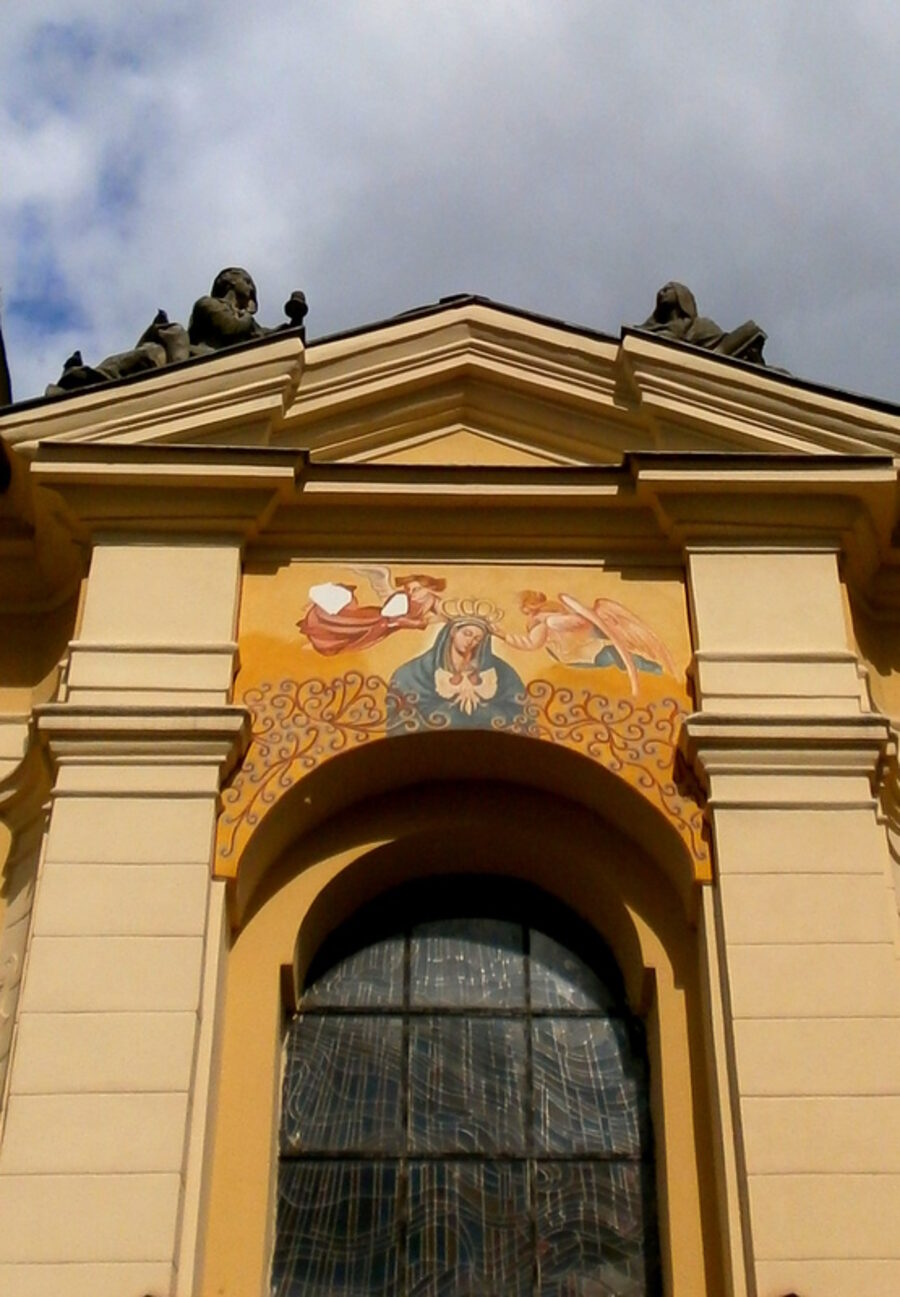
The image of Our Lady of Rokitno is a small table 17th-century Marian, of a devotional iconographic type, popularly known as the Virgin who "listens with patience" (Our Lady of Rokitniańska – Lady Patiently Listening). It is a painting on a table (not a relief or a sculpture) in which the Virgin appears in a collected attitude, with a serene gesture of listening, underlining her compassionate closeness to those who come in prayer. The concrete iconography (position of the hands, colors of the blankets, symbols) varies according to the copies and reproductions, but the predominant devotional feature is the figure of Mary as Mother who welcomes and hears in prayer silence.
The sanctuary where the image is venerated is the Rokitno minor santuary basilica, in the diocese of Zielona Góra-Gorzów. The present temple, which has known various remodeling, is an officially recognized diocesan Marian sanctuary, and has received the title of minor basilica, which expresses its special liturgical and devotional importance within the local Church. The compound has facilities to host pilgrimages, spaces of confession and celebration of the Eucharist, as well as places of prayer in the open air, following the model of other great Marian centers in Poland.
Sponsorship and coronation
Our Lady of Rokitno is patron of the diocese of Zielona Góra-Gorzó wto venerate her in a particular way as Mother and Protector. His patronage is expressed in the diocesan celebrations, in the shield and in the spiritual identity of the local Church, who comes to this sanctuary as the main Marian center.
The image was on 18 June 1989, a date marked in a stable way in the memory of the sanctuary and of the diocese. The sources consulted confirm the coronation in that year, but do not require with full certainty the name of the pontiff who authorized the coronation (although by date it would correspond to the pontificate of John Paul II) or that of the pontifical delegate who carried it out. In the absence of direct and explicit data in available sources, from a strictly documentary point of view only the following can be stated: the coronation in 1989 on 18 June; the details of the act and the name of the pontifical delegate are not recorded with certainty.
Party and devotion
La main party of Our Lady of Rokitno is celebrated the 18 June, coinciding with the anniversary of the coronation of the image, and constitutes the great Marian day of the diocese of Zielona Góra-Gorzów. Around this date, the sanctuary hosts diocesan and regional pilgrimages, with a strong participation of priests, religious and lay, as well as movements and communities, who renew their consecration to the Virgin.
Throughout the year, the sanctuary of Rokitno receives numerous groups of pilgrims, especially from the parishes of the diocese and from other areas of western Poland. Devotion is characterized by trust in Mary as a "patiently listening" Mother, which is reflected in the frequent practice of confession, participation in the Eucharist and the presentation of intentions and thanks. Devotional sources indicate that many people come to ask for help in family, work or health difficulties, consolidating Rokitno's fame as a place of Christian comfort and hope. There are no detailed official figures of inflow in the sources consulted.
Link to the Rosary
The specific sources on Our Lady of Rokitno do not point to a particular or exclusive relationship with the prayer of the Rosary (for example, a historical fellowship of the Rosary proper to this sanctuary or a different rosarian feast). The devotion to this advocation is, however, part of the deep Polish Marian tradition, in which the Rosary occupies a central place as family and community prayer.
In a manner consistent with the spirituality of Rokitno, where Mary is venerated as the Mother who "listens with patience," the Rosary It is naturally presented as a prayer that accompanies this devotion: in the paused prayer of mysteries, the faithful contemplate the life of Christ next to Mary and find a space to be heard and to listen to God in inner silence. Thus, even if there is no unique historical link documented, the Rosary is spontaneously integrated into the life of the sanctuary and into the piety of those who come to the Virgin of Rokitno, strengthening the contemplative and confident dimension of this Marian advocation.
A flower for the Virgin
Offer a simple prayer to this Marian devotion. Pray a Hail Mary for Poland and for world peace.
Pray Hail MaryDocumentary expansion: the image of Rokitno and his cult
The official history of the sanctuary recognizes that the material origin of the image is not fully established. The page of the sanctuary describes it as a painting made in the early 16th century on tile wood, with Mary's ear visibly discovered. This iconographic feature explains the title of Our Lady who listens patiently. The description of the work, its dimensions and its restorations belongs to the history of the preserved object; it must not be confused with an affirmation of apparition.
The institutional source reconstructs the image's journey through several families and communities. In 1624, he passed to the Opaliński family and later, the Cistercian abbot Kazimierz Jan Opaliński took her to the monastery chapel. The account that the abbot received a call in the dream to care for the cult and that he healed from a serious disease is part of the devotional tradition preserved by the sanctuary. The theological commission convened by the Bishop of Poznań in 1670 and his recognition of the miraculous character of the image are data of the ecclesial history of the cult as presented by the source; they do not authorize the call of canonical miracle to each healing or favor attributed in later times.
In 1669 the image was moved to Rokitno. The memory of the sanctuary links devotion to prayer for peace and to the political history of Poland of the 17th century, when the image was brought before King Miguel Korybut Wiśniowiecki. The narrative of the agreement reached without battle is preserved as a devotional interpretation of those facts. The fact sheet keeps it as a memory of veneration and popular piety, without claiming that a political victory is a test of supernatural intervention.
The public worship was expressed in the solemn coronation of 18 June 1989, presided over by the primate Józef Glemp in the face of a great pilgrimage. The basilica was raised to the lower basilica in 2001 and the sanctuary itself explains that the public proclamation of this title took place in 2002. These recognitions refer to the temple, the image and the pastoral importance of the place. They should not be transformed into an approval of an apparition which the sources consulted do not describe as an apricionist phenomenon. Mary is venerated and her intercession is requested; worship corresponds only to God.
The present sanctuary also retains a calvary of thirty-two stations between Lubikowskie and Rokitniańskie lakes. The work began in 2000 and its first penitential exercise took place in 2001. This space helps to understand that Rokitno's life is not reduced to the image: it includes liturgy, pilgrimage, silence, catechesis and contemplation of Christ's passion.
Sources of this enlargement
- Rokitno Sanctuary, Image History, HTTP 200.
- Shrine of Rokitno, basilica and history of the temple, HTTP 200.
- Santuary of Rokitno, Calvary, HTTP 200.
Is the advocation of the Virgin Mary of your people missing?
Si no encuentras la advocación mariana de tu ciudad o pueblo, cuéntanosla: la investigaremos para ubicarla y darla a conocer en este mapa del amor de la Madre por el mundo.
Propose an apvocation →