
Marian devotion
Our Lady of Trondheim
Marian vocation of Trondheim (Norway)
Documented history
Main data
Origin and history
Documented history
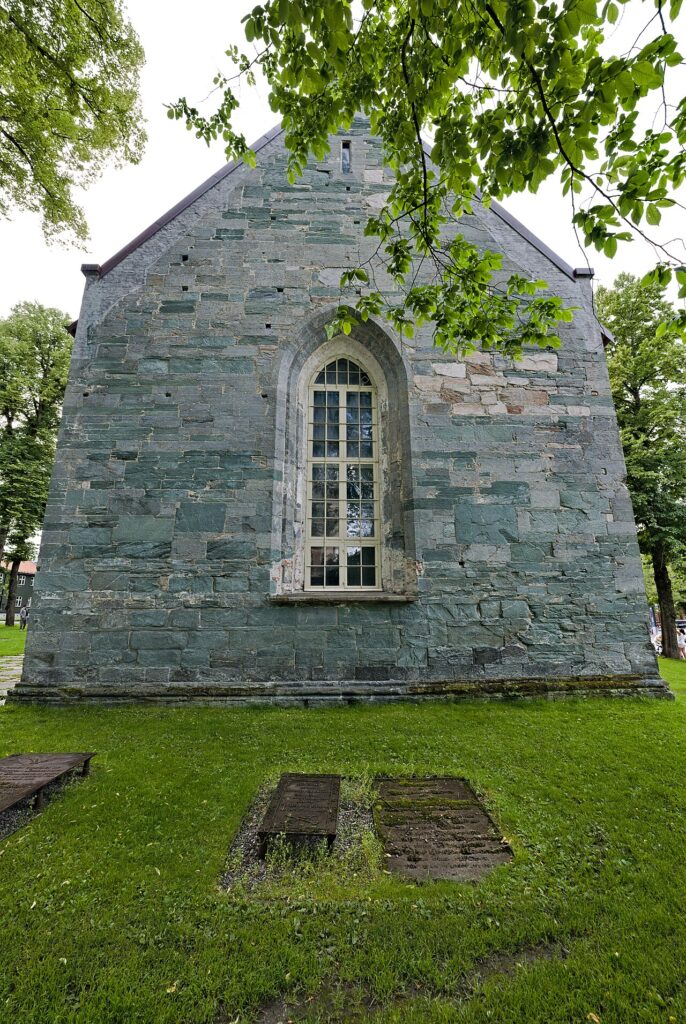
La actual Church of Our Lady of Trondheim (Vår Frue kirke) is one of the oldest buildings in the city and goes back to the Middle age. Its origins are located towards the XII-XIII centurywhen it appears as a church dedicated to Holy Mary / Our Ladyin then Catholic Norway. Its construction began approximately towards 1200under the title of Santa Maria, according to the Romanesque architectural tradition of the moment, later incorporating Gothic elements and, in later stages, neo-Gothic.
After Protestant Reformation in the 16th century, the temple passed to the cult of the Church of Norway (Lutheran), however maintaining its Marian title as “Vår Frue kirke” ("Church of Our Lady"). Today it remains a temple of ordinary worship of the Lutheran diocese of Nidaros, in the heart of Trondheim, very close to the great catedral de Nidaros, former Catholic cathedral and today also Lutheran.
Tradition / Devotional context
En la Medieval Catholic Norway, devotion to the Virgin Mary was strongly associated with Marian churches and altars linked to pilgrimage centers like Nidaros, where Saint Olaf was venerated. In this context, the Church of Our Lady was an important place of urban Marian devotion, near the cathedral, although the sources consulted do not keep specific accounts of Marian miracles or legends linked to a concrete image of the Virgin in Vår Frue kirke. There is therefore no detailed legendary tradition comparable to other Marian shrines in southern Europe.
The image and the sanctuary
Iglesia / sanctuary
The temple is officially known as Our wife kirke ("Church of Our Lady") and belongs to the Church of Norway (Lutheran), within the diócesis de Nidaros. Se trata de una iglesia de stonelocated in the centre of Trondheim, within walking distance of the Cathedral of Nidaros. Architectural combines Romanesque, gothic and nogotic motifs, reflection of the different stages of construction and restoration over the centuries. The interior stands out for its altar y un notable body, mentioned by several passenger descriptions.
It does not know that the temple currently has Catholic canon titles like minor basilica, National sanctuary o diocesan sanctuary (in the Catholic sense). It's a iglesia parroquial luterana with strong historical and symbolic value for the city.
The image
The sources consulted on Vår Frue kirke mainly describe the building, its antiquity and its style, but do not provide accurate and current data on a specific Marian image (type, material, iconography) that works today as the center of a specific devotion comparable to other Marian calls for pilgrimage. Modern descriptions emphasize more the character of a historical church than that of a Marian sanctuary in a strict sense.
Therefore:
– No consta in a documented and accessible way imagen titular concrete (por ejemplo, talla medieval conservada, icono, etc.) descrita con detalle en fuentes académicas o eclesiales recientes. – Es razonable, por el contexto histórico, suponer que en la Edad Media contó con Altards or images of the Virgin of a Romanesque / Gothic style, but available documentation does not specify its current statusand their artistic characteristics.
Sponsorship and coronation
– Patronage: – Vår Frue kirke es una historical parish de Trondheim, bajo la advocación general de la Virgen María. – No consta que la "Our Lady of Trondheim" haya sido proclamada official patron of the city, diocese or Norway en la forma jurídica propia del derecho canónico católico. El patrono nacional reconocido es san Olaf, vinculado a la catedral de Nidaros. – Por tanto, se puede hablar de un patronazgo local at the level of the ancient Marian parish of the city, but no consta a national or diocesan Catholic canonical patronage.
– Canon coronation: – En la documentación consultada (fuentes históricas, turísticas, y de referencia sobre la iglesia de Nuestra Señora de Trondheim) does not contain a documented canonical coronation de una imagen de la Virgen asociada a esta iglesia. – Por ello, conforme a la indicación solicitada: does not contain a documented canonical coronation.
Party and devotion
The Lutheran and tourist sources on Vår Frue kirke focus on the history of the building and its current use; and no detallan a Marian fiesta propia of "Our Lady of Trondheim" with specific date or flow data comparable to other international Marian shrines.
– Main party: – No consta, en las fuentes consultadas, una fiesta litúrgica específica de la advocación “Nuestra Señora de Trondheim” fijada en una fecha concreta. – En el calendario católico universal, la Nativity of Mary, the Immaculate Conception, the Annunciation or general Marian parties could serve as spiritual reference; however, this does not appear officially linked to Vår Frue kirke in available sources.
– Pilgrimage and devotional features: – La gran catedral de Nidaros has traditionally been the main pilgrimage center de Trondheim y del norte de Europa, relacionada con la tumba de san Olaf. – Vår Frue kirke, situada junto a la catedral, formaba parte del pagaje sacro medieval de la ciudad, ofreciendo un espacio propio de culto a la Virgen María, aunque las fuentes actuales no documentan peregrinaciones marianas específicas centradas en esta iglesia. – En la actualidad, la devoción está marcada sobre todo por el uso de la iglesia como temple of ordinary veneration and how historical and spiritual space open in the urban centermore than Marian sanctuary of pilgrimage.
Since the sources examined do not provide figures of the influx, processions or popular Marian traditions of their own (for example, romanias, specific novies, etc.), it must be strictly stated: does not contain, in accessible sources, a Marian devotional tradition of its own with distinct features clearly defined for "Our Lady of Trondheim."
Link to the Rosary
The historical and current sources on the Church of Our Lady of Trondheim do not document a specific relationship between this advocation and the prayer of Rosary (for example, historical rosarian copradies, own indulgences, or Rosary parties linked to the temple).
However, from the Marian Catholic perspective:
– El título de "Our Lady" places this church within the great the current of devotion to Mary que recorre la cristiandad desde la Edad Media. – El RosaryAs a meditation of the mysteries of Christ's life with Mary, it has historically been a privileged way of to unite the Catholic communities of northern Europe to the great Marian shrines, even if the practice is not
A flower for the Virgin
It offers a simple prayer to this advocation. Pray a Hail Mary for Norway and for world peace.
Pray Hail MaryIs the advocation of the Virgin Mary of your people missing?
Si no encuentras la advocación mariana de tu ciudad o pueblo, cuéntanosla: la investigaremos para ubicarla y darla a conocer en este mapa del amor de la Madre por el mundo.
Propose an apvocation →