
Marian devotion
Our Lady of Vadstena
Patron Saint of Europe
Marian devotion linked to Vadstena was born in the 14th century around the figure of Saint Brigid of Sweden, fundadora de la Order of the Most Holy Saviour (Brigidins and Brigidins). According to the Brigidine spiritual tradition, the Virgin Mary occupies a central place in the revelations and in the inner life of the saint, to the extent that her visions have been described as a true "history of Mary." This intense Brigidine mariology makes the monastery designed by Brigida in Vadstena an authentic "monastery of Mary."
Main data
Origin and history
Marian devotion linked to Vadstena was born in the 14th century around the figure of Saint Brigid of Sweden, fundadora de la Order of the Most Holy Saviour (Brigidins and Brigidins). According to the Brigidine spiritual tradition, the Virgin Mary occupies a central place in the revelations and in the inner life of the saint, to the extent that her visions have been described as a true "history of Mary." This intense Brigidine mariology makes the monastery designed by Brigida in Vadstena an authentic "monastery of Mary."
From the perspective of the documented history, Santa Brigida (1303-1373) founded the Order of the Most Holy Saviour in the 14th century, with a main house planned in Vadstena, in the province of Östergötland, Sweden. After the death of Brigida in Rome, his daughter Santa Catalina de Sweden (the one of Vadstena) He continued the work and organized the monastery of Vadstena, which became the mother house of the Order and one of the most important religious centers in medieval Sweden. Before the Protestant Reformation, Vadstena was a great focus of monastic life, pilgrimages and Marian devotion in the Swedish kingdom.
La tradition Brigidina presents the monastery of Vadstena as a place especially loved by the Virgin, linked to the visions of Saint Brigida and the mission of the Order as "family" in the service of Christ and Mary. However, there is no specific and established formulation of the advocation under the formal title "Our Lady of Vadstena" in the Middle Ages; rather, it is the Marian natural reference to the monastery and to the church linked to the Order and spirituality of Santa Brigida. The available documentation does not contain a particular canonical definition of this advocation as its own liturgical title other than the general Marian devotion Brigidine.
The image and the sanctuary
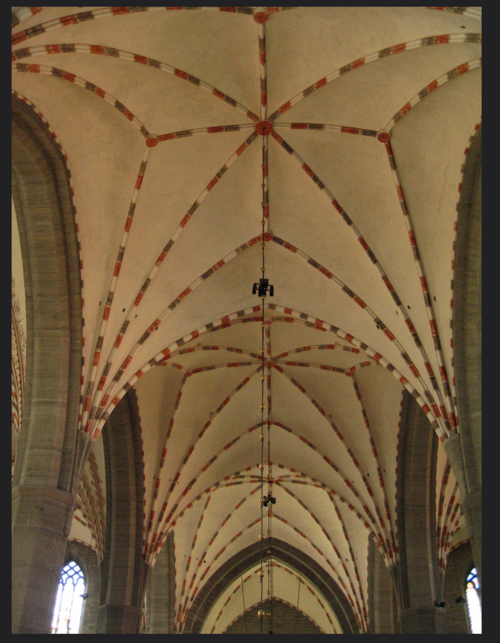
El historical sanctuary is the ancient Brigidino monastery of Vadstenawhose medieval church (the monastery church) is preserved and remains a place of spiritual and heritage reference. In the Middle Ages it was the mother house of the Order of the Most Holy Saviour and an irradiation center of Brigidine spirituality for all Scandinavia. The church, of Nordic Gothic style, was part of a large monastic complex that housed a double community (nuns and a limited number of priest monks), according to the Constitutions of the Order. After the Reformation, the monastery was abolished and transformed into a royal palace, but the temple has remained a church and a focus of religious memory.
Today, Brigidine spirituality continues to be present in Sweden through communities of Brigidina sisters, who keep alive the Marian heritage of Santa Brigida and its link with Vadstena. Vatican News stresses that the congregation has "a long history and deep roots" in Sweden, in continuity with the medieval foundation. In the sources consulted it is not known that the temple of Vadstena has the title of minor basilica or officially declared National Marian Sanctuary; rather, it is identified as a historical church of the ancient monastery and a place of pilgrimage linked to Santa Brigida.
As for a specific Marian image under the title "Our Lady of Vadstena," accessible sources do not provide a clear and documented description (type of image, material, concrete iconography). It is known that the spirituality of the Order and of the monastery is articulated around Christ crucified and the Virgin Mary contemplated in the mysteries of salvation, but there is no one, in the documentation consulted, a uniquely famous image described under that specific title. Therefore, there is no Marian iconography of "Our Lady of Vadstena" that can be accurately summarized.
Sponsorship and coronation
Vadstena is historically one of the major Marian centres in Sweden thanks to Saint Brigida and the Order of the Most Holy Saviour. However, the available sources do not record a decree formal de patronazgo of the Virgin under the title "Our Lady of Vadstena" on the city of Vadstena, a diocese or the Swedish nation. The national patron of Sweden recognized by the Catholic Church is Santa Brígida, canonized in 1391 and later declared co-patron of Europe. The Marian devotion of the people, in the surroundings of Vadstena, has been expressed mainly through the worship of Saint Brigida and the Brigidine spirituality centered on Jesus and Mary.
On a canonical coronation of an image of the Virgin under the title of Our Lady of Vadstena, there is no reference in the sources consulted to any act of coronation approved by the Holy See or to a specific year or pontifical delegation. Therefore, for this advocation does not contain a documented canonical coronation.
Party and devotion
In the Catholic calendar, the most significant dates linked to Vadstena are the Saint Brigid of Sweden, el 23 July, y de Santa Catalina de Sweden (the one of Vadstena), daughter of Brigida and continuation of the work in the monastery. These celebrations, especially that of Saint Brigida, have become privileged occasions for Marian devotion in Vadstena, given the markedly Marian character of the spirituality of the Order.
The sources indicate that the revelations of Santa Brigida they are a true "history of Mary" and that the monastery of Vadstena was, in the Middle Ages, a great pilgrimage centre for Swedish faithful and other countries, attracted by the spiritual prestige of the saint and by the fame of the monastery as a place of grace. Although the statistical data of medieval inflow are difficult to specify, the importance of Vadstena is documented as one of the great shrines of North Europe before the Reformation.
Today, the presence of the Brigidina sisters and the memory of Santa Brigida continue to make Vadstena a pilgrimage destinationfor both Catholics and other Christians, within the small but living Swedish Catholic community. Marian devotion is integrated into the liturgical life, the celebration of the Feasts of the Virgin and of Saint Brigida, and the meditation of the mysteries of the life of Christ and Mary, according to the spirit of the Brigidine revelations.
Link to the Rosary
The sources consulted do not indicate a specific historical relationship between the advocation of the Virgin in Vadstena and the spread of Holy Rosary as own or distinctive practice of the sanctuary. There is no document of a fellowship of the Rosary of Vadstena or a particular feast of the Rosary linked to this advocation.
However, the mariology Brigidine It offers a very suitable framework for the prayer of the Rosary. The revelations of Saint Brigida present the Virgin as Mother closely associated with the mysteries of the Incarnation, the Passion and the glory of Christ, that is, the same great mysteries that the Rosary contemplates. In this sense, the prayer of the Rosary in Vadstena, although it does not reflect as an exclusive historical feature, deeply harmonizes with the charism of the Order of the Most Holy Saviour: to meditate, together with Mary, on the mysteries of Christ to shape the life of the believer with the Gospel. Thus, the Rosary becomes a privileged means of living today the devotion to the Virgin in the spirit of Saint Brigida and of the spiritual tradition born in Vadstena.
A flower for the Virgin
Offer a simple prayer to this Marian devotion. Pray a Hail Mary for Sweden and for world peace.
Pray Hail MaryIs the advocation of the Virgin Mary of your people missing?
Si no encuentras la advocación mariana de tu ciudad o pueblo, cuéntanosla: la investigaremos para ubicarla y darla a conocer en este mapa del amor de la Madre por el mundo.
Propose an apvocation →