
Marian devotion
Nuestra Señora de Werthenstein
Marian vocation of Werthenstein (Lucerne)
The information available on Nuestra Señora de Werthenstein is very small in Spanish sources and in the usual repertories of Marian advocations; most published data refer to other Swiss Marian shrines (especially Einsiedeln), not to Werthenstein. There is no precise traditional narrative in the sources consulted (apparition, miraculous finding of the image, etc.) linked to this advocation. Therefore, a concrete foundation legend cannot be presented with rigour: no consta.
Main data
Origin and history
The information available on Nuestra Señora de Werthenstein is very small in Spanish sources and in the usual repertories of Marian advocations; most published data refer to other Swiss Marian shrines (especially Einsiedeln), not to Werthenstein. There is no precise traditional narrative in the sources consulted (apparition, miraculous finding of the image, etc.) linked to this advocation. Therefore, a concrete foundation legend cannot be presented with rigour: no consta.
From the perspective of the documented historyWerthenstein appears in the context of central Switzerland as an old place of Marian penance and pilgrimage, developed between the 15th and 16th centuries on a rock in the present canton of Lucerne, with a convent and church that functioned as a regional Marian sanctuary. This characterization as a penitential and Marian center is in line with other great Swiss sanctuaries - like Einsiedeln - that structured the religious life of the country around monasteries and pilgrimage places. However, for Werthenstein in particular do not contain in-line, accessible and verifiable, detailed foundation data, exact date of erection of the sanctuary or specific historical documents (episcopal records, local chronicles) in the sources consulted.
As a result, for the purposes of a rigorous disclosure, it can only be said with certainty that Werthenstein is a ancient Marian shrine on rock, linked to penance practices, in the canton of Lucerne (central Switzerland), developed as a place of pilgrimage in late-medieval and modern times. Beyond this, no accurate verifiable historical data in the resources consulted.
The image and the sanctuary
The accessible sources do not offer a verifiable technical description of the image of Our Lady of Werthenstein (exact type - sculpture / block - material, style or iconographic details). It does not know whether it is a polychrome-sized image, a black Virgin, a Gothic or baroque representation, or whether it supports the Child in a certain way; therefore, no consta an iconographic description based on documents.
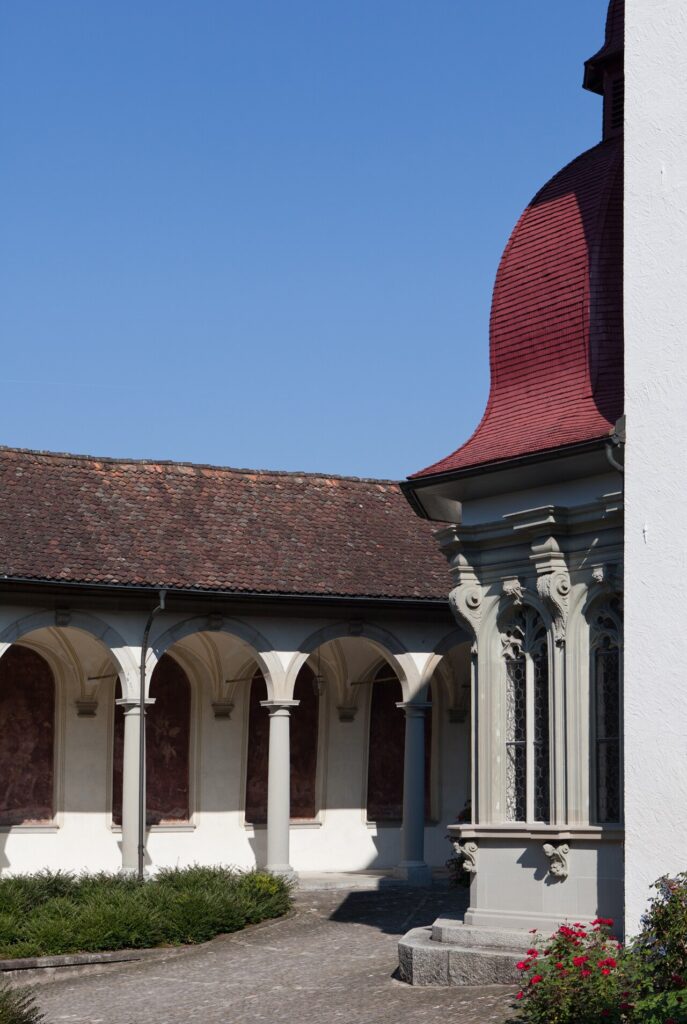
The sanctuary where this advocation is venerated is identified as the ancient conventual church and Marian shrine of Werthensteinin the canton of Lucerne (Switzerland). It's built. on a rock and has traditionally been characterized as a place of Marian penance and pilgrimage of central Switzerland, of particular importance in the XV-XVI centuries. It is not found in the consulted sources that the temple has the title of minor basilicaor that it has been officially erected as National sanctuary; in the absence of an accessible diocesan decree, only generic talk of Marian local/regional shrine. There is also no specific official name (e.g. "Sanktuarium María Werthenstein") in verifiable online ecclesial documents.
Sponsorship and coronation
The localized documentation does not explicitly state that Our Lady of Werthenstein is official employer of a specific municipality, or of the canton of Lucerne, or of a diocese; therefore, in strictly canonical terms, does not contain a patronage proclaimed or confirmed by decree. It is reasonable to assume - by analogy with other local sanctuaries - that the Virgin venerated in Werthenstein is a reference for the surrounding community and the region of central Switzerland, but such a statement is not based on an accessible pontifical or episcopal document.
On a canonical coronation (with a decree of the Holy See or officially recognized diocesan coronation), available sources do not mention any ceremony or decree with clearly identifiable date and authority. In the absence of explicit and verifiable documentation, it should be clearly stated: does not contain a documented canonical coronation for the image of Our Lady of Werthenstein.
Party and devotion
Not found in the sources consulted own party date universally recognized for Our Lady of Werthenstein (for example, inscribed in a diocesan liturgical calendar or in the usual repertory of Marian parties, which do collect in detail that of Einsiedeln). It is possible that the local community will celebrate the advocation in some general Marian solemnity (such as the Assumption, the Nativity of the Virgin or a feast of the Werthenstein church), but, in verifiable terms, does not contain a documented main party date.
As for the devotion and pilgrimages, tradition describes Werthenstein as a place of penance and pilgrimage of central Switzerland, developed on a rock in the 15th-16th centuries, which indicates a strong imprint of conversion, confession and fulfillment of penance, in continuity with other Swiss Marian shrines where the faithful come to receive the sacraments and present their pleas. There are no figures of inflow (number of pilgrims, large jubilee, etc.), nor are there any specific processions or popular rites described in the documents consulted (annual romanies, through the crucis to the sanctuary, etc.). In this way, it can only be said in general that it is a traditional Marian and Penitential pilgrimage center at regional level, with no quantitative data or detailed devotional descriptions.
Link to the Rosary
The sources consulted do not explicitly mention a relationship of the Werthenstein shrine with the prayer of the Rosary (for example, co-fradies of the Rosary canonically erected, specific promises linked to this prayer, or festivals of the Rosary highlighted in the own calendar). It should therefore be clearly stated: there is no specific documented link between this advocation and the Rosary.
However, in the Marian tradition of the Church, especially in the shrines of pilgrimage and penance, the Holy Rosary It is often one of the most common forms of prayer: it accompanies confession, Eucharistic worship and the ways of pilgrimage, helping to meditate on the mysteries of Christ's life with Mary. In a place like Werthenstein, marked by penance and conversion, the Rosary is theologically understood as a school of contemplation and subsidiary trustwho introduces the pilgrim into the mysteries of redemption and provides the heart for the grace received in the sacraments. Although there are no specific data, it can be said that the prayer of the Rosary is naturally integrated into Marian spirituality around Our Lady of Werthenstein, as is the case in most Marian shrines of the European level.
A flower for the Virgin
It offers a simple prayer to this advocation. Pray a Hail Mary for Switzerland and for world peace.
Pray Hail MaryIs the advocation of the Virgin Mary of your people missing?
Si no encuentras la advocación mariana de tu ciudad o pueblo, cuéntanosla: la investigaremos para ubicarla y darla a conocer en este mapa del amor de la Madre por el mundo.
Propose an apvocation →