
Marian devotion
Our Lady of West Bend
Marian title of West Bend (Iowa)
The sanctuary known as Grotto of the Redemption is located in the town of West Bend, in the state of Iowa, United States, and belongs to the Catholic Church of Latin Rite. The Marian invocation linked to this place is associated, in local tradition, with the intercession of the Virgin Mary in favour of the priest. Paul (Pablo) Dobbersteinwho would have made a vow to raise a grotto as an exvote of thanks for his healing of a grave disease, attributed to the Virgin. This explicit link with "Our Lady" is part of the devotional tradition, transmitted in popular biographies and divulgative material of the sanctuary, but not always detailed in the short synthesis available.
Main data
Origin and history
The sanctuary known as Grotto of the Redemption is located in the town of West Bend, in the state of Iowa, United States, and belongs to the Catholic Church of Latin Rite. The Marian invocation linked to this place is associated, in local tradition, with the intercession of the Virgin Mary in favour of the priest. Paul (Pablo) Dobbersteinwho would have made a vow to raise a grotto as an exvote of thanks for his healing of a grave disease, attributed to the Virgin. This explicit link with "Our Lady" is part of the devotional tradition, transmitted in popular biographies and divulgative material of the sanctuary, but not always detailed in the short synthesis available.
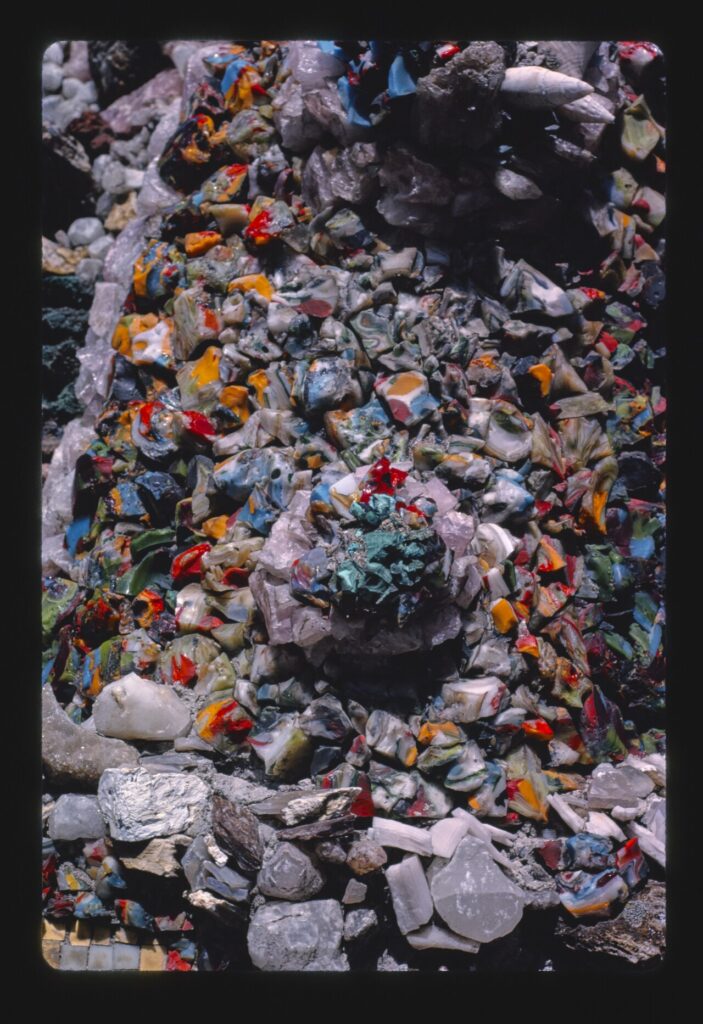
In the plan of the documented historyit is noted that Father Paul Dobberstein (a diocesan priest of German origin) began the construction of the grotto in West Bend in the early 20th century, working for decades on its realization with the help of collaborators and parishioners. The whole was conceived as a "sanctuary of redemption" focused on the mysteries of Christ's life and the economy of salvation, with special presence of scenes of the life of Jesus and of the Virgin, following the traditional Marian sensitivity of Central European Catholicism that Dobberstein led to the United States. Over the years, the Grotto of the Redemption became known as one of the world's largest religious groups, notable for the extension of the whole and the wealth of mineral materials and semi-precious stones used in its construction.
The image and the sanctuary
En el recinto del Grotto of the Redemption venerable pictures of the Virgin Mary integrated into the different scenes and outer and interior chapels; it does not contain, in the short documentation available, a single main image of "Our Lady of West Bend" with iconography and material clearly described and differentiated from the other Marian representations of the whole. The Marian statues in the Grotto often represent the Virgin in a prayer or with the Child Jesus, according to the traditional Western iconography; they are structurically integrated into niches and grotto covered with stones and minerals. No precise data on the author, specific material (stone, plaster, wood, etc.) or exact date of carving of the central image of the Virgin is available in the consulted sources, so that at this point no documented technical details.
The sanctuary is named after “Shrine of the Grotto of the Redemption” (Sanctuary of the Grotto of Redemption). It is composed of a wide set of groups and devotional structures built of precious, semi-precious and other minerals, organized in biblical scenes, especially of the life of Christ and of the Virgin. The grotto is linked to the local Catholic parish of West Bend and works as diocesan sanctuary of pilgrimage and popular devotion, although the sources consulted do not indicate that it has the title of minor basilica ni de National sanctuary officially recognized by the Episcopal Conference of the United States; in this sense, no consta the Grotto of the Redemption has received such designations.
Sponsorship and coronation
The Marian advocation linked to the Grotto of the Redemption has a character mainly local and diocesan, associated with the Catholic community of West Bend (Iowa) and the pilgrims who come to the sanctuary. No official proclamation of this title as a patron of the city, county or diocese has been found in the sources consulted; therefore, in respect of a canonically established patronage, no consta a specific formal declaration.
As for the canonical coronation of the Marian image linked to this advocation, the available sources do not mention any coronation approved by the Holy See or by pontifical delegation. It should therefore be strictly stated: does not contain a documented canonical coronation.
Party and devotion
The sources of rapid access on the Grotto of the Redemption describe the place as an important Centre for pilgrimage and religious tourismopened for much of the year and visited by many faithful and people interested in their spiritual, artistic and mineralogical value. However, there is no Fecha liturgica propia of "Our Lady of West Bend" as an officially established feast for the parish, the diocese or the whole country; the liturgical life of the place is articulated, above all, around the Marian and Lord festivals of the general Roman calendar (for example, the Immaculate Conception, the Assumption of Mary, etc.), applied to the context of the sanctuary. As a result, with regard to a specific date of the party holding this title, no consta a documented data.
En el plano devocional, el Grotto of the Redemption se caracteriza por: – La pilgrimage de fieles que acuden a rezar ante las distintas escenas, en especial las que representan a Cristo y a María. – La presencia de personal prayers, burning of candles and promises que los peregrinos dejan como expresión de gratitud o petición de gracias. – Una fuerte dimensión catechetic and contemplative, since the succession of grotto and scenes helps to meditate on the mysteries of faith, including the mysteries of the life of the Virgin Mary.
No recent official figures of influx (annual number of pilgrims) have been found in the sources consulted for immediate access; therefore, at this point no constan Numerical dates verifiable.
Link to the Rosary
The information available on the Grotto of the Redemption does not include a specific and documented partnership between this Marian invocation and a particular practice of Rosary (for example, the Rosary's cofradies formally erected, their own indulgences linked to the Rosary's prayer in the grotto, or a Rosary's own feast linked to the sanctuary). Therefore, as regards an explicit and exclusive legal or devotional link with the Rosary, no consta in the sources consulted.
However, by the very nature of the place - a Marian and Christological sanctuary, plagued by scenes of the life of Jesus and of the Virgin -, the prayer of the Rosary find a particularly suitable space in this Grotto. The joyful, painful, glorious and luminous mysteries allow us to travel, in prayer, the same episodes represented plastered in the grotto: the Incarnation, the public life of Christ, his Passion and Resurrection, as well as the presence of Mary in the history of salvation. Thus, even if there is no particular legal link, the Rosary is presented as a a privileged way of contemplating, together with Mary, the mystery of Redemption to whom the sanctuary is dedicated, integrating the personal Marian devotion of the pilgrims with the theological character of Grotto himself.
A flower for the Virgin
Offer a simple prayer to this Marian devotion. Pray a Hail Mary for the United States and for world peace.
Pray Hail MaryIs the advocation of the Virgin Mary of your people missing?
Si no encuentras la advocación mariana de tu ciudad o pueblo, cuéntanosla: la investigaremos para ubicarla y darla a conocer en este mapa del amor de la Madre por el mundo.
Propose an apvocation →