
Marian devotion
Our Lady of Zimbabwe; Marian advocation of the Zimbabwean Catholic community, with shrines and diocesan pilgrimage groups. Latin Catholic Rite.
Marian Advocation of Harare (Zimbabwe)
In the accessible documentation on the Catholic Church in Zimbabwe (ecclesial reports, missionary chronicles, Catholic press, general historical resources) no consta a Marian advocation of stable and officially recognized use with the title "Our Lady of Zimbabwe" linked to a specific sanctuary in Harare.
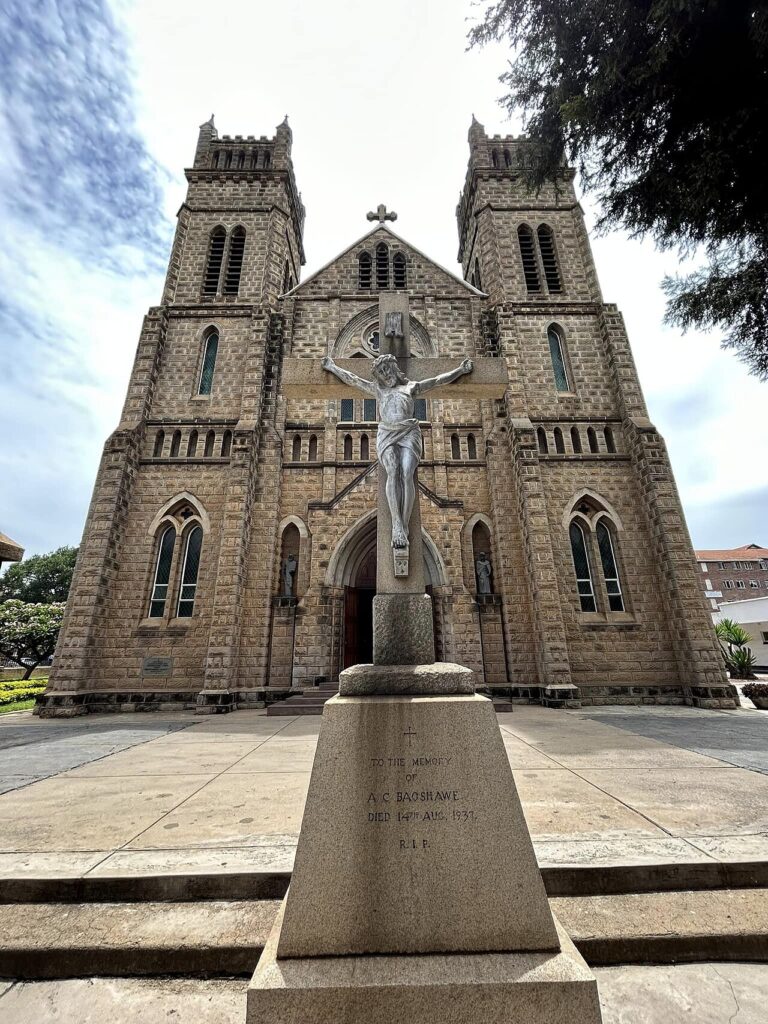
Main data
Origin and history
In the accessible documentation on the Catholic Church in Zimbabwe (ecclesial reports, missionary chronicles, Catholic press, general historical resources) no consta a Marian advocation of stable and officially recognized use with the title "Our Lady of Zimbabwe" linked to a specific sanctuary in Harare.
There are testimonies of a deep Marian devotion in the country, especially in communities, religious congregations and movements, which honor the Virgin with universal titles (such as Our Lady of the Rosary, Our Lady of the Consolata, etc.) or with better documented African advocacy in other countries, such as Our Lady of Kibeho (Rwanda), but no se registra in a documented way a history of apparitions, image finding or foundation of sanctuary under the name "Our Lady of Zimbabwe."
The expression "Queen and Mother of Zimbabwe" appears in contexts of Marian spirituality, for example in movements such as Schoenstatt, applied to images of the Virgin who are symbolically crowned by local communities as a gesture of consecration of the country to Mary; however, this does not necessarily amount to a canonically erected advocation with the status of a national sanctuary. It is rather an affective and devotional title, without a formal decree of erection of a national sanctuary under this title.
As a result, with regard to the concrete historical origin of "Our Lady of Zimbabwe" as a different and officially recognized advocation, no documented history (date of origin, founder, diocesan approval, etc.).
—
The image and the sanctuary
The sources consulted do not provide a precise or constant description of a official image of "Our Lady of Zimbabwe" (type of image, material, own iconography, cultural or ethnographic features of Zimbabwe). It is not clear that the Episcopal Conference of Zimbabwe and the archdiocese of Harare have promulgated a normative iconography or a unique model of representation under that title.
Similarly, no consta a national or diocesan Marian sanctuary in Harare with specific official recognition as "Our Lady of Zimbabwe Sanctuary." There are churches, convents and religious houses in Harare, as well as centers of spirituality and houses of formation (for example, the Claretian presence in Harare), where the Virgin is venerated under various titles, but the sources do not identify a temple clearly erected as a diocesan Marian sanctuary with that specific name.
In some Marian movements, such as Schoenstatt, acts of coronation of a Marian image are mentioned as "Queen and Mother of Zimbabwe" in the context of prayer and consecration of the country, but they are sanctuaries of the movement (shrines of Schoenstatt), with its characteristic iconography, and not of a national Marian sanctuary under the generic title "Our Lady of Zimbabwe." Therefore, for this advocation, no consta an official sanctuary defined by the local hierarchy with that specific name.
—
Sponsorship and coronation
It is not recorded in the accessible documentation that "Our Lady of Zimbabwe" has been proclaimed Official pattern of the nation, of the city of Harare or of a specific diocese by a canonical decree published. Marian devotion in Zimbabwe is expressed rather through universal titles and popular religiosity, without a clearly established Marian national patronage under this name.
As for a canonical coronationthere are no references to a decree of pontifical canonical coronation of an image entitled "Our Lady of Zimbabwe" (neither through the Holy See nor through a pontifical delegate). Devotional or symbolic coronations are documented, especially in the context of Schoenstatt, where a community crown the Virgin as "Queen and Mother of Zimbabwe" in a local celebration, but this belongs to the realm of spirituality and does not amount to a canonical coronation in the legal-ecclesial sense.
For this reason, the following must be stated: "does not contain a documented canonical coronation".
—
Party and devotion
No consta una litigation fiesta propia of "Our Lady of Zimbabwe" in the official calendar of the Church in Zimbabwe, beyond the Marian parties already present in the general Roman calendar (Solemnity of Holy Mary Mother of God, Immaculate Conception, Asunción, Our Lady of the Rosary, etc.).
It is possible for some Marian communities or movements to celebrate, at the internal level, days of consecration or anniversaries of symbolic coronations under the title "Queen and Mother of Zimbabwe," but these acts belong to the scope of the private or community devotion and are not recorded as a liturgical feast of precept or as a compulsory memory recognized in the diocesan calendars.
Marian devotion in Zimbabwe is generally characterized by intense participation in the Eucharist, community prayer, Eucharistic worship, contemplative life (as in the Harare Clarisas), and the trust of the faithful in the intercession of the Virgin Mary in the midst of a social reality marked by economic and political difficulties. These features can also frame and support any local devotion to Mary invoked as Mother and Queen of the country, even if there is no officially encoded advocation called "Our Lady of Zimbabwe."
—
Link to the Rosary
The sources consulted do not document a specific relationship between the advocation "Our Lady of Zimbabwe" and the prayer of the Rosary (for example, known as a "rosarian" advocation, that a cross of the Rosary has been expressly instituted under that title, or that there is a national sanctuary of the Rosary with this name).
However, in the Catholic tradition, especially in the context of testing and mission, the Rosary it becomes in fact one of the most common ways of expressing the trust of the people of God in the intercession of Mary. In Zimbabwe, where ecclesial life is largely supported by the persevering prayer of communities, the Rosary accompanies Marian devotion in parishes, movements and families, helping to contemplate the mysteries of Christ's life with the eyes of Mary and to offer, through its mediation, the needs of the country: peace, justice, reconciliation and the alleviation of poverty.
Therefore, although no conste a legal-liturgical or historical link of its own between the concrete title "Our Lady of Zimbabwe" and the Rosary can be generally affirmed that any devotion to the Virgin in this context is naturally enriched and sustained by the faithful prayer of the Holy Rosary, which unites the Zimbabwean faithful with the great Marian tradition of the universal Church.
A flower for the Virgin
It offers a simple prayer to this advocation. Pray a Hail Mary for Zimbabwe and for world peace.
Pray Hail MaryIs the advocation of the Virgin Mary of your people missing?
Si no encuentras la advocación mariana de tu ciudad o pueblo, cuéntanosla: la investigaremos para ubicarla y darla a conocer en este mapa del amor de la Madre por el mundo.
Propose an apvocation →