
Marian devotion
Our Lady of the Pillar
Marian title of Malabo (Equatorial Guinea)
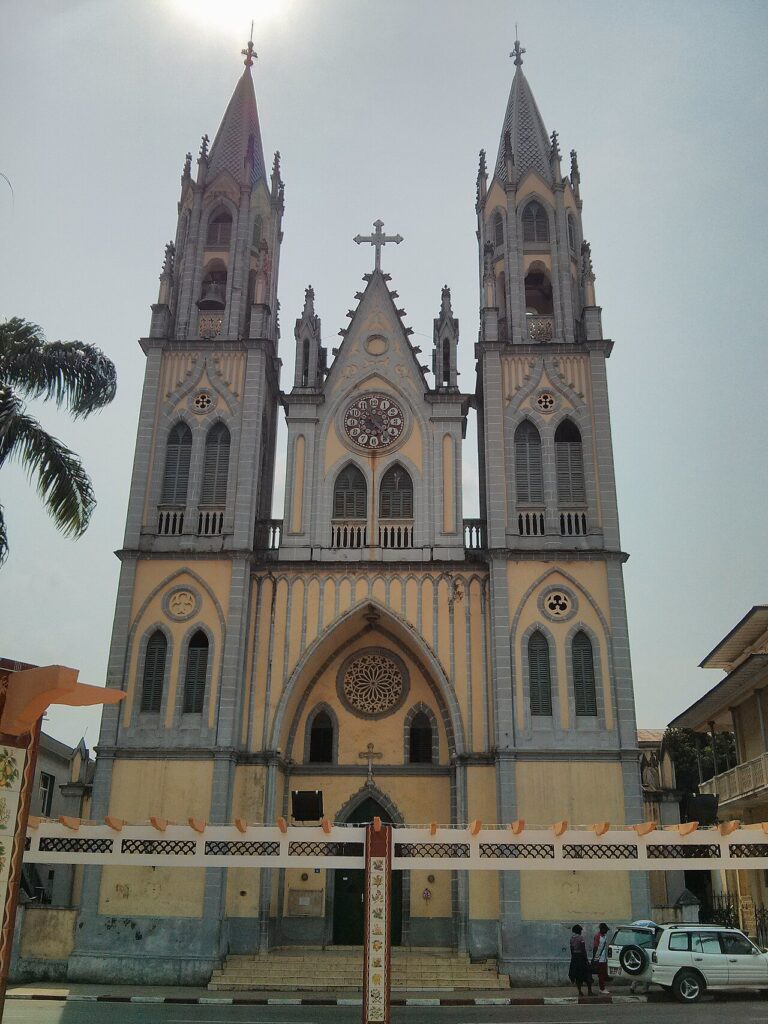
In Equatorial Guinea there is a clear presence of the of Our Lady of the Pilar, directly linked to the evangelization of Spanish origin and the use of Spanish as an official language in the only Spanish-speaking African nation. This devotion comes from the well-known advocation of Our Lady of the Pilar of Zaragoza, introduced by Spanish missionaries and pastoral agents during the colonial period and later consolidated in the ecclesial life of the country. The cathedral of Santa Isabel de Malabo, however, is dedicated to the Immaculate Conceptionnot to the Pilar, so the presence of the Pilar in the capital is mainly given through parishes, schools and ecclesial works, and not as the headline of the cathedral.
Main data
Origin and history
In Equatorial Guinea there is a clear presence of the of Our Lady of the Pilar, directly linked to the evangelization of Spanish origin and the use of Spanish as an official language in the only Spanish-speaking African nation. This devotion comes from the well-known advocation of Our Lady of the Pilar of Zaragoza, introduced by Spanish missionaries and pastoral agents during the colonial period and later consolidated in the ecclesial life of the country. The cathedral of Santa Isabel de Malabo, however, is dedicated to the Immaculate Conceptionnot to the Pilar, so the presence of the Pilar in the capital is mainly given through parishes, schools and ecclesial works, and not as the headline of the cathedral.
They have not been found in accessible sources, specific documented data on the arrival of a concrete image of Our Lady of the Pilar to Malabo, or on the erection of an official sanctuary under this advocation in the city. The documentation consulted does not contain an exact date of introduction of devotion or specific episcopal decrees concerning a diocesan shrine of the Pilar in Malabo. The presence of this advocation is part of the general influence of the Spanish Marian devotions (such as the Immaculate, Pilar, Valme, etc.) in the Archdiocese of Malabo.
In other areas of the country, such as Batthe apvocation of the Pilar is explicitly attested: the cathedral of that city is entitled "Cathedral of Santiago and Our Lady of the Pilar", which confirms the official insertion of this vocation into the life of the Church in Equatorial Guinea. This data shows the general context in which Malabo also receives and knows devotion to the Pilar, even though the capital has other Marian titles of its own (Immaculate in the cathedral, Virgin of Bisila as patron of Bioko, etc.).
The image and the sanctuary
It does not contain a precise and documented description of a headline image of Our Lady of the Pilar specific to Malabo (type of size, material, style, author or date). The available data on the Pilar images in Equatorial Guinea refer in general to the usual iconography of the Virgin of the Pilar (Marian image on column or pillar), but do not technically identify a specific image of Malabo or its formal characteristics. Therefore, there is no official description of an image of its own exclusively linked to the capital.
As regards sanctuary or temple, the main church of Malabo is the catedral de Santa Isabel, dedicada a la Immaculate Conception, seat of the Archdiocese of Malabo. It is not known that this cathedral has as its headline Our Lady of the Pilar, nor that there is an officially recognized temple in Malabo. diocesan or national shrine of Our Lady of the Pilar. The references to ecclesial works with this advocation within the country (such as schools or temples in other cities) confirm devotion, but do not allow to identify a specific shrine of the Pilar in Malabo with the rank of minor basilica or national sanctuary.
Therefore, in the absence of specific documentation, it can be said that devotion to the Pilar is present in the Church of Equatorial Guinea and also known in Malabo, but no consta an officially recognized Marian sanctuary under this advocation in the capital, not a canonically defined image of Our Lady of the Pilar of Malabo.
Sponsorship and coronation
No consta que Our Lady of the Pillar has been officially proclaimed patron of the city of Malabonor of the Homonymous Archdiocese, nor as a national patron of Equatorial Guinea. Other Marian patterns are clearly documented, such as the Virgin of Bisila, patron of the island of Bioko, to whose jurisdiction Malabo belongs, which helps to understand the place that each advocation occupies in the devotional life of the country. At the national level, there are also no official statements in the consulted sources that attribute to the Virgin of Pilar a patronage about the State or the capital.
On a canonical coronation of Our Lady of the Pilar in Malabo (i.e., a liturgical act authorized by the Holy See or by the diocesan bishop on behalf of the Pope), no reference has been found in specialized ecclesial, historical or journalistic sources. It is therefore not clear that an image of the Pilar in Malabo has received recognized and documented canonical coronation. It should therefore be stated that: does not contain a documented canonical coronation of Our Lady of the Pilar in Malabo.
Party and devotion
La liturgical feast of Our Lady of the Pilar in the calendar of the Church in Spanish is celebrated the October 12, a memory that links the Virgin of the Pilar to the history of evangelization and to the Hispanic world. In Equatorial Guinea, a country of Catholic tradition and Spanish language, this date is known and celebrated in different places where there is the apvocation of the Pilar, especially where the Virgin of the Pilar is the holder of parish, cathedral or institution. However, no specific data have been found on the Pilar's own celebrations in Malabo, including inflow figures, own processions or particular rites.
In the whole of the ecclesial life of the country, Marian devotion is strongly manifested in local advocacy (such as the Virgin of Bisila) and in other devotions brought by the Spanish mission. It is reasonable to assume, in accordance with the general praxis of the Church, that where there is community, school or temple under the title of the Pilar, solemn Mass is held on 12 October, novenas, processions or Marian meetings, but in the specific case of Malabo no constan in the sources consulted detailed descriptions of such practices, nor documented figures of pilgrimages or romaneries specifically linked to the Pilar.
Link to the Rosary
No one found a specific documented tradition which uniquely relates the advocation of Our Lady of the Pilar in Malabo to the prayer of Holy Rosary (for example, the Rosary's cofradies explicitly linked to the Pilar of Malabo, or the Pilar's shrines which are the main centres of the Rosary's dissemination in the capital). They do not include in the available sources statutes, decrees or chronicles that describe this relationship in a particular way.
However, in Catholic spirituality, the apvocation of the Pilar is fully placed in the great Marian tradition of the Church, in which the Rosary occupies a privileged place. Where the Virgin is venerated - also in Equatorial Guinea - the Rosary is presented as a simple and profound way to contemplate with Mary the mysteries of Christ, to thank the faith received by evangelization and to ask for Mary's maternal protection over the Church and the people. In this way, although it does not contain a unique and exclusive link between "Our Lady of the Pilar of Malabo" and the Rosary, it can be said in a general way that the Prayer of the Rosary accompanies and feeds Marian devotion in the country, including devotion to the Pilar where it is present.
A flower for the Virgin
It offers a simple prayer to this advocation. Pray a Hail Mary for Equatorial Guinea and for world peace.
Pray Hail MaryIs the advocation of the Virgin Mary of your people missing?
Si no encuentras la advocación mariana de tu ciudad o pueblo, cuéntanosla: la investigaremos para ubicarla y darla a conocer en este mapa del amor de la Madre por el mundo.
Propose an apvocation →