Marian devotion
Our Lady of the Black Rosary
Marian devotion of Salvador (Bay)
Documented history
Main data
Origin and history
Documented history
The advocation of Our Lady of the Rosary of the Black was consolidated within the framework of the hermandades and co-fradies of Black men - slaves and liberals - in the city of Salvador, capital of the state of Bahia, Brazil, during the 18th century. The Church of Our Lady of the Rosary of the Priets (Igreja de Nossa Senhora do Rosário dos Pretos) is an 18th-century Catholic temple, belonging to the archdiocese of São Salvador da Bahia, erected by the brotherhood of the blacks in the Pelourinho district.
The construction of the church began in 1704 and lasted for about a hundred years, to complete the factory and its characteristic facade, concluded 1780 and attributed to the master of works Caetano José da Costa. The temple was raised and sustained by hermandades of enslaved and free blacks, who found in this church a proper space of veneration and organization within a society marked by slavery. In 1938 the building was protected as a historical good by the Instituto do Patrimônio Histórico e Artístico Nacional (IPHAN) and is now part of the historic center of Salvador, recognized as a World Heritage Site by UNESCO.
Tradition and historical memory
The local devotional memory stresses that the slaves, excluded from the white churches, built this temple with their own hands, working in their own free hours and providing their modest resources to honor the Virgin of the Rosary, considered to be protective and consolation in the midst of oppression. This dimension of "Black Church" is reinforced by the existence of an old slave cemetery at the bottom of the church, a reference that the local tradition has filled with strong symbolism over Christian suffering, resistance and hope.
It does not contain, in the sources consulted, a specific Marian apparition or foundational miracle associated with the origin of the advocation in this sanctuary; devotion seems to arise rather from the encounter between the traditional title of the Rosary and the religious experience of enslaved communities of African descent.
—
The image and the sanctuary
The image
In the church, various colonial images are venerated, including a image of Our Lady of the Rosary of the 17th centuryfrom the ancient cathedral of Bahia, which occupies a prominent place in the altars of the temple. The sources consulted do not require the material with certainty; it is a colonial size, most likely in polychrome wood, according to the usual use of the time, but no consta explicitly the type of material or a detailed iconographic description (features, skin color, specific attributes). As a result, it cannot be strictly affirmed if it is explicitly represented as a "black" Virgin or as an image of more European canons adopted by the Afro-Brazilian fellowship.
The general iconography of the interior also includes images of Santo Antônio de Categeró, San Benito, Santa Bárbara y un Christ crucified in ivory, which shows a devotional set especially significant for black and popular communities.
The sanctuary / temple
The temple is officially called Iglesia de Nuestra Señora del Rosario de los Prietos (Church of the Third Order of Our Lady of the Rosary of the Blacks) and belongs to the Archdiocesis of São Salvador da Bahia. It is not known that it has been elevated to the rank of a minor basilica or declared a national sanctuary; the sources present it as a parish / archdiocesan church of great historical and devotional relevance.
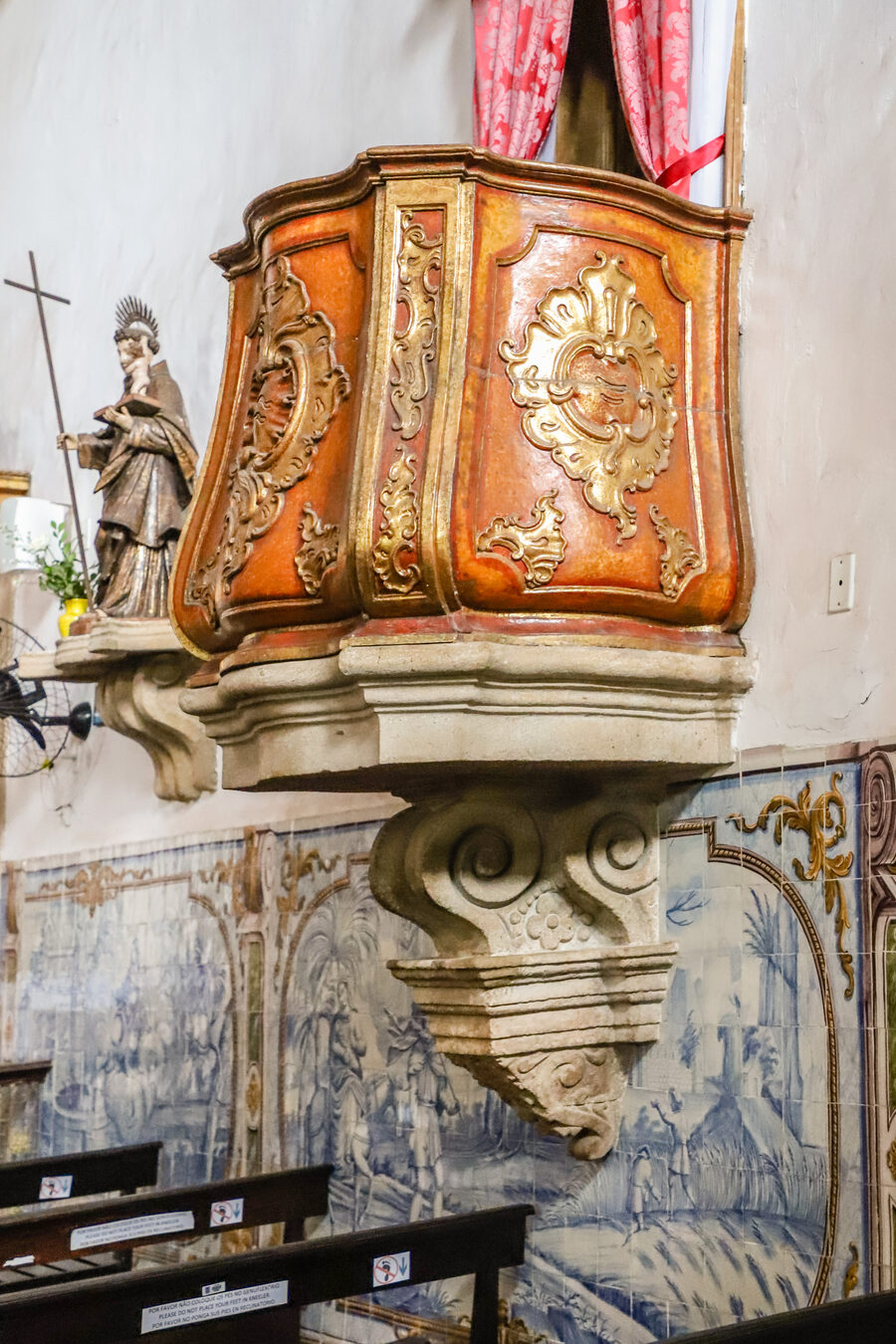
Architectural, it is a large-scale building, started in 1704, with a two-story façade crowned by fronton with voltages and flanked by two bell-bells with bulbous shrapnel covered with tiles. The ground floor has five doors and, above them, five windows with delicate design. In the interior are:
– Azulejos portugueses de c. 1790 con escenas relativas a la devoción al Rosario. – Altares de estilo neoclassical, carved in the decade of 1870 por João Simões F. de Souza. – Pintura del techo de la nave realizada en 1870 by José Pinto Lima dos Reis.
In the back there is an old Slave cemetery, material testimony of the history of suffering and faith of the black community linked to this temple. The church continues to be a spiritual and cultural reference in the Pelourinho, with a liturgy that incorporates music inspired by the Candomblé terreiros, reflecting the dialogue between Catholicism and Afro-Brazilian religiosity.
—
Sponsorship and coronation
Patronage
La advocación de Our Lady of the Rosary of Blacks is closely linked to the and hermandades of blacks in Salvador and, by extension, has become a symbol of the Afro-Brazilian faith and identity in the city. The historical sources present it as a spiritual patron of the hermandades of black men (slaves and liberts) who built and held the church, but no consta a formal decree declaring the canonical patron of the city or of the archdiocese in a strict legal sense.
In the context of popular religiosity, the church is a great reference of the Afro-Brazilian faith and, in fact, functions de facto as a sanctuary for black communities, especially around the feast of the Rosary and other celebrations linked to saints of special devotion in the African world (such as Santa Barbara).
Canonical coronation
In the sources consulted (historical, heritage and religious dissemination) does not contain a documented canonical coronation of the image of Our Lady of the Rosary venerated in this church. There is no secure data on the year, pontiff or episcopal delegate who has presided over a possible coronation, so it is not possible to attribute a title of "crowned Queen" to him in the canonical sense.
—
Party and devotion
The advocation is part of the the Rosary in Octoberin line with the universal memory of Our Lady of the Rosary (October 7) and with the solemn celebrations organized by the black hermandades. However, the specific sources on the Pelourinho church do not offer a unique, explicit and official date for the main feast of this sanctuary; therefore, it can only be said that devotion is concentrated around the OctoberNo more precision.
The church is a reference point in several celebrations that articulate Catholic religiosity and Afro-Brazilian culture. It highlights, for example, its role in the Santa Barbara (associated in religious syncretism with Iansã / Oiá), in which the church becomes the center of liturgical and popular celebrations. The liturgy incorporates inspired music in candomblé terreiros, which gives the celebrations a very representative character of the Afro-Brazilian faith of Salvador.
No reliable quantitative data on the number of pilgrims or annual inflow have been found. What is documented is that the church, located in the heart of the Pelourinho, receives both local faithful and visitors and tourists
A flower for the Virgin
Offer a simple prayer to this Marian devotion. Pray a Hail Mary for Brazil and for all of America.
Pray Hail MaryIs the advocation of the Virgin Mary of your people missing?
Si no encuentras la advocación mariana de tu ciudad o pueblo, cuéntanosla: la investigaremos para ubicarla y darla a conocer en este mapa del amor de la Madre por el mundo.
Propose an apvocation →