Marian devotion
Our Lady of the Rosary and San Benito of Palermo, patron of the city of Paysandu
Marian vocation of Paysandu (Paysandu)
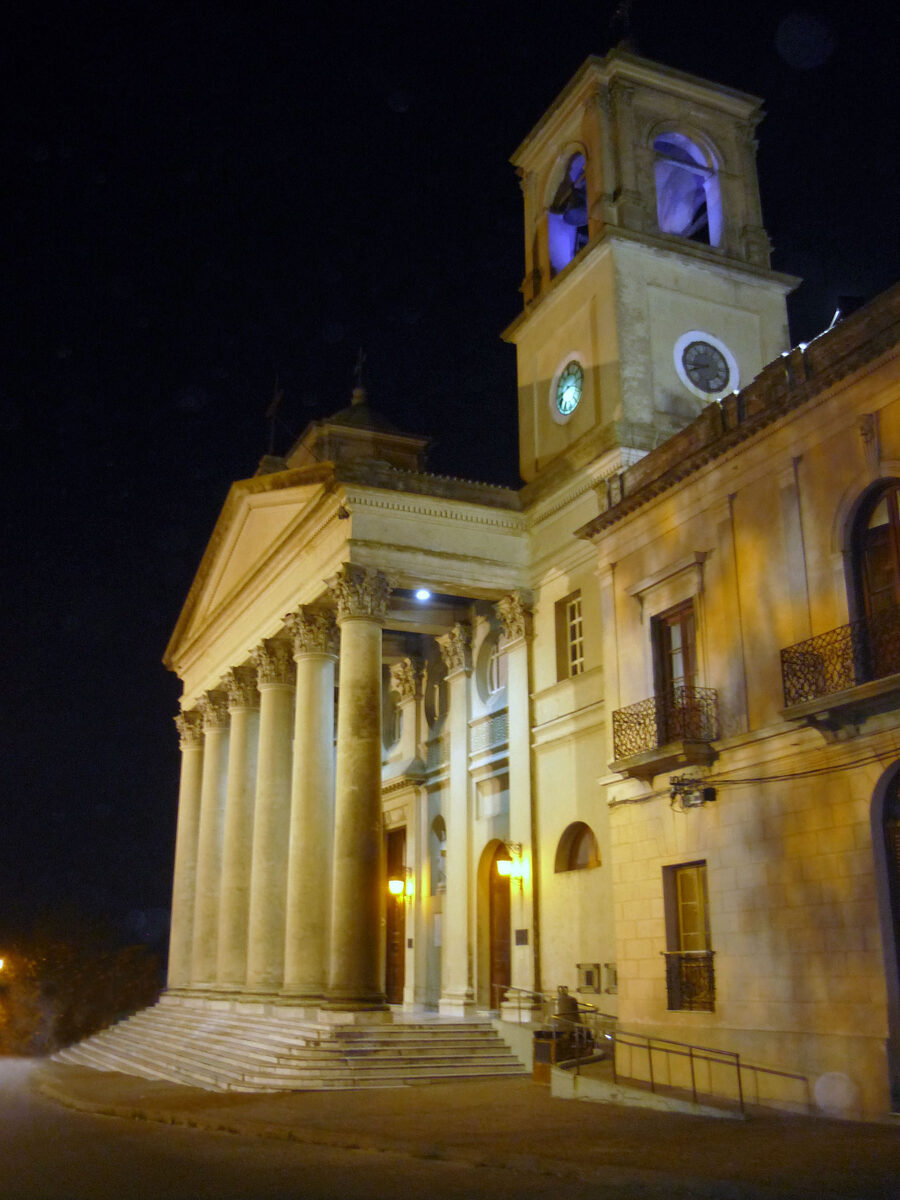
In the city of Paysandu, Department of Paysandu, Uruguay, the Basilica of Our Lady of the Rosary and Saint Benedict of Palermo, one of the most important Catholic temples in the region and linked to the memory of the call «heroica Paysandú» by the war and resistance of the 19th century (sites and fighting of the Triple Alliance War and associated conflicts), in whose history the presence of the Virgin of the Rosary acquired strong symbolic religious and civic burden.
Main data
Origin and history
In the city of Paysandu, Department of Paysandu, Uruguay, the Basilica of Our Lady of the Rosary and Saint Benedict of Palermo, one of the most important Catholic temples in the region and linked to the memory of the call «heroica Paysandú» by the war and resistance of the 19th century (sites and fighting of the Triple Alliance War and associated conflicts), in whose history the presence of the Virgin of the Rosary acquired strong symbolic religious and civic burden.
From the point of view documented history, devotion is part of the broad tradition of Our Lady of the Rosarywhose worship was driven above all by the Order of Preachers (Dominicans) and consolidated in the universal Church after the battle of Lepanto (1571), when the feast of Our Lady of the Rosary was spread as a thanksgiving for the victory attributed to the intercession of Mary through the prayer of the Rosary. This Marian advocation, present in "various countries," is characterized by highlighting the prayer of the Rosary as a privileged way of contemplating the mysteries of Christ with Mary.
From the perspective of the local traditionthe image of the Virgin of the Rosary venerated in Paysandu is linked with the protection of the city in times of war and with the identity of the «heroica Paysandú», so the image is considered a sign of spiritual amparo in the midst of historical tests. However, no precise and verifiable online data on the exact date of the introduction of the image, responsible for its arrival, or diocesan documents detailing its entronization have been found; therefore, does not accurately record the foundational chronology of this devotion in Paysandu.
Important: No reliable sources have been found to prove the existence of a city called Paysandu in Colombia with a Marian sanctuary under this vocation; does not record the documented existence of the advocation in Paysandu (Colombia). The verified reference is Paysandu, Uruguay.
—
The image and the sanctuary
♪ ♪ The image
The available documentation does not find a sufficiently precise technical description of the concrete image de Our Lady of the Rosary venerated in the Basilica of Paysandu (exact type of sculpture, material, height, specific iconographic attributes). Accordingly:
– No consta with safety material (madera, yeso, mármol, etc.). – No consta la size date ni el autor. – No consta an official and detailed description of your iconography.
It can be affirmed by analogy with the usual iconography of the Our Lady of the Rosarywhich is most likely to be an image of Mary with the Child Jesus, bearing the Rosary as a central attribute, but this is just a inferencia general from the iconographic tradition of advocation and not a documented data of this particular piece. Therefore, in rigour, does not contain an official iconographic description of this specific image.
### The sanctuary / temple
The temple where the Virgin is venerated is officially known as Basilica of Our Lady of the Rosary and Saint Benedict of Palermo, ubicado en Paysandu, Department of Paysandu, Uruguay. It is a church of great importance in the city, which has received the title of minor basilicaa dignity that the Holy See gives to certain temples for their historical, artistic and pastoral importance, but the sources consulted online do not require the date and the pontifical document by which he was granted that rank, so that data no constan with certainty.
Architectural, it is known that the temple is considered one of the main religious buildings of Paysandu and is integrated into the central urban landscape of the city, but accessible sources do not provide a detailed and verifiable description of its style (neoclassical, eclectic, etc.), its plant or its dimensions; therefore, no consta technical information required to describe it rigorously.
No reference has been found to the temple being declared National sanctuary ni diocesan sanctuary in documents accessible online; in the absence of official data, it should be stated that there is no specific recognition as a national or diocesan sanctuary beyond your condition of minor basilica.
Geographical warning: The existence of a temple with the same rank has not been verified Paysandú (Colombia); all localized data refer to Paysandú, Uruguay.
—
Sponsorship and coronation
According to the information available, the Virgin of the Rosary venerated in the Basilica of Our Lady of the Rosary and Saint Benedict of Palermo is traditionally held as Patron of the city of Paysandu (Uruguay)in close relation to the historical memory of the "heroic Paysandu." However, no official online documents (e.g. episcopal or civil decrees) have been found to clarify the exact date and the way of proclaiming patronage; therefore, the mention of patronage is based on the local tradition and encyclopedic reference, not in a decree transcript.
As for a possible canonical coronation of the image of Our Lady of the Rosary in Paysandu:
– No se ha encontrado en las fuentes consultadas ninguna referencia clara y verificable a una canonical coronation con decreto de la Santa Sede o de la autoridad eclesiástica competente. – No se citan Year, Pontiff ni Deputy in relation to a coronation ceremony of this image.
Therefore, following the requested criterion:
> No documented canonical coronation for the image of Our Lady of the Rosary venerated in the Basilica of Our Lady of the Rosary and Saint Benedict of Palermo of Paysandu.
There is no record, either, of a recognized patronage for a city called Paysandu in Colombia; that location no consta in reliable sources.
—
Party and devotion
La main party de la advocación de Our Lady of the Rosary in the universal Church the 7 October, date historically linked to the battle of Lepanto and thanks for the intercession of the Virgin through the prayer of the Rosary. The request indicates this same date as the feast of the advocation in Paysandu, and this is consistent with the general liturgical calendar of the Church.
In the pastoral life of the parishes and basilicas dedicated to the Virgin of the Rosary, a novena previa to the party (from 28 September to 6 October) and, on the same 7 October, is used to celebrating Formal Mass, processions with the image and acts of consecration or renewal of promises to the Virgin. However, for the Paysandu Basilica, the accessible sources online do not accurately detail the own program of celebrations (schedules, processions, number of attendees, cos
A flower for the Virgin
Offer a simple prayer to this Marian devotion. Pray a Hail Mary for Uruguay and for all of America.
Pray Hail MaryIs the advocation of the Virgin Mary of your people missing?
Si no encuentras la advocación mariana de tu ciudad o pueblo, cuéntanosla: la investigaremos para ubicarla y darla a conocer en este mapa del amor de la Madre por el mundo.
Propose an apvocation →