Marian devotion
Our Sovereign Lady
Marian Invocation of Kolomenkoye (Moscow) (Russia)
La iconography of Our Sovereign Lady (Derzhávnaya) belongs to the tradition of the Russian Orthodox Church and is linked to a very concrete historical event: the finding of a Marian icon in Kolómenskoye (then still located outside Moscow) the 2 / 15 March 1917, consistent with the Abdication of the Tsar Nicholas II. This chronological coincidence is documented in Russian historiography and in the Orthodox ecclesial memory, which sees in it a spiritual sign: when the monarch leaves power, the Mother of God manifests herself iconographically as Queen and Sovereign, called to protect the Russian people.
Main data
Origin and history
La iconography of Our Sovereign Lady (Derzhávnaya) belongs to the tradition of the Russian Orthodox Church and is linked to a very concrete historical event: the finding of a Marian icon in Kolómenskoye (then still located outside Moscow) the 2 / 15 March 1917, consistent with the Abdication of the Tsar Nicholas II. This chronological coincidence is documented in Russian historiography and in the Orthodox ecclesial memory, which sees in it a spiritual sign: when the monarch leaves power, the Mother of God manifests herself iconographically as Queen and Sovereign, called to protect the Russian people.
According to the traditionthe icon would have been revealed in Kolomenkoye after a dream or inner inspiration received by a pious woman, who was led to find him and recognize in him a response from heaven to the convulsed time of the revolution. This traditional line interprets finding as a prophetic message: Our Lady takes special care of Russia at the moment when imperial power disappears. These elements (dream, personal inspiration, detailed prophetic character) belong to the field of popular piety and are not included in critical civil or ecclesiastical documents; therefore, they are considered tradition and pious legendnot strictly demonstrable history.
As for the documented history, está firmemente atestiguado que: – La advocación Derzhavnaya Bogoroditsa (Our Sovereign Lady) is born in 1917 in relation to a Marian icon found or recognized in Colomenskoye, en la periferia de Moscú, en el contexto del colapso del Imperio ruso. – El icono muestra a la Virgen en actitud regia, y pronto fue objeto de veneración y difusión dentro del mundo ortodoxo ruso, especialmente entre fieles que veían en ella un signo de protección sobre la nación en tiempos de persecución.
The detailed details of the finding (seer name, exact circumstances, first processions, etc.) vary according to the sources and do not always match; therefore, beyond the date and place, is not fully certain the whole transmissible story as "critical history" and must be presented with caution as local tradition.
—
The image and the sanctuary
La iconografía de Our Sovereign Lady es la de un Orthodox icon Marian, regio type. The Virgin appears sitting on the throne, dressed in royal cloak, and bearing the classic attributes of sovereignty: cetro in one hand and orbe on the other, signs of royalty and dominion, no longer of a temporary power, but interpreted as a spiritual key as a symbol of his maternal dominion over the Christian people and, in particular, over Russia. The Child Jesus does not occupy the central place in this composition, but the dimension of Queen and Sovereign of the Theotokos. It does not contain documentary safety, in accessible sources, the original material (wood, exact measures, concrete pictorial techniques), beyond the generic data of being a icon painted on rigid supportthe Russian tradition; therefore, on these specific technical aspects no detailed information.
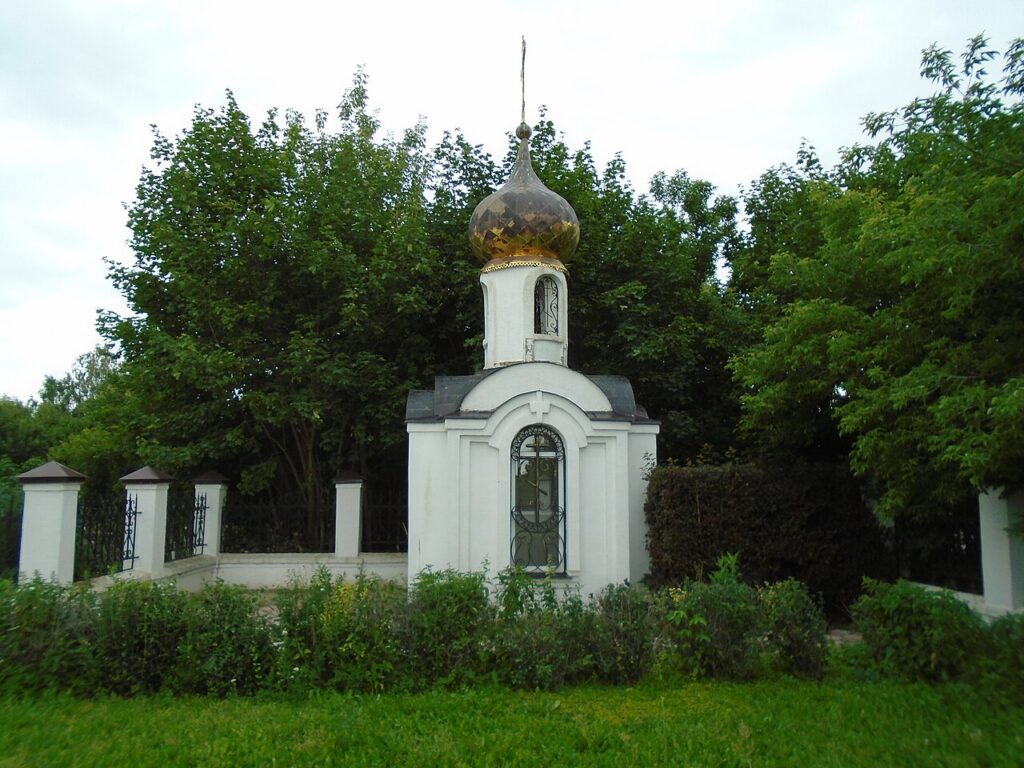
As regards place of worship, the icon is linked to Colomenskoye, now integrated in Moscow. Kolomenkoye was an ancient suburban residence of the great princes and zars of Russialocated on the right bank of the Moscow River. It is currently a National museum and historical-architectural reservewith churches and ancient buildings, among which the Church of the Ascension of Kolomenkoye, declared World Heritage by UNESCO in 1994. Within this monumental ensemble are various Orthodox temples where many icons are preserved and venerated.
The sources consulted describe Kolomenkoye as imperial estate and museum-reservewith several sanctuaries and historical churches, but do not explicitly and documented identify a temple with specific rank (minor basilica, national or diocesan sanctuary) officially dedicated under the title "Our Sovereign Lady". Therefore, at the level of canonical classification according to Catholic use, no consta that the place of veneration of this icon has received a title as a minor basilica or national Marian sanctuary. It is, rather, a place of worship inserted in the historical-religious set of Kolómenskoye.
—
Sponsorship and coronation
La advocación de Our Sovereign Lady (Derzhávnaya) in the Orthodox field, the spiritual protection of Russia as a whole. From its origin, it was interpreted as a sign that the Mother of God assumed a special role of patron and protector of the Russian nationin a context of political change and religious persecution. However, in the available sources there is no formal declaration, in legal terms, of civil or ecclesiastical patronage (for example, official proclamation as patron of the State or of a specific diocese in the Roman-Catholic way); therefore, does not contain a specific legal-canonical patronage (city, municipality, diocese, nation) in a strict sense, although devotion considers it the mother and protector of the Russian people.
On a canonical coronation in the Catholic sense (i.e. an act approved by the Holy See or pontifical delegate, with liturgical crowns imposed on the icon), does not contain a documented canonical coronation. The Orthodox tradition knows its own forms of coronation and ornamentation of icons (metal crowns, rich curls and coatings), but these actions do not exactly correspond to the legal figure of "canonical coronation" as understood in the Catholic Church.
—
Party and devotion
La advocación de Our Sovereign Lady is celebrated in the Russian Orthodox Church, in a regular way, the 15 March (Gregorian calendar), a date that recalls the discovery-manifestation of the icon in Kolómenskoye and, in parallel, the abdication of Nicholas II. Other calendars, in Julian tradition, place the commemoration of the 2 March (old style). The exact details of the official institution of this liturgical memory may vary according to the orthodox jurisdiction, but the date has strong devotional arraigo.
As regards pilgrimage and devotional practicesThe veneration of Our Sovereign Lady was inserted, especially from the 20th century, into the great Marian resurgence of Russian orthodoxy after decades of persecution. Faithful come to Colomonskaye (Moscu) to venerate their icons, participate in the liturgy and processions, and ask the intercession of the Mother of God for the Church, the homeland and the families. However, the sources consulted do not provide flow figures or accurately described unique popular traditions (mass specific processions, characteristic promises, etc.) linked exclusively to this advocation; therefore, beyond the general data of its veneration among the Russian Orthodox faithful, no quantitative data or specific details of pilgrimages which can be strictly cited.
—
Link to the Rosary
Al tratarse de un Orthodox icon, la devoción a Our Sovereign Lady has developed within the liturgical and spiritual framework of the Russian Orthodox Church, where the most characteristic Marian prayer is the veneration of the iconos, the prayer of hymns as the Acathistosand the prayers to the Theotokos, more than the Rosary in Latin format. Therefore, there is no specific historical or devotional relationship between this advocacy
A flower for the Virgin
Offer a simple prayer to this Marian devotion. Pray a Hail Mary for Russia and for world peace.
Pray Hail MaryIs the advocation of the Virgin Mary of your people missing?
Si no encuentras la advocación mariana de tu ciudad o pueblo, cuéntanosla: la investigaremos para ubicarla y darla a conocer en este mapa del amor de la Madre por el mundo.
Propose an apvocation →