Anecdotes about the Virgin Mary
The Star of the Highlands at the mouth of the mine
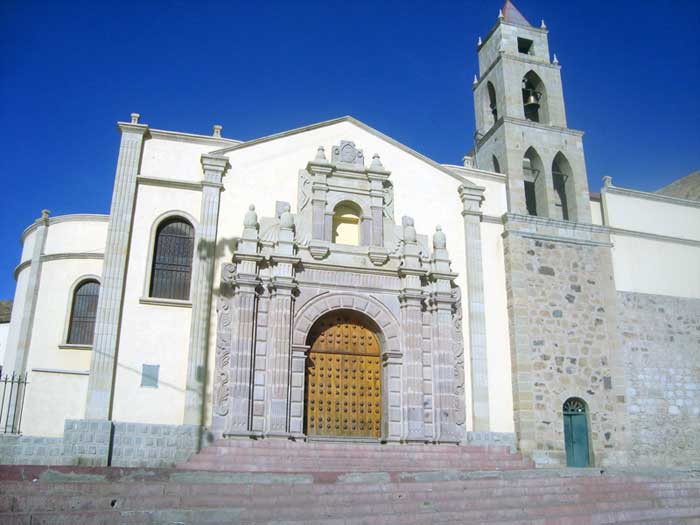
In the city of Oruro, on the Bolivian altiplano, there is a sanctuary nestled at the foot of Pie de Gallo hill, right at the mouth of a mine shaft. There, the Virgin of the Mineshaft, also known as the "Star of the Altiplano," patron saint of miners, is venerated. Before the Marian devotion, a hermitage dedicated to Saint Michael the Archangel stood on the site, linked to colonial mining, and was already in place at the time of the founding of the Villa de Oruro on November 1, 1606. According to studies and historians, the name "Our Lady of the Mineshaft" became established around 1740.
The orureña tradition tells a very intimate story: that of the bandit "Chiruchiru" (or "Girl Girl"), which assaulted travelers but distributed part of the stolen among the poor. One night he was wounded with death within a minion; at dawn he was found dead, and on the rock wall a painting of the Virgin had miraculously appeared, which would have accompanied his agony. From that finding would be born the miner cult, with Mary opposed to the sinister figure of the "Uncle of the mine."
It must be said with affection and truth: the story of Chiruchiru is a widely circulated oral tradition and pious legend, but it is not recorded in 18th-century documents; historiography records it as the founding myth of the sanctuary. Studies themselves acknowledge that "it is impossible to pinpoint when the cult of the Virgin of Socavón began, because there is no documentation on the matter." What is documented is the hermitage of San Miguel from the 17th century, its transition to a Marian sanctuary around 1740, and that in 1781, in the midst of the revolution, she was invoked as the protector of the independence fighters, being chosen as the patron saint of the city.
The devotion has been solemnly recognized: by law of February 12, 1994, the Virgin of Socavón was declared Patroness of Bolivian National Folklore, and on May 18, 2001, UNESCO declared the Carnival of Oruro, linked to her, a Masterpiece of the Oral and Intangible Heritage of Humanity. This Carnival is, in reality, a danced offering: thousands of dancers enter and prostrate themselves before the image, many as devotees offering years of dance in exchange for favors. The sanctuary houses numerous votive offerings from miners saved from cave-ins and explosions. The Rosary is part of the novenas and vigils preceding the Carnival, and in many religious images, the Virgin appears holding it; however, there is no canonical title or Rosary confraternity that formally links her to this devotion.
A flower for the Virgin
Give thanks to the Virgin Mary for her love. Pray a Hail Mary remembering this story.
Pray Hail MaryIs the advocation of the Virgin Mary of your people missing?
Si no encuentras la advocación mariana de tu ciudad o pueblo, cuéntanosla: la investigaremos para ubicarla y darla a conocer en este mapa del amor de la Madre por el mundo.
Propose an apvocation →