
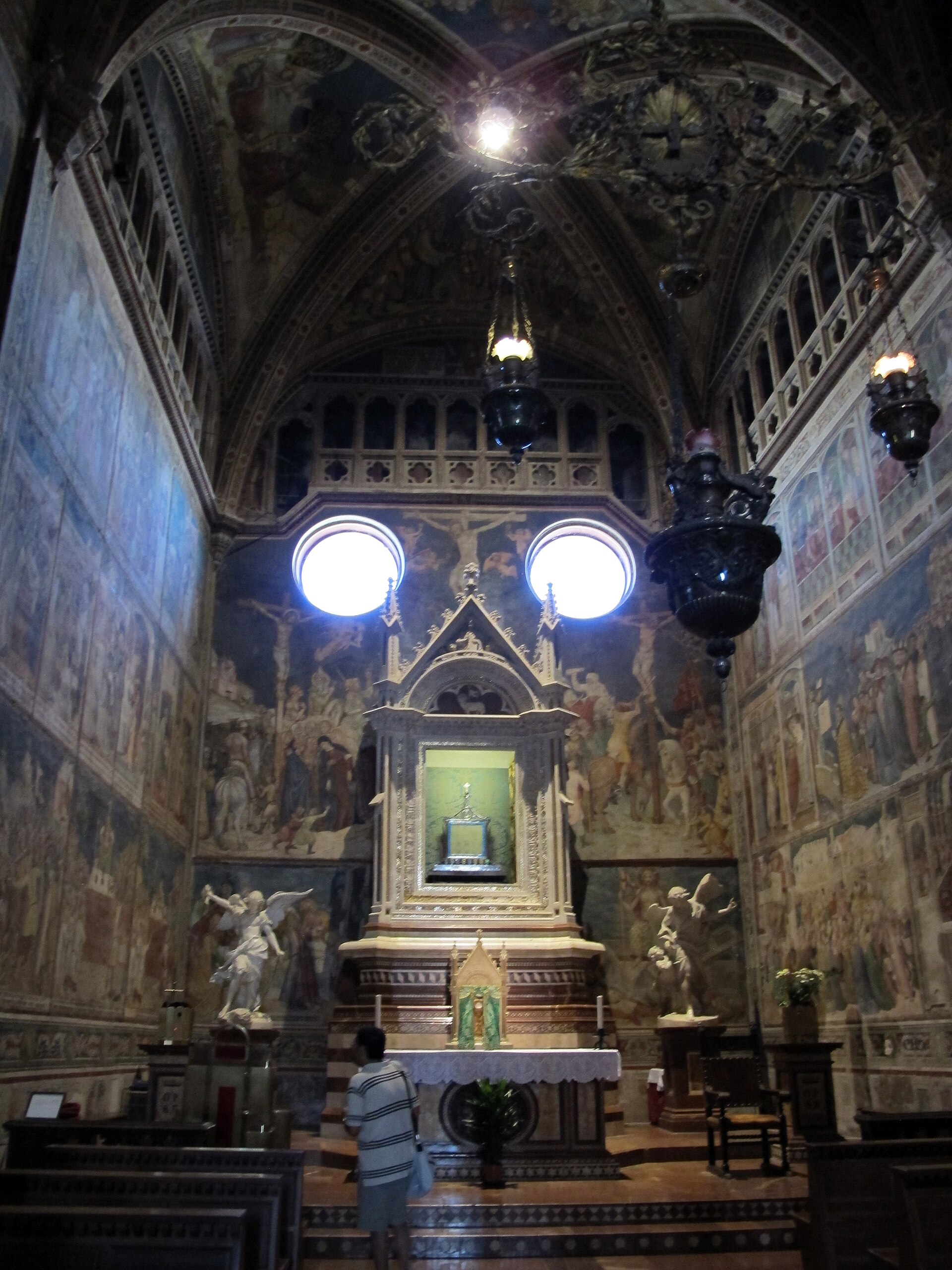
A consecrated host bled on the body during the Mass, dissipating a priest's doubt about the real presence; it was the trigger of the feast of Corpus Christi.
Documented history and memory received
Bolsena and Orvieto share a tradition of the 13th century: a priest who doubted would have seen signs of blood in the body during the Mass in Santa Cristina. The canvas is preserved in the cathedral of Orvieto and the stones attributed to the episode, in Bolsena. Urban IV issued "Transit" of hoc world in 1264 extending the Corpus Christi; historical documentation does not allow to reduce that decision to one cause, as the party was already taking place from Liège. Tradition, relics and liturgical process are distinguished.
Who venerates the memory
The look is directed to Jesus Christ and to the mystery of his Incarnation, Passion, Death, Resurrection or Reign. The image, relic, monument or custom does not act by its own power: it serves the memory of the Gospel and leads to prayer, sacraments, conversion and charity.
History, tradition and discernment
Documented bodily and cult; liturgical prodigy and causality treated with historical caution. The tab retains the memory received without turning legend, witness or believing interpretation into a historically demonstrated fact.
Celebration and devotional life
Festivity or main time: Corpus Christi (jueves tras la octava de Pentecostés).
No automatic promise or prodigy guarantee is documented. Eucharistic veneration leads to mass, veneration, conversion, repair and charity.
Location on the map
The marker points to the Cathedral of Orvieto · Chapel of the Corporate (Italy). The coordinate was contrasted with open mapping and institutional identification of the place.
Main source
Opera of the Duomo de Orvieto. Contrast lettering with OpenStreetMap/Nominatim.
Para orar
Praise the Most Holy Sacrament of the altar.
Image credit
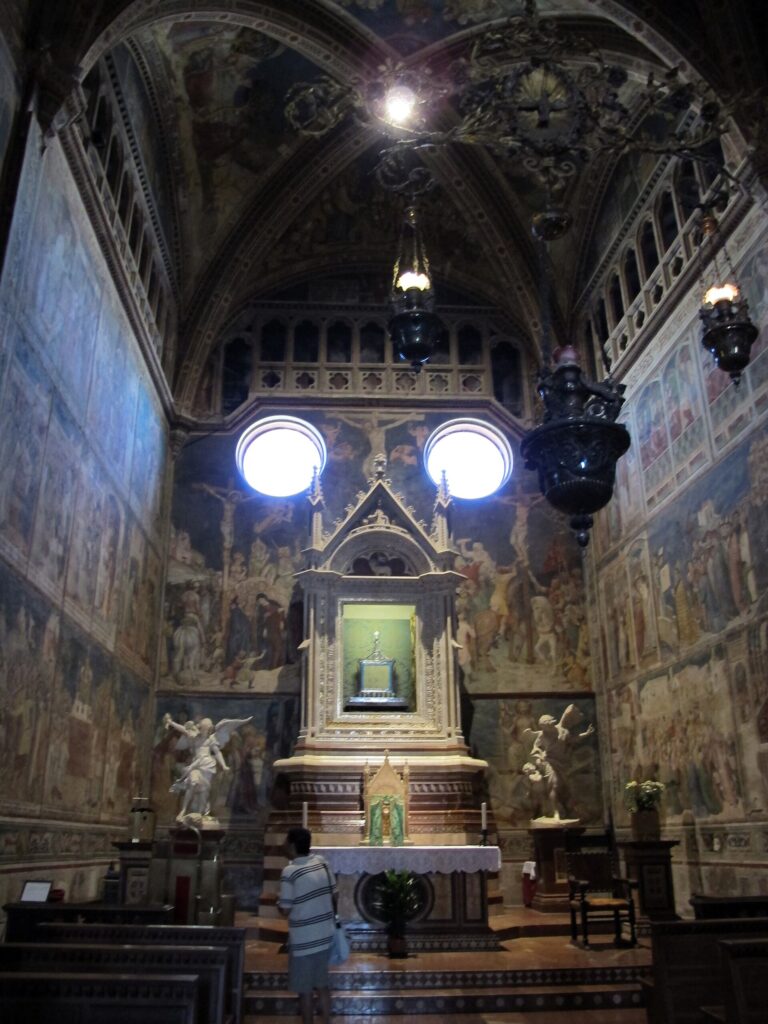
Interior of the chapel of the Body of the Cathedral of Orvieto, the exact place of custody of the canvas linked to the tradition of Bolsena. In the center you can see his great relic. This photograph replaces the previous theme image of Naples. Photo: Sailko, CC BY-SA 3.0, Wikimedia Commons.