
Catholic sacramentals · Devotional cords
Historical origin: Mugnano del Cardinale (Italy), siglo XIX.
What is and what is not
This object or practice belongs to the field of Catholic piety and must be understood from the general doctrine of the sacramentals. The sacramentals are sacred signs instituted by the Church who, by their prayer, prepare to receive grace and sanctify the circumstances of life. They do not confer grace in the same way as the seven sacraments and do not act automatically. Matter, color, or form have no magic power.
History
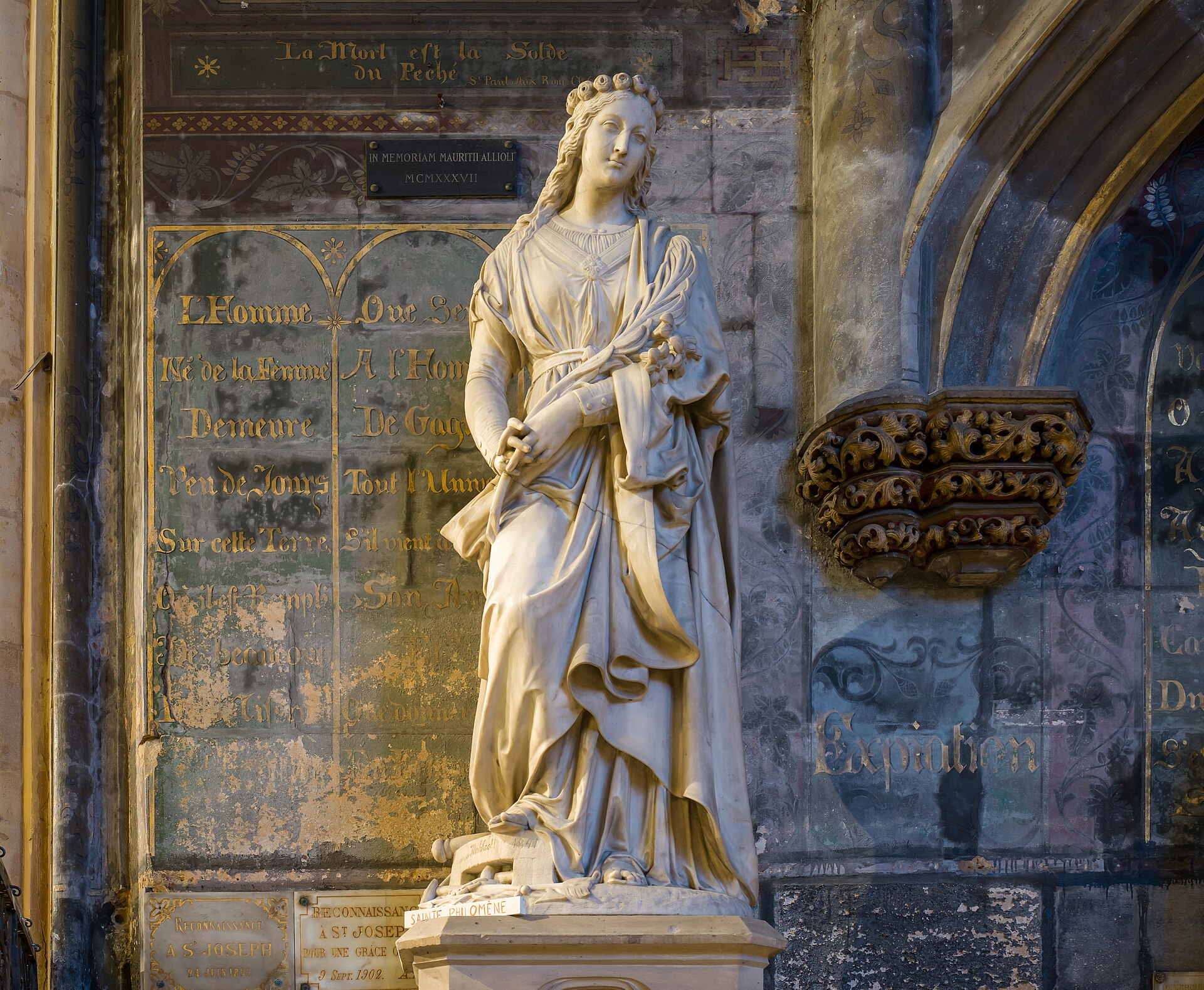
The red and white cord associated with Saint Philomena was spread in the 19th century from the Mugnano del Cardinale shrine, after the finding of relics in the catacomba of Priscila in 1802 and its transfer in 1805. Red evokes martyrdom and white virginity. Devotion received popular impetus for testimonies of graces and for the veneration of various saints. The reform of the 1961 calendar withdrew its celebration of the universal calendar because of the historical uncertainty about the identity of the person indicated by the slabs; that does not amount to a declaration of absence and does not make the subsequent accounts clear.
Its development is inserted into a broader Christian history. From the first centuries, the faithful used the sign of the cross, blessings, water, oil, clothing, pilgrimage and images to keep alive the memory of Baptism and the communion of the saints. In the Middle Ages, the cofradies and reduced forms of religious habits grew; the Modern Age multiplied rituals, medals and sanctuary memories. The contemporary liturgical reform called for a review of these practices so that they lead to the liturgy, sprout from it and avoid superstitions.
Christian use and blessing
It is taken as a reminder of purity of heart, strength and fidelity. The object does not guarantee favors and its use must remain united with Christ, sacramental life and historical prudence.
The blessing must be done with a rite approved and by the competent minister. The faithful responds to that prayer by living the Gospel: faith, hope, charity, participation in the Eucharist, confession when necessary and works of mercy. A sacramental does not replace a medical consultation, a prudent decision or moral duty.
doctrinal sources for deepening
- Catechism of the Catholic Church, 1667-1679
- Code of Canon Law, 1166-1172
- Directory on popular piety and liturgy
Feel free to use my photos, but please mention me as the author and send me a message.
This image is not in the public domain. Please respect the copyright protection. It may only be used according to the rules mentioned here. This specifically excludes use in social media, if applicable terms of the licenses listed here not appropriate.
Please do not upload an updated image here without consultation with the Author. The author would like to make corrections only at his own source. This ensures that the changes are preserved.Please if you think that any changes should be required, please inform the author.Otherwise you can upload a new image with a new name. Please use one of the templates derivative or extract.. CC BY-SA 3.0, Wikimedia Commons. Image tab and license.
