
A double cross (patriarchal) that preserves a relic of the Lignum Cruces, venerated as a shield against evil.
Documented history and memory received
The Cross of Caravaca is a cross of double horizontal cross (patriarchal cross) that keeps in its relic a splinter of the Lignum Cruces, the relic of the Vera Cruz. According to tradition, his miraculous apparition occurred in the Alcázar of Caravaca on May 3, 1232, in times of Muslim domination of the territory. The account shows that the captive priest Ginés Pérez Chirinos, willing to celebrate the Mass before the ruler Abu-Zeit, found himself without a cross on the altar, when two angels came down from heaven carrying a double cross that contained the relic. The relicary has the characteristic form of a cross of two horizontal arm - the shortest evokes the title where the INRI was written and the longest the arms of the crucified - on a vertical axis. The devotion was consolidated throughout the Middle Ages and became one of Spain's great pilgrimage centers. The Holy See granted Caravaca, on 9 January 1998, the celebration of a Jubilee Year to Perpetuity every seven years around the Vera Cruz, a privilege of which very few places in the world enjoy. Possibly, the reproduction of the Caravaca Cross has been carried and placed in homes as a protective shield against evil, disease and dangers. It is at the same time revered relic in its sanctuary and devotional object spread throughout the Hispanic world. Like every sacramental linked to the Cross, its devotional force always refers to the redeeming Passion and death of Christ.
Who venerates the memory
The look is directed to Jesus Christ and to the mystery of his Incarnation, Passion, Death, Resurrection or Reign. The image, relic, monument or custom does not act by its own power: it serves the memory of the Gospel and leads to prayer, sacraments, conversion and charity.
History, tradition and discernment
Ecclesial veneration and jubilee are documented; the angelic arrival of 1232 belongs to tradition and reproductions are neither amulets nor guarantees protection. The tab retains the memory received without turning legend, witness or believing interpretation into a historically demonstrated fact.
Celebration and devotional life
Festivity or main time: May 3 (Festivals of the Most Holy and Vera Cruz).
There is no concrete pontifical promise; popular piety gives it protection against evil, disease and danger. The Holy See recognizes Caravaca a perpetual Jubilee Year every seven years (1998 concession).
Location on the map
The marker points to Basilica-shrine of the Vera Cruz · Caravaca de la Cruz (Spain). The coordinate was contrasted with open mapping and institutional identification of the place.
Main source
Diocese of Cartagena. Contrast lettering with OpenStreetMap/Nominatim.
Para orar
Holy Cross be my light; do not be the devil my guide. You have worshipped, O Christ, and we bless you, for by your Holy Cross you have redeemed the world!
Image credit
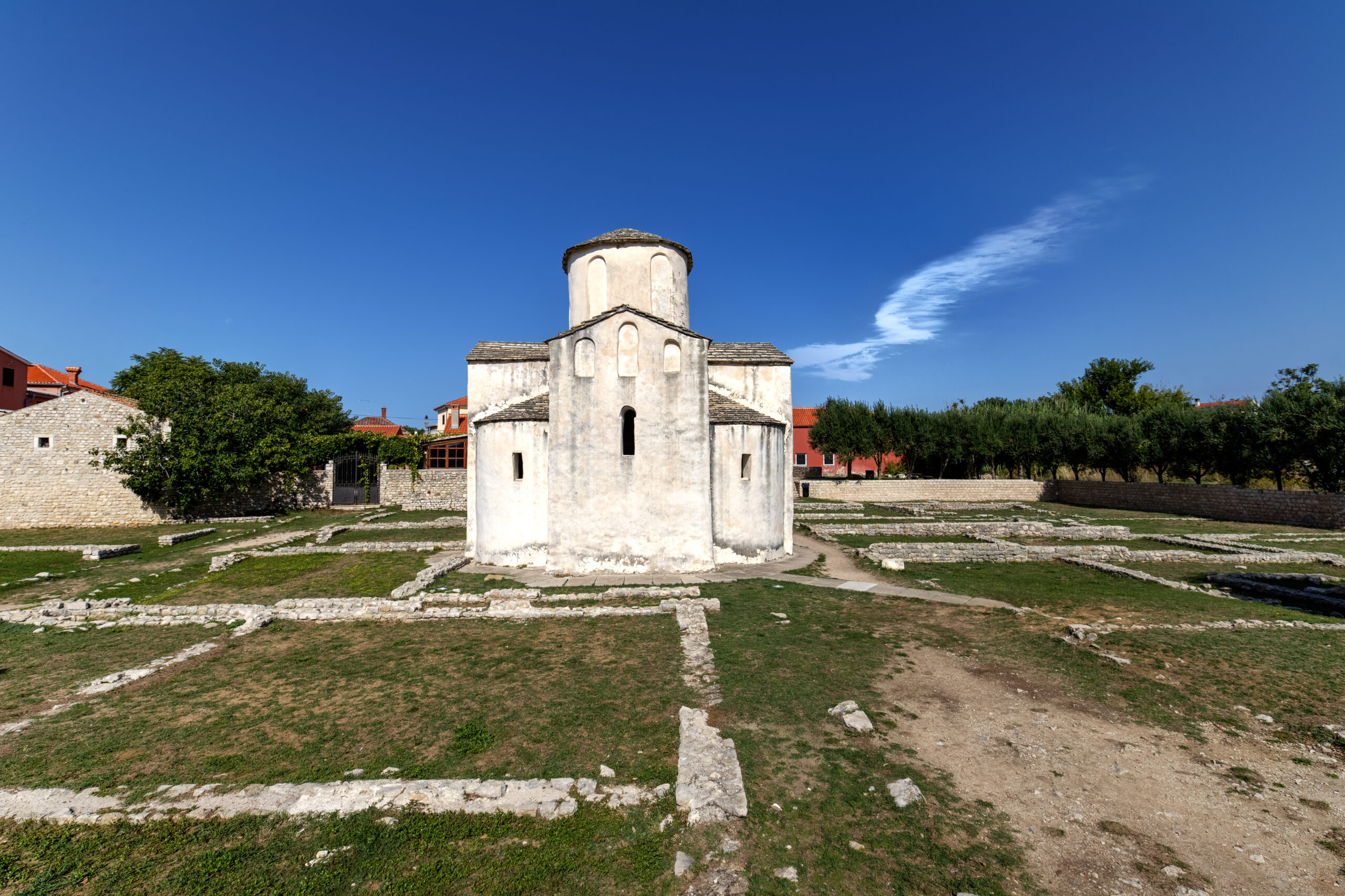
Church of the Santa Cruz de Nin, a free thematic image that does not represent the relic of Caravaca. Photo: Paula Borkovic, CC BY-SA 4.0, Wikimedia Commons.