
The tradition of La Rochelle reports that Bertrand Leclerc, a 12-year-old mute and paralyzed child from a fall, regained speech and movement after comulgar in the church of Saint- Barthélemy on Easter Day of 1461.
What happened according to La Rochelle's memory
The story preserved by the diocese places the event in the church of Saint- Barthélemy de La Rochelle, on Easter Day 1461. Madame Jehan Leclerc took her 12-year-old son Bertrand there. The child had suffered a terrible fall at the age of seven and, since then, could not speak or move.
During communion, Bertrand made his mother understand that she wanted to receive Jesus in the Eucharist. The priest doubted because the boy, unable to speak, could not confess in the usual way. The child's insistence and the pleas of those who accompanied him finally moved the priest to give him communion.
The healing attributed to communion
Tradition states that, as soon as it received the consecrated form, Bertrand felt a mysterious force, regained the movement and began to speak. The news is not focused on a visible change in the host, but on the healing of the child after comulgar.
This difference is essential to read the case rigorously. In La Rochelle it is not reported that the consecrated bread would bleed, change its appearance or be kept in an extraordinary way. There is also no Eucharistic relic from the event. The transmitted is a grace of healing that is temporarily and spiritually linked to the reception of the sacrament.
The first words attributed to Bertrand
The diocesan page reproduces the words that, according to a handwritten document written shortly after the prodigy, the child said: "Adjutorum nostrum in nomine Domini." In Spanish they mean: "Our help is the name of the Lord," a formula taken from Psalm 123 and used for centuries in liturgical prayer.
The detail has great value within the believer memory: the recovered voice would have premiered not with an exclamation on itself, but with a confession of divine help. The fact sheet retains this tradition as presented by the diocese, without turning a quote transmitted into an independent medical test.
A sacramental discipline in its time
The initial repair of the priest must be understood in the pastoral and sacramental context of the 15th century. The narrative explains that Bertrand could not confess orally because of his mutism. It is not appropriate to project the present pastoral practices on that episode without nuances or to use it to judge the priest.
The core of the story is the child's persevering desire to receive Christ and the response that the community interpreted as a healing. The preparation for communion, the care of sick or disabled persons and pastoral discernment today require the guidance of the Church and the concrete care of each person.
What a source today the diocese offers
On 20 May 2025, the diocese of La Rochelle and Saintes published an extensive presentation of the event. He explained that the parish had found its prints again after meeting the exhibition of San Carlo Acutis and that the memory had been held annually until World War II.
The diocesan publication is the main ecclesial source of this fact sheet because it identifies the place, the protagonists, the age of the child, the development of the story and the contemporary pastoral recovery. It does not amount on its own to a modern medical file, nor does it claim that there is a material relic.
A print on diocesan files
The inventory of the historical archives of the diocese records a file entitled "Le miracle du muet" in French, referred to April 14, 1461 in the church of Saint-Barthélemy and attributed to Marc Hudgau in May 1936. This archival entry shows that the memory was studied and preserved before its later oblivion.
The specific date of the catalogue and the more general expression "Easter Day" of the pastoral presentation come from different documents. For prudence, the document maintains the formulation of the diocese and points out the archival reference without forcing a chronological harmonization that would require a direct examination of the file.
The annual memory and oblivion
According to the diocese, the parish commemorated the event every year until World War II. Then he fell into oblivion. The interruption helps explain why a known story in international devotional repertories could be unvisible even in its own city.
A living tradition does not depend only on an ancient inscription. It needs communities that transmit it, documents that can be consulted and celebrations that can explain its meaning. The absence of commemoration for decades requires a distinction between documented historical continuity and recent pastoral recovery.
The public recovery of 2025
On May 23 and 24, 2025, the parish organized a proposal to rediscover the Eucharistic mystery: meeting for young people, open evening, evening worship and Mass at dawn. The initiative did not announce the exhibition of a relic, but rather prayer and catechesis around the Eucharist.
This recovery provides a verifiable current data, but does not in itself guarantee that there is an identical celebration every year. Anyone who wishes to participate in future events must consult the parish or the diocese before travelling.
The Iglesia of St. Bartholomew
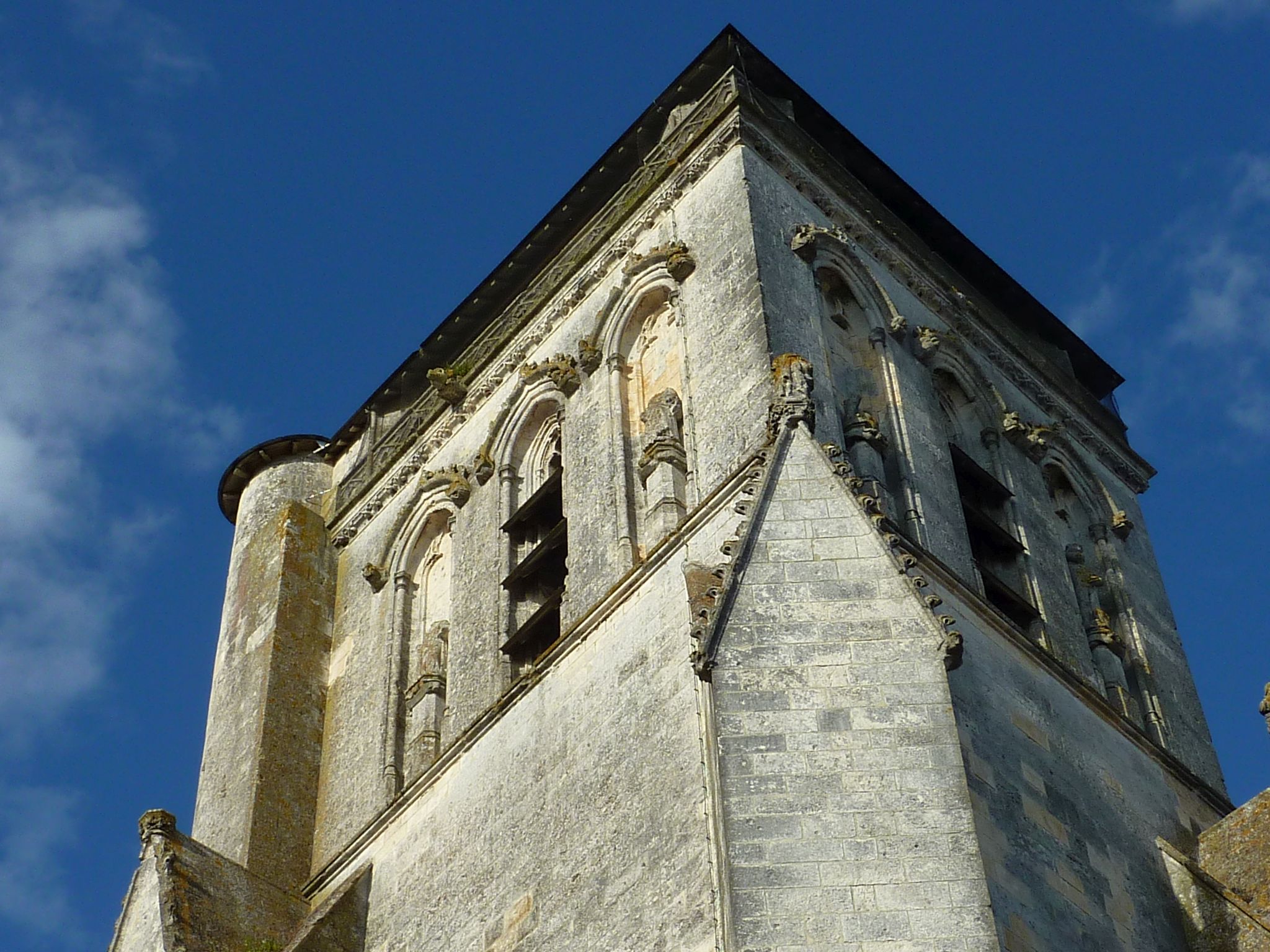
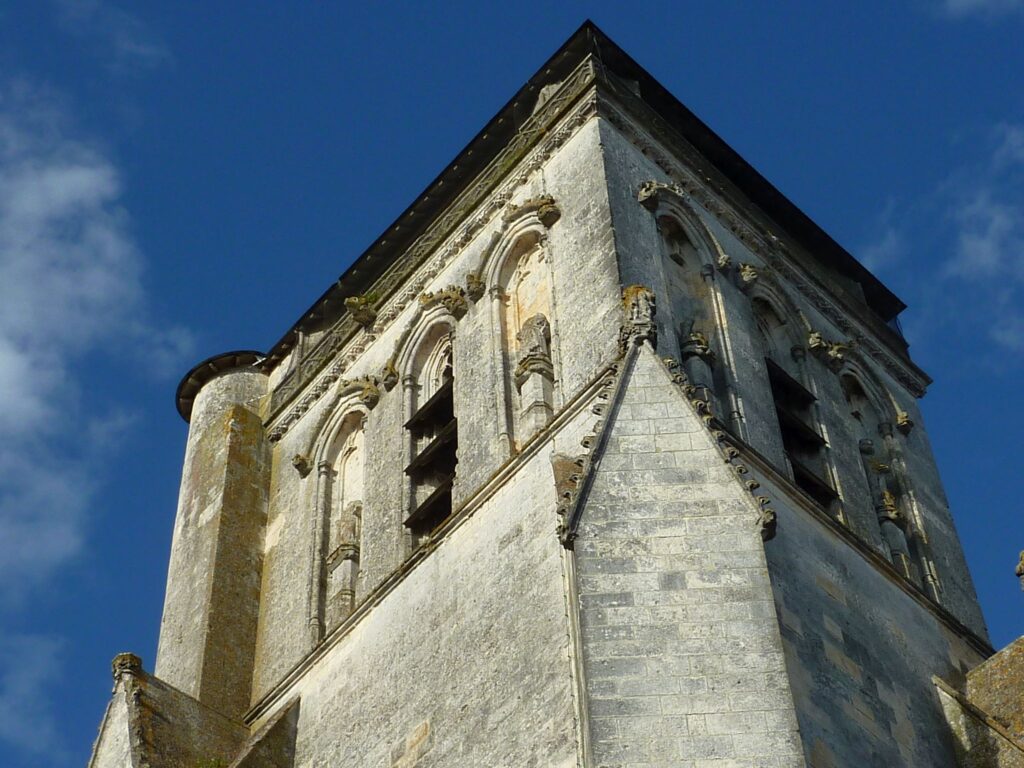
The medieval temple in which the story is located is no longer fully preserved. The urban history of La Rochelle left its Gothic bell tower, known today as the tower of Saint- Barthélemy, next to the Cathedral of San Luis, as a vestige. The photograph of this page shows that real rest and not a generic illustration.
The tower allows to anchor the narrative in its historical space without stating that the current building keeps the 1461 provision intact. The map's marker points to the vestige and the solar linked to the ancient church, not a relic or a chapel built to guard a miraculous form.
Precise location on the map
The tower is located in the surroundings of the Cathedral of San Luis, in the historic centre of La Rochelle, Charente- Maritime, Nueva Aquitaine, France. The coordinates 46.1609310, -1.1537280 correspond to the kept bell tower and coincide with the property location linked to the reference IA17000077.
Choosing this point avoids placing the story vaguely throughout the city or confusing Saint-Barthélemy with another temple. Geographical accuracy identifies the place of memory; it does not add or replace historical or ecclesial discernment about healing.
How this case is classified
On the world map it appears as "healing linked to communion, not altering in a way." This label allows the case to be included in the historical repertoire associated with the Eucharistic miracles and at the same time to explain to the reader what kind of testimony you will find.
The responsible classification avoids two errors: to present as relic a form that was never the material object of the story and to omit the Eucharistic dimension of a healing that tradition expressly attributes to communion. Transparency and devotion are not contrary when each statement retains its scope.
The role of San Carlo Acutis
The repertoire gathered and disseminated from the work of San Carlo Acutis gave La Rochelle international visibility. The diocese itself recognizes that this work helped to bring out the local memory. It is therefore cited as a secondary devotional source and as part of the contemporary history of its recovery.
However, editorial research is not limited to copying a file. It contrasts the narrative with the diocesan publication, the file catalogue and the property identification of the place. So you can correct ambiguities, locate the site and clearly declare what didn't happen.
What we should not promise this story
A healing narrative does not allow the promise that anyone who communicates will heal physically or replace medical care. The Eucharist is the sacramental presence of Christ and food for Christian life; it is not a technique or a remedy that can be demanded of God.
Sick people deserve spiritual support, health care and a community that does not blame them if the expected healing does not come. The fruit of this memory can be a deeper faith, a well-prepared sacramental participation and a more attentive charity for those who suffer.
Spiritual feeling
Bertrand appears in tradition as a child who wants to approach Jesus despite his limitations. This desire calls for a perseverant faith and for no disability to become a pastoral abandonment. Every Eucharistic celebration calls for the formation of a single body and the special care of its most fragile members.
The phrase attributed to the boy sums up an attitude of trust: help comes from the Lord. Christian prayer can ask for health with hope, but it always opens to the will of God and translates into concrete closeness, patience, comfort and service.
Sources consulted
- Diocese of La Rochelle and Saintes: rediscovery of the Eucharistic miracle of La Rochelle, main ecclesial source published in 2025.
- Catalogue of diocesan historical files, reference to the 1936 file on the "mute miracle" of 1461.
- Ministry of Culture of France, property reference IA17000077, ancient church and tower of Saint- Barthéemy.
- Exhibition associated with San Carlo Acutis: La Rochelle, secondary devotional repertoire contrasted.
Para orar
Lord Jesus, who you give yourself in the Eucharist, increases our faith and our desire to receive you with dignity. Take the sick, comfort their families and pay attention to every fragile person. May our help be always in your name. Amen.
Image credit
Torre conservada de la antigua iglesia de Saint-Barthélemy de La Rochelle. Chris06 / Wikimedia Commons, CC BY-SA 4.0. File and license in Wikimedia Commons.
.jpg)