
In the parish of Santa María de Buenos Aires, three episodes occurred in 1992, 1994 and 1996 around consecrated forms. The exhibition associated with San Carlo Acutis disseminates the later story and analysis, but no ecclesiastical decree or complete scientific record has been located.
Three episodes, not a single moment
The story spread by the international exhibition of Eucharistic miracles linked to San Carlo Acutis brings together three different facts in the parish of Santa María. According to the panel, on 1 May 1992, 24 July 1994 and 15 August 1996. Meeting them under the same name facilitates their study, but does not allow them to become a single sequence or to automatically move to one episode what was said about another.
This sheet retains the dates and details of the panel, and clearly distinguishes what is reported, what is attributed to later analysis and what has not been verified in accessible primary documents.
The May 1992 episode
The panel placed the first event on 1 May 1992. After the Mass two fragments of host were found on the body of the sacrary. Following a liturgical practice used when a form cannot be consumed, they were put in water to dissolve.
The same narrative states that on 8 May the container had a reddish colour and that, two days later, blood-like drops were observed in two patenas. There has been no location of a digitized parish act, dated photographs of the process, signed testimonies or an archdiocesan decree that will allow the reconstruction of this episode independently of the panel.
The drop observed in 1994
The second episode is dated July 24, 1994, during a children's mass. The source describes a drop that looked like blood on the inner side of the copon. It is a different account of the forms preserved in water in 1992 and the host of 1996.
The brevity of the information available suggests caution. No names of witnesses, a custody chronology, or specific analytical results linked to this drop are published. These gaps are therefore not completed with repeated versions on the Internet.
The host of 15 August 1996
The third event would have started during the communion of 15 August 1996, when a host fell to the ground. The priest picked her up and put her in water. The panel claims that on 26 August a red and blood-like appearance was observed.
This is the way in which subsequent disclosure often associated studies carried out years later. The temporal difference matters: a statement on a sample taken at a later date does not in itself demonstrate how it was preserved since 1996 and does not allow the same result to be attributed to the 1992 and 1994 episodes.
What does the disclosure say about the analyses
The exhibition reproduces a story by Ron Tesoriero according to which in 1999 a sample was taken to a laboratory in San Francisco, where no genetic profile was obtained, and in 2004 the forensic cardiologist Frederick Zugibe had described cardiac muscle tissue with inflammatory signs.
These claims remain expressly attributed. The full laboratory report, instrumental data, microphotographs with traceability, sampling protocols, chain of custody forms, peer-reviewed publication and a complete response from the above-mentioned professionals have not been located. Without these materials it is not appropriate to state as an independent conclusion that "living tissue" was demonstrated, that the tissue necessarily came from a host or that there is a proven identity with other cases.
Jorge Mario Bergoglio and the correct chronology
Some versions say that then Archbishop Jorge Mario Bergoglio supervised the 1996 case from the beginning. The official chronology of the Holy See requires that he be nuanced: in 1992 he was appointed auxiliary bishop, in June 1997 Archbishop coadjutor and on 28 February 1998 he succeeded Cardinal Antonio Quarracino as Archbishop of Buenos Aires.
Therefore, Bergoglio was not archbishop when the August 1996 episode occurred. The panel attributes to a later intervention of the then archbishop the invitation to researcher Ricardo Castañón; that phase, if it occurred in the narrated terms, had to belong to a later moment. Without an office dated from the archdiocese, it is not claimed that Bergoglio led a canonical investigation or that he approved the case.
Ecclesial reception: what does not amount to a decree
That a priest reserves a form, that a bishop knows a story or that he is allowed to study it does not amount to officially recognizing a miracle. Nor does inclusion in a devotional exposure replace the trial of the competent diocesan authority.
A decree of the Archdiocese of Buenos Aires declaring the three episodes supernatural has not been found in the consultation for this document. The official directory does confirm the existence and direction of the parish of Santa María, but does not offer a statement on the events in this parish.
The parish of Santa María
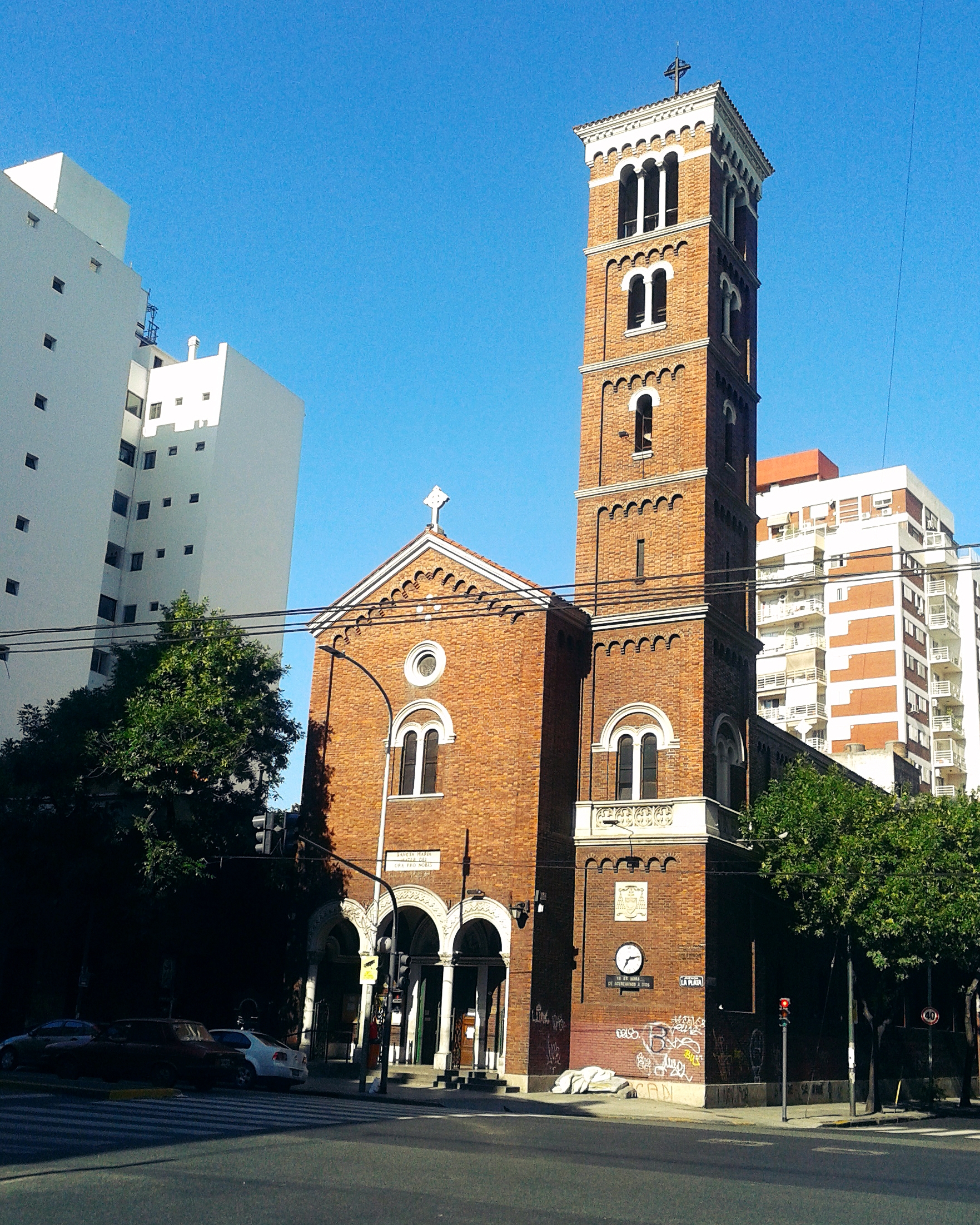
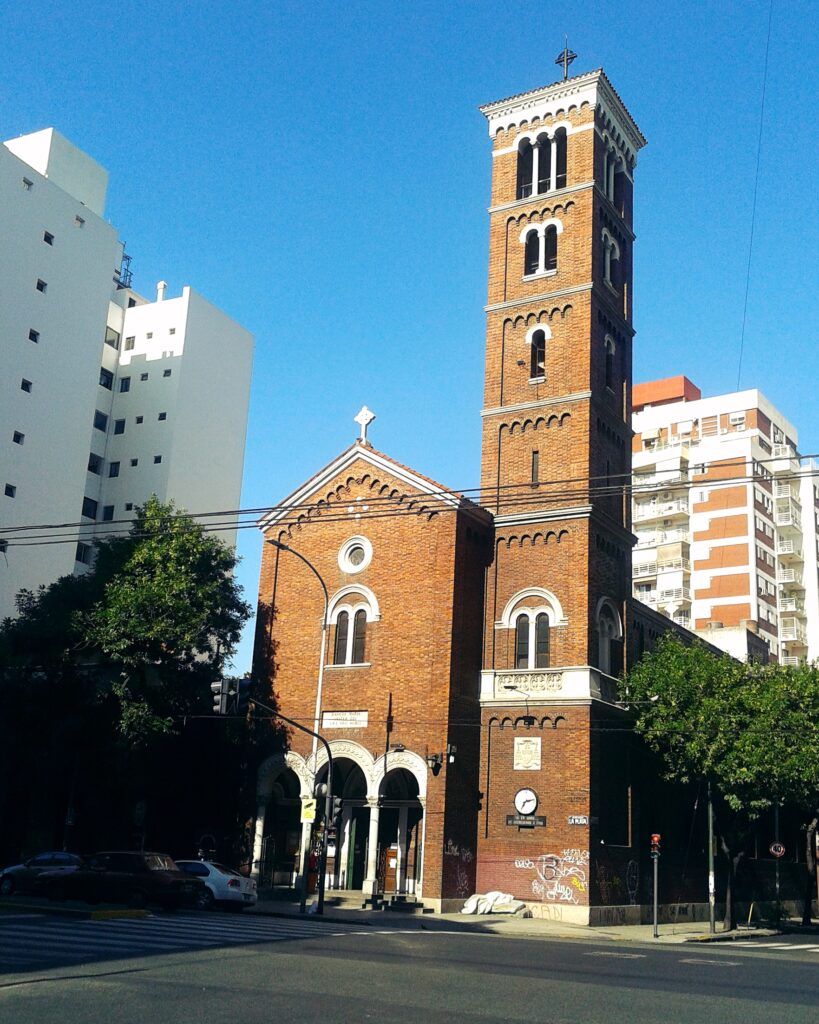
The place is identified with the parish Santa María, on Avenida La Plata 286, Ciudad Autónoma de Buenos Aires. The directory of the Archbishop of Buenos Aires confirms the name, address and diocesan membership. The brick façade is located next to La Plata Avenue, near Rivadavia Avenue, between the Almagro and Caballito neighborhoods.
The marker uses the coordinates -34.6180371, -58.4281795 and points to the parish building. It is not said that a specific relic is today exposed to the public. Anyone who wishes to visit the temple must first consult the current times and indications of the parish or the archbishopric.
World map classification
Buenos Aires is incorporated as "contemporary Eucharistic phenomenon without a local decree." The label does not deny the faith of those who transmit the story or declare an extraordinary sign impossible; it honestly reports on the available documentary level.
The map thus distinguishes between places with localized ecclesiastical documents, historical traditions, events with quoted episcopal declaration and contemporary cases whose primary research is not published. That difference protects both truth and devotion.
Spiritual feeling
The Church does not need an extraordinary phenomenon to confess the real presence of Christ in the Eucharist. Each Mass calls to receive the Sacrament with faith, reconciliation, reverence and charity towards the neighbor.
These stories may invite deeper worship, but curiosity about matter should not displace the Gospel. Documentary prudence does not cool the faith: it avoids building it on claims that available sources do not allow for verification.
Sources consulted
- Buenos Aires Panel of the international exhibition associated with San Carlo Acutis: chronology of the three episodes and account of the analyses; source of disclosure, not primary file.
- Official Directory of the Archbishop of Buenos Aires: identification of the parish of Santa María on Avenida La Plata 286.
- Holy See: biography of Jorge Mario Bergoglio: dates of his ministry as assistant, coadjutor and archbishop.
Para orar
Lord Jesus, the bread of life, increases our faith and makes us humble servants of the truth. Teach us to worship you with reverence, to receive you with a reconciled heart and to recognize you in every person in need. Amen.
Image credit
Parish Santa María de Buenos Aires. Nicolasrnphoto / Wikimedia Commons, CC BY-SA 4.0. Original file and license in Wikimedia Commons.
