
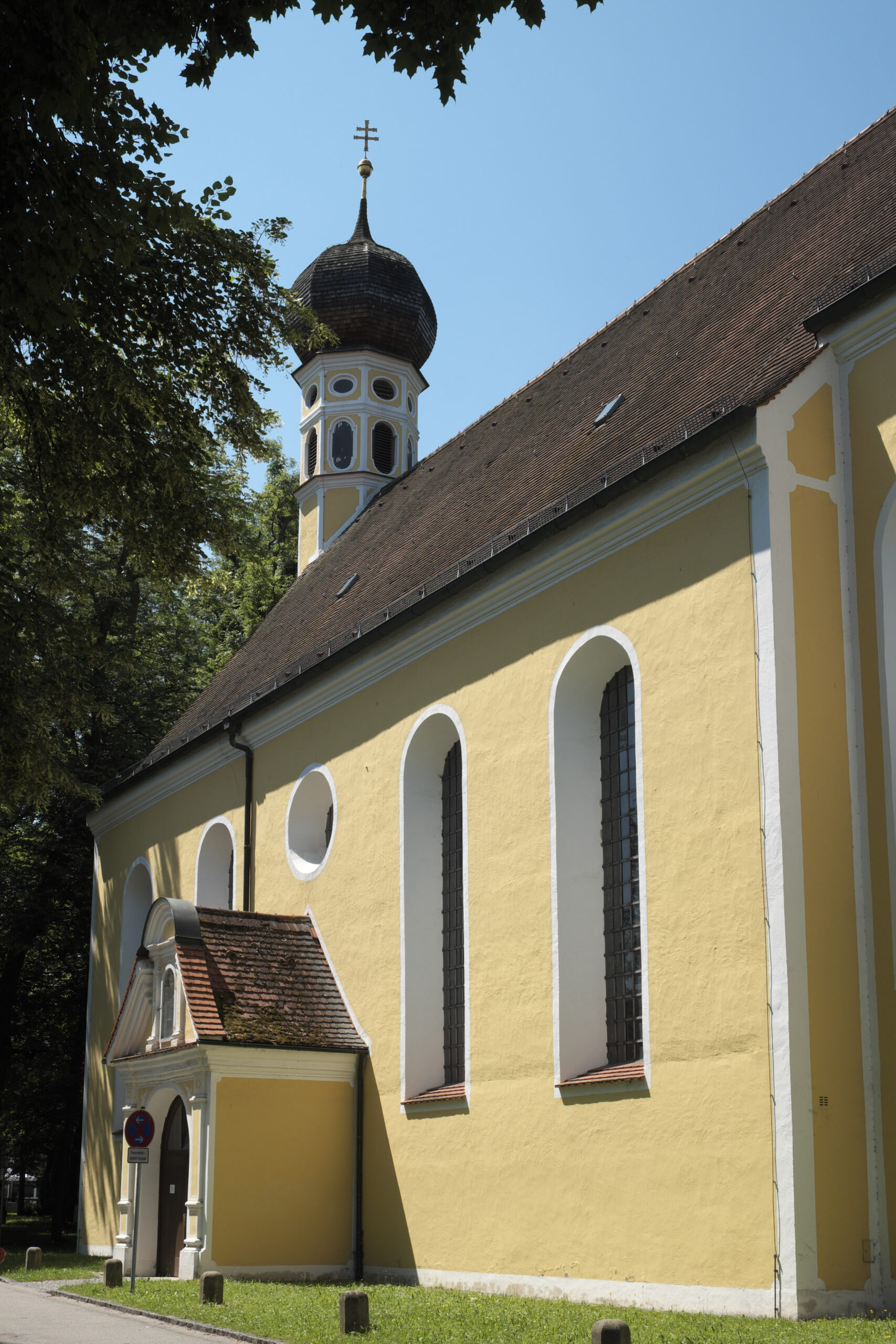
The Heilig Blut Church of Erding retains the memory of a medieval Eucharistic tradition, written centuries later and spread with the date of 1417. The pilgrimage and the temple are previously documented; the church has been closed since 2015 and its restoration is under way.
The Eucharistic account attributed to Erding
Tradition tells that a peasant unduly took a consecrated form because he hoped to obtain prosperity or protection from it. As he walked away, the host would have escaped from his hands or fallen to the ground. Unable to recover it, he warned the priest; then she would have been found glowing and carried with reverence.
The exhibition associated with San Carlo Acutis dates the episode in 1417. However, the official pastoral concept of the parish explains that the legend of desecration was written in the 16th century and that the place of worship and pilgrimage have previous roots. The file maintains 1417 as a traditional date, not presented as a firm documentary conclusion.
A warning against superstitious use
The protagonist of the story was not seeking to communicate, but to possess the form as if he had a utilitarian power. This gesture contradicts the Eucharistic faith. Christ is not an amulet to achieve wealth, control the future, or impose upon others.
The catechesis that can be extracted is clear: the Eucharist is received in the Church and leads to self-giving. The reverence is not to attribute magic to consecrated species, but to worship the Lord, to participate in the Mass, to reconcile and to serve the neighbor.
A place of worship before the date of 1417
The first documentary news of a sacred building between Erding and Altenerding came from the 14th century. The Archdiocese considers it likely that there was a chapel around 1300 and places the origin of the Heilig Blut pilgrimages after the 13th century.
This chronology creates a difficulty for a literal reading of 1417 as an indisputable origin. Tradition may gather different memories or the date may be set later. The history of the sanctuary is real and ancient, but not all the details of the prodigy have the same degree of evidence.
The legend written in the 16th century
The pastoral text states that the legend was written in the 16th century and was probably based on the memory of a Eucharistic desecration. There is therefore a considerable distance between an alleged medieval event and its drafting.
This distance does not make the story useless: it allows you to study local spirituality and the way the community explained its sanctuary. It does, however, make it possible to use expressions such as "according to tradition" and not to treat each scene as a contemporary act.
The well and popular devotion
Next to the Eucharistic memory there was a well or spring to which healing properties were attributed. The pastoral concept mentions this cult of the source as part of the history of the place.
The Church does not teach that water will act automatically. A source can become a sign of prayer and baptismal memory, but Christian hope is addressed to God. The tab does not promise cures or propose to drink water without sanitary guarantees.
From the Gothic building to the Baroque church
In the 15th century a Gothic construction probably replaced the wooden chapel. The previous church was demolished in 1675 and the new building, widely barroquised by Hans Kogler, was consecrated in 1677.
The current Heilig-Blut-Kirche thus brings together several stages of local memory. The octagonal chapel of the well, linked to the whole, was projected in the early 18th century. Architecture, landscape and tradition formed a pilgrimage unit for centuries.
Closing for structural damage
After a restoration in 1985, serious problems of foundation and cracks in the walls appeared. The church has been closed since December 2015. It is not wise to indicate to the visitor that he can enter, attend Mass or contemplate a relic inside.
The closure protects people and the monument itself. The marker allows to identify the building from the outside, but any access must depend exclusively on the indications of the parish and those responsible for the work.
Restoration: situation in 2026
The parish information of 2025 confirmed the financing of the consolidation of the land and the roof, with an insured budget of 11.5 million euros and forecast to start work in 2026. The 2026 bulletin convened a meeting to explain progress and follow-up.
The restoration is therefore a living process and not a work already completed. The file will be updated when the parish authority officially announces the reopening. Until then the closing notice is maintained.
The Paulines and the memory of the place
The Order of St. Paul First Eremita maintains a presence in Erding and participates in pastoral life. Its connection offers spiritual continuity to a sanctuary that cannot be used physically while it is consolidated.
Devotion does not disappear because the building is closed. It can be expressed in parochial prayer, Eucharistic celebration in open temples and responsible support for the preservation of the heritage.
exact location on the map
The church is located in Heilig-Blut-Weg 3, Erding, next to the old monastic and educational set. The marker is corrected to 48,2985226, 11,9010869, centre of the building identified in OpenStreetMap as way 24553730.
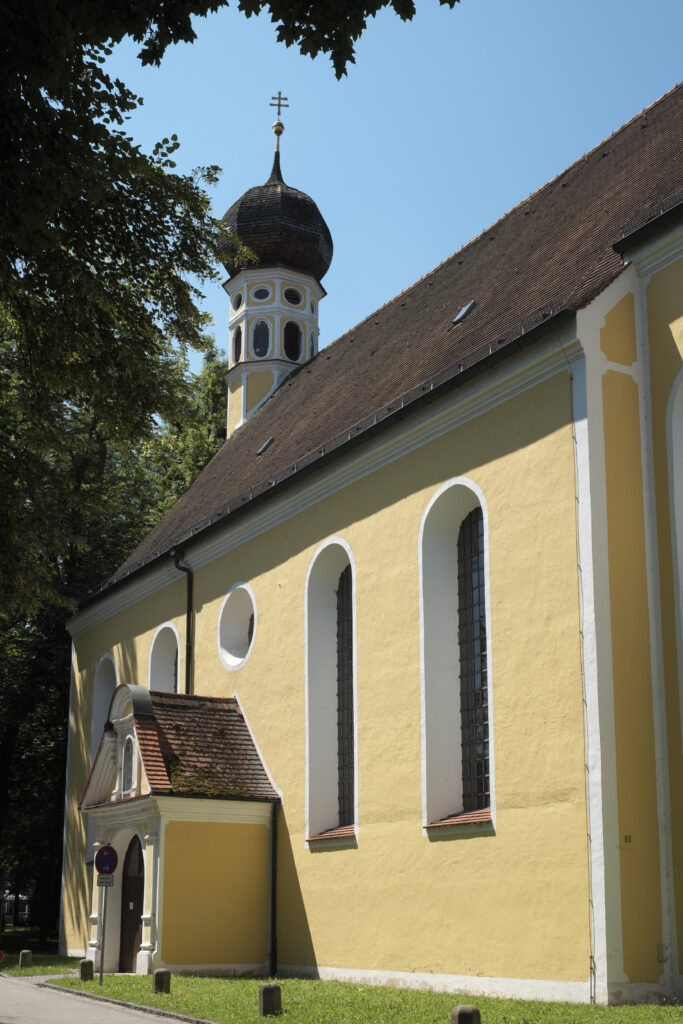
The previous coordinate was moved about a kilometre. The outstanding image of a Neapolitan church is also replaced by a real view of Heilig Blut from the south-east.
World map classification
Erding appears as "historical tradition with temporarily closed sanctuary." The category recognizes the building, the pilgrimage and the Eucharistic memory, and at the same time warns that it is not today a visitable space with open veneration.
A preserved Eucharistic relic that can be attributed to the episode has not been located. The main object of the map is the historical place and its tradition, not an exposed form.
Spiritual feeling
History invites us to abandon all superstitious relationship with the sacred. Christ is given free; he is not stolen or instrumentalized. Communion calls for a heart available to share, not an attempt to appropriate the blessing.
The long effort to save the church also recalls the common responsibility for the heritage received. The care of a temple is important, but its ultimate purpose remains to lead to prayer, the Eucharist and service to people.
A pilgrimage without access to the interior
As long as the structural closure continues, reaching Heilig Blut does not normally amount to visiting its interior. The building can be seen from authorized areas, but safety and work have priority over any devotional or photographic desire.
Community-related celebrations move to safe spaces. The pilgrim must therefore go to the parish channels to know where the Mass is held and how the memory is kept during the restoration.
Restoration as a shared responsibility
Consolidating the foundations on the ground and repairing the cover requires studies, public and ecclesial funding, specialists and years of work. The horizon until 2030 shows the project dimension. An early reopening should not be announced until the parish and the authorities confirmed it.
The economic effort is not presented as a promise of spiritual favor. Donating or collaborating is a free way to protect religious and cultural heritage; it never buys a grace, a indulgence or a healing.
How this sheet will be updated
The state of the building is temporary information. The 2026 reference documents a stage of preparation and progress of the actions, not the end of the work. Where there is an official reopening notice, the initial notice, the map description and the visiting guidelines must be reviewed.
Until then, the "temporarily closed" label protects the visitor from obsolete information. It also shows that a responsible devotional map not only points to places: it communicates access limits, custodians and changes that affect a real pilgrimage.
Pray for a closed church
The impossibility of entering can be painful for those who celebrated weddings, pilgrimages or family moments there. This duel is part of community life and deserves to be recognized, especially when the closure is prolonged for years.
Prayer can accompany technicians, responsible, donors and parishioners without turning the work into a sign of divine abandonment. The Christian community continues beyond its walls and patiently prepares a safe future use.
Sources consulted
- Archdiocese of Munich and Frisinga: pastoral concept of Erding- Langengeisling, history and structural closure.
- Parish Bulletin 2026: progress and next restoration actions.
- Order of St. Paul First Eremita: community of Erding.
- Exposure associated with San Carlo Acutis: Erding, compared to local sources.
Para orar
Jesus the Eucharist, deliver us from seeking you as an object of power. Give us a humble heart to receive, worship and share your gifts. Hold those who take care of this temple and make every outside restoration also renew our inner life. Amen.
Image credit
Heilig Blut de Erding pilgrimage church, seen from the south-east. GFreihalter / Wikimedia Commons, CC BY-SA 3.0. File and license in Wikimedia Commons.
