
Bois-Seigneur-Isaac retains a stained body associated with a form that, according to tradition, bled during the Mass of June 5, 1405. Pierre d'Ailly approved his veneration in 1413 and authorized a procession that continues to live.
The Mass of June 5, 1405
The tradition places the event on June 5, 1405 in the chapel of Bois- Seigneur- Isaac, in the current Brabante Valon. Pierre Ost, a parish priest of Haut-Ittre, celebrated Mass when he found in the body a fragment in a consecrated way.
According to the preserved memory, the fragment began to leave drops of blood on the liturgical canvas. The phenomenon would have continued for several days, until it left the stain that the community related to the Blood of Christ.
The body and not an exposed host today
The object that is preserved is the body, the small canvas that extends over the altar to receive the sacred vessels. The form attributed to the episode does not currently appear as a separate piece before the pilgrims.
The relic is kept in an ostensoriorelicary inside the chapel of the Holy Blood. This precision avoids imagining a visible host of 1405 and allows us to understand which object received approval and historical veneration.
Ecclesial research
The local Church did not immediately authorize veneration. CathoBel recalls that an investigation was opened and continued for eight years. Pierre d'Ailly, then Archbishop of Cambrai and Cardinal, examined the case before making his decision.
The duration of the process shows that veneration was not only born of an instant popular reaction. Testimonials, object and circumstances were submitted to the discernment available in the 15th century.
Pierre d'Ailly's decision in 1413
On 18 October 1413 Pierre d'Ailly issued a bull preserved in the abbey's archives. CathoBel explains that he approved the body stained as a true relic and allowed it to be venerated.
The same decision authorized an annual procession in honor of the Holy Blood on Sunday after September 8, the feast of the Nativity of the Virgin. The first procession after the approval took place in 1414.
What does that approval mean?
Ecclesial approval is a solid historical evidence of the reception and legitimacy of veneration. It can be said that the competent authority authorized to venerate the body and organize the procession.
It should not be translated anachronically as a modern biochemical analysis. The tab does not ensure that the composition of the stain has been determined by current techniques, nor does it attribute to the medieval document scientific statements that it does not contain.
The foundation of the priory
Community life was organized around the chapel and devotion. In 1413 the religious establishment was founded and in 1424 Pope Martin V officially approved the creation of the Priory of Bois- Seigneur- Isaac.
The sixth centenary of this approval was held in September 2024 with historical colloquium, activities for the people, mass and a great procession of the Holy Blood. The commemoration confirms the contemporary vitality of the place.
Six centuries of processions
The procession initiated after the decision of 1413 went through political changes, wars and religious transformations. In the 2014 Jubilee, faithful and pilgrims returned to accompany the relic and the Most Holy in the streets.
CathoBel contains several traditional dates related to devotion: the Friday before Pentecost, liturgical anniversary associated with the event; the 1 July, feast of Holy Blood; and the Sunday following 8 September.
Always check the current calendar
The historical continuity does not guarantee that all celebrations keep the same time or tour each year. The 2014 and 2024 activities document tradition, but should not be used as a permanent agenda.
It is appropriate to consult the Saint- Charbel monastery or Belgian pastoral information directly before travelling. The visit must respect the times of prayer and the life of the monastic community.
Agustinos, premonstratenses and Maronites
The abbey was occupied by Augustine religious from 1413 to 1784. At the beginning of the 20th century, premonstratense canons arrived, which maintained the liturgical life and pilgrimage until 2009.
Since January 2010, the responsibility lies with monks of the Lebanese Maronite Order. The place took the name of the monastery Saint- Charbel and continues to be integrated into the communion of the Catholic Church.
An Eastern Catholic Presence
The Maronite community brings to Bois- Seigne- Isaac an eastern Christian tradition born around Saint Maron and especially rooted in Lebanon. His arrival did not interrupt local devotion, but assumed the abbey, the parish and the pilgrimage.
In the chapel are venerated both the body of the Holy Blood and a relic of Saint Charbel. This coexistence expresses the universality of the Church and the encounter between a medieval Belgian memory and Maronite spirituality.
The relic is not an idol
During the 2014 Jubilee it was expressly recalled that relic does not replace God and should not be treated as a magical object. His veneration directs the look to Christ, who gave his life and whose sacramental presence the Church celebrates.
The difference between worship and veneration is essential. Catholics worship only God; they honor a relic for their relationship to the mystery of faith and for the spiritual memory it transmits.
The Blood of Christ and the Eucharist
Devotion interprets the stain of the body in the light of the Passion and the new alliance. In the Mass, Christ becomes sacramentally present under the species of bread and wine; the value of the Eucharist does not depend on a visible phenomenon.
The body invites you to contemplate the love of Jesus who is given. Its fruit is not to seek material blood or extraordinary signs, but to enter deeper into celebration, worship and charity.
La capilla de la Santa Sangre
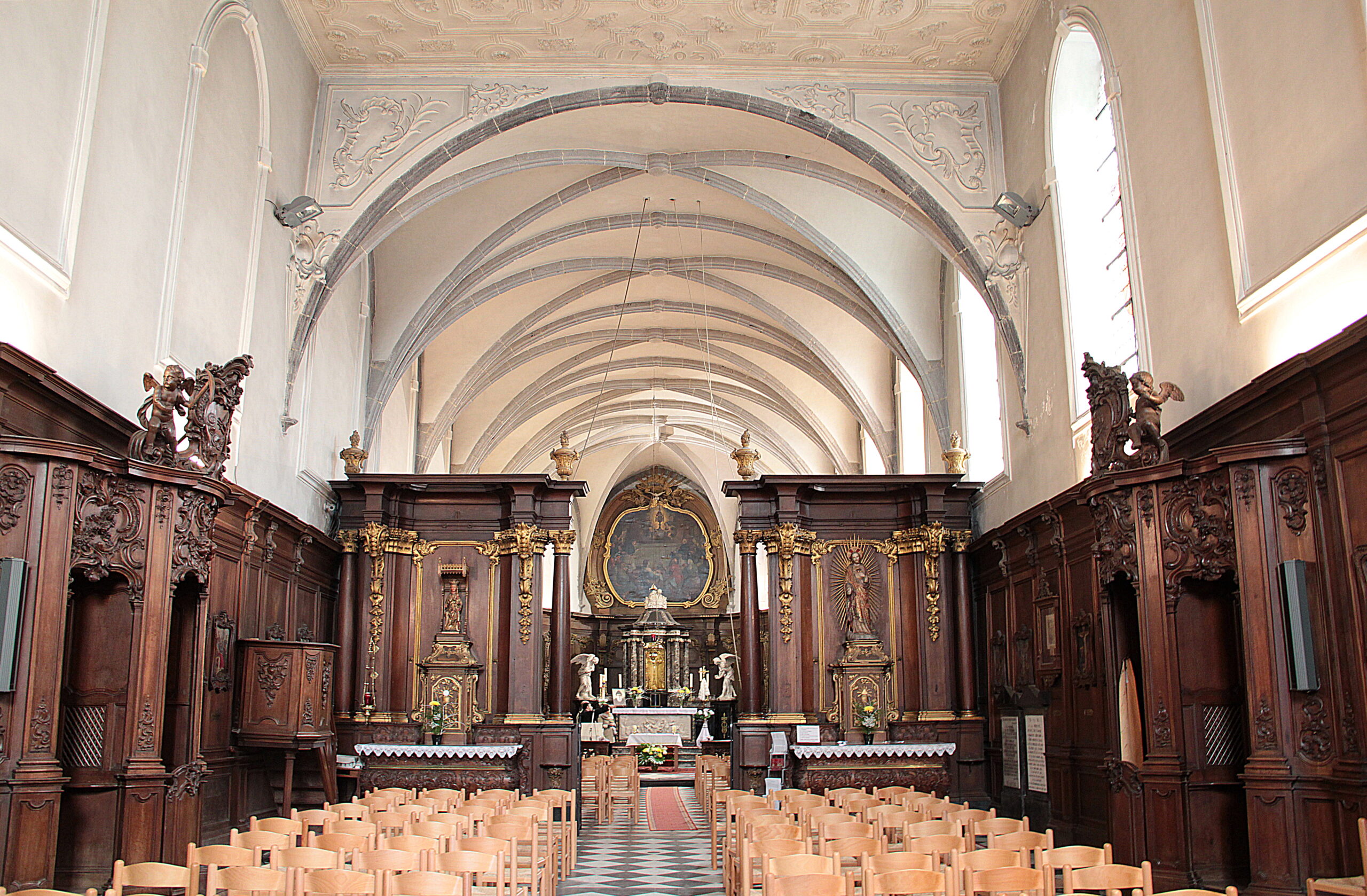
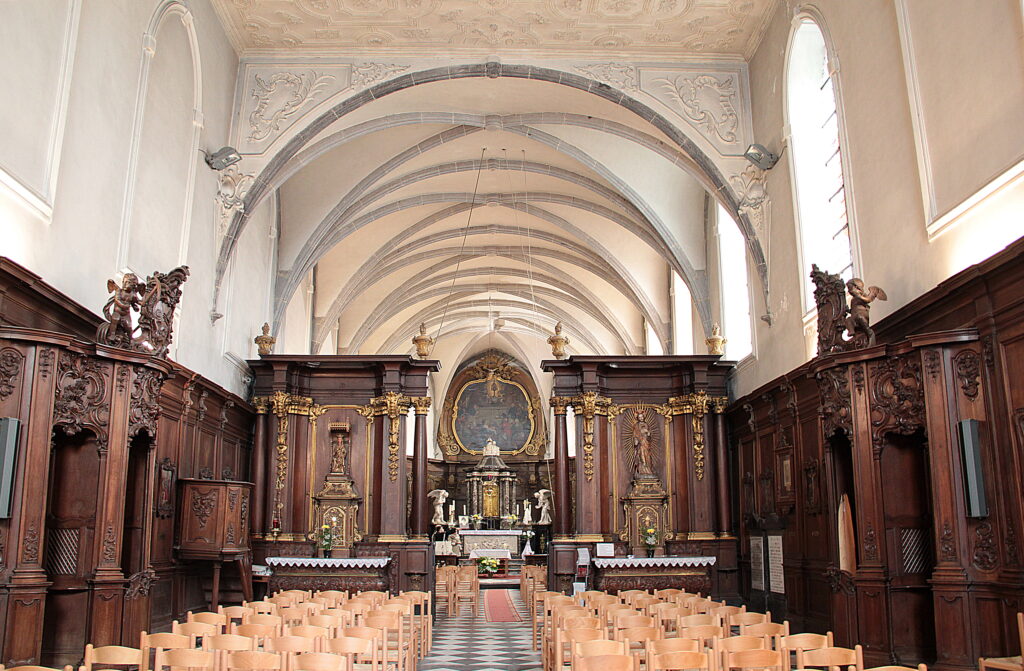
The current chapel retains elements of different times and a rich furniture. The photographed interior shows the ship, the wooden silery and the liturgical space where the community and pilgrims meet.
The architecture is not that of an isolated museum room. It's still a place of worship. The visit requires silence, respect for the celebrations and attention to the indications of the monks.
exact location
The monastery Saint-Charbel and the chapel of the Holy Blood are located in Rue Armand De Moor 2, 1421 Ophain-Bois-Seigneur-Isaac, municipality of Braine-l'Alleud, Brabante Valon, Belgium.
The coordinates 50,6443121, 4,3224949 place the monastic set and the chapel. The marker corresponds to the current custody of the relic and the effective centre of worship, not only to the general name of the people.
Responsible classification
The chart is classified as "Eucharistic miracle with current historical ecclesial veneration." It is based on the 1413 decision, the preserved relic, the authorized procession and the documented continuity.
At the same time, it declares the limit of available evidence: the approval of the cult should not be transformed into modern scientific certification. This distinction allows us to present devotion with respect and rigour.
Spiritual feeling
The tradition of Bois- Seigne- Isaac leads to the mystery of Christ who spills his blood for love, not violence or revenge. Veneration must strengthen communion with God and mutual love.
To participate in the Mass, to worship the Most Holy and to accompany a procession only make sense if they form a reconciled heart, attentive to the poor and willing to serve. The extraordinary sign always refers to the ordinary life of the Gospel.
Sources consulted
- CathoBel: six hundred years of Holy Blood procession, bull of 1413, veneration and traditional calendar.
- CathoBel: Jubilee of the Abbey in 2024, historical account, approval of 1424 and current cult.
- CathoBel: Jubilee of the Holy Blood 2014, pastoral sense of relic and procession.
- Cathobel: Maronite community and Saint- Charbel monastery, contemporary custody.
- Exposure associated with San Carlo Acutis: Bois-Seigneur-Isaac, secondary devotional repertoire contrasted.
Para orar
Lord Jesus, who sealed with your blood the covenant of love, increases our faith in the Eucharist. Be grateful, reconciled and attentive to those who suffer. May all veneration lead us to worship you and to serve you. Amen.
Image credit
Interior of the Capilla de la Santa Sangre de Bois-Lord-Isaac. Jean-Pol GRANDMONT / Wikimedia Commons, CC BY-SA 3.0. File and license in Wikimedia Commons.
.JPG)