
A documented history of the Eucharistic miracle of Boxmeer: the account of wine and body, the medieval tradition, the testimonial research of 1618, the episcopal recognition of 1631, the relic and the existing Boxmeerse Vaart.
La Santa Sangre de Boxmeer
Boxmeer retains one of the most lasting Eucharistic traditions in the Netherlands. Its origin is located around 1400 in the parish church of San Pedro, where a priest would have seen the contents of the chalice overflow during the mass.
The cult led to pilgrimages, a brotherhood, altars, artistic objects and the procession called Boxmeerse Vaart. Unlike other Dutch cases, here a body is preserved as a relic.
The priest Arnoldus Groen
Tradition identifies the celebrant as Arnoldus Groen, who died in 1419. During the consecration he would have experienced doubts about the sacramental transformation of bread and wine into the Body and Blood of Christ.
The story presents doubt not as a serene intellectual question, but as a crisis of faith within the liturgy. His outcome highlights the priest's repentance and his return to confidence.
The wine that overflowed the chalice
According to the narrative, the wine changed its appearance and began to overflow on the body, the linen cloth placed under the chalice. By regaining Arnoldus the faith, the content would have returned to wine except the matter that remained on the fabric.
In the body a small red mass, described in the tradition as similar in size to a nutmeg, would have been formed. This fragment is the material center of later veneration.
What do we know about the early years
There is no record of the alleged phenomenon. However, there are early indications that devotion was already important a few decades later.
A ducal account of 1411 mentions a pilgrimage of Reinoud IV from Güeldres to the Holy Blood. Although Boxmeer is not explicitly written on that line, the context makes identification likely.
The Guild of the Sacrament and Blood
Around 1450 a guild dedicated to the Most Holy Sacrament and Holy Blood is documented. Legacies of 1454, 1504 and 1508 show that the institution received wheat, land and income.
These documents do not describe the miracle, but they prove that their veneration was organized and rooted in the religious and economic life of Boxmeer during the 15th and 16th centuries.
The transfer to Gennep
In 1583, in the face of a military threat to the lordship, the relic was taken to Gennep to protect it. He remained there 11 years and returned to Boxmeer in 1594.
The loss of old documents was attributed to that period of instability. The continuity of the object and the lack of the original scriptures created the need for further research.
The testimony investigation of 1618
In 1618, parish priest Johannes Franssen promoted an investigation before the local judges. On June 13, some of the older inhabitants appeared to declare what they knew about veneration.
Some of the information came from the hearing of parents and elderly people born around 1520. One witness recalled that there had been stamps and letters, lost by the neglect of former administrators.
What evidence and what does not prove the record
The 1618 Act documents an oral memory and a previous practice of veneration. It is not an eyewitness statement from 1400, because it was written more than two centuries later.
Its value is to rebuild tradition when the old documents were lost. To present it as a scientific report on the matter of the body would be anachronistic.
The Episcopal Approval of 1631
On 26 November 1631, Jacobus à Castro, Bishop of Roermond, endorsed the act with his signature. The veneration thus received official ecclesiastical recognition.
The episcopal signature legitimizes veneration within its historical context. It does not amount to a laboratory test or automatically converts all the narrations transmitted into contemporary observations.
The investigation of cures
The parish priest Antonius Wilhelmus Peelen gathered about 1660 news about history and about cures attributed to veneration. In addition to a priest, he used medicine with pontifical permission.
The Meertens repertoire lists eleven accounts of the 17th century related to pilgrimages, promises and offerings. They are historical testimonies of attributed devotion and relief, not clinical stories evaluated with current criteria.
The relic of 1656
In 1656, Count Albert van den Bergh and Marie-Madeleine de Cusance gave away a large process relic of gold and silver metal. The piece, about 70 centimeters high, has a commemorative inscription.
The relic was restored in 1991. Since 2007 the cylinder containing the relic is permanently exposed within the large processing box in the chapel of the Holy Blood.
The church destroyed in 1944
The medieval temple was seriously damaged during World War II. In 1944, the chapel and altar of the Holy Blood, built in previous stages, also disappeared.
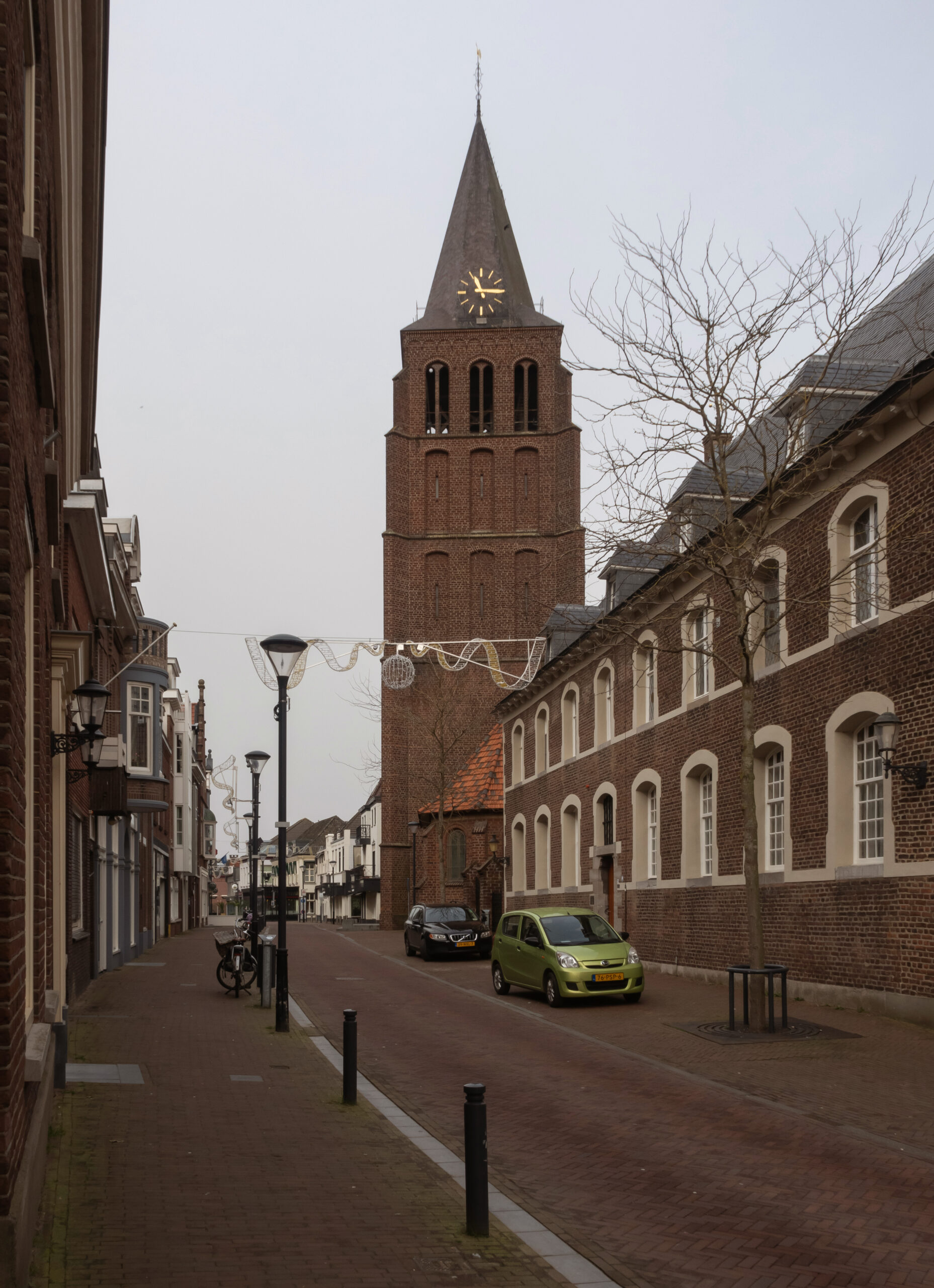
The current church of San Pedro was completed in 1951. The visible building is therefore not that of about 1400, although it occupies the center of the same parish tradition and retains the relic.
La capilla actual de la Santa Sangre
Next to the main entrance was built a new chapel, consecrated in 1953. There the relicary is kept and several vitrals narrate the origin and history of the cult.
The basilica is in Kerkpad 4, 5831 HS Boxmeer. The verified marker is 51,6480721, 5,9534870 and corresponds to the building where devotion can be found today.
La Boxmeerse Vaart
The procession runs through the streets on the second Sunday after Pentecost, known as Vaartzondag. The body is transported in the relic and is accompanied by the guild, faithful, music and performances.
The current organization states that the procession is still alive. In addition to its religious dimension, it has an important community and cultural expression, which must not hide the Eucharistic core that gave rise to it.
From a week of pilgrimage to a day
For centuries there was a Vaartweek with pilgrims from a wide region, including groups from Germany. Since about 1995 the activity has been concentrated mainly on the day of the procession.
The Meertens Institute points to a reduction in the scope of pilgrimage and devotion in favour of folklore components. The fact sheet contains both realities: genuine continuity and social transformation.
A preserved relic with complex history
To say that the relic is preserved does not mean to affirm a perfect documentary chain since 1400. There were transfers, wars, destroyed altars and lost documents.
The continuity is based on the body venerated, the institutional memory, the act of 1618, the recognition of 1631 and the subsequent relicaries. The page exposes that chain without hiding its limits.
It also distinguishes the cloth attributed to the origin, the small material attached, the cylinder that protects it and the large processing box of 1656. They are not four different relics, but successive layers of conservation and presentation.
How to visit Boxmeer
The Basilica of St. Peter today brings together the relicary, the chapel and the visual memory of the event. The parish hours and conditions of access should be consulted before travelling.
To live the process tradition, you have to check the annual date on the official Vaart website. "Two Sundays after Pentecost" changes day each year.
The map and continuity of the solar
The marker is assigned to the present temple because there remains the veneration and relic, and because it happens to the destroyed church where tradition locates the origin.
The description expressly warns that the building was completed in 1951. So the picture and the map are not presented as if they showed medieval architecture.
Doubt and faith
The story of Arnoldus is often read in response to a Eucharistic doubt. Doubt, however, should not be treated with contempt or used to scare those who are going through a spiritual crisis.
The Christian faith can seek understanding, ask for help and grow through prayer, Scripture, liturgy and accompaniment. The story invites humility, not humiliation.
The Eucharist as a service
The procession makes sense when it leads to mass, worship and charity. The Christ venerated in the sacrament is the same who calls to recognize his face in poor, sick and single people.
The continuity of six centuries is not measured just by keeping an object. It becomes fruitful when a community transmits faith, takes care of its heritage and serves its neighbor.
Sources consulted
- Instituto Meertens: Boxmeer, Holy Blood, account, documents, research, objects and evolution of the cult.
- Organization of the Boxmeerse Vaart, relic and procession in force.
- Boxmeer Center: St. Peter's Basilica, location and annual continuity.
- Holy Blood Guild of Boxmeer, institutional history and accompaniment of the relic.
- Repertoire associated with San Carlo Acutis: Boxmeer, initial reference contrasted.
Para orar
Lord Jesus, present in the Eucharist, welcomes our doubts and leads us to a humble and sincere faith. Make the veneration of your surrender the servants of the poor, the guardians responsible for memory and the builders of communion. Amen.
Image credit
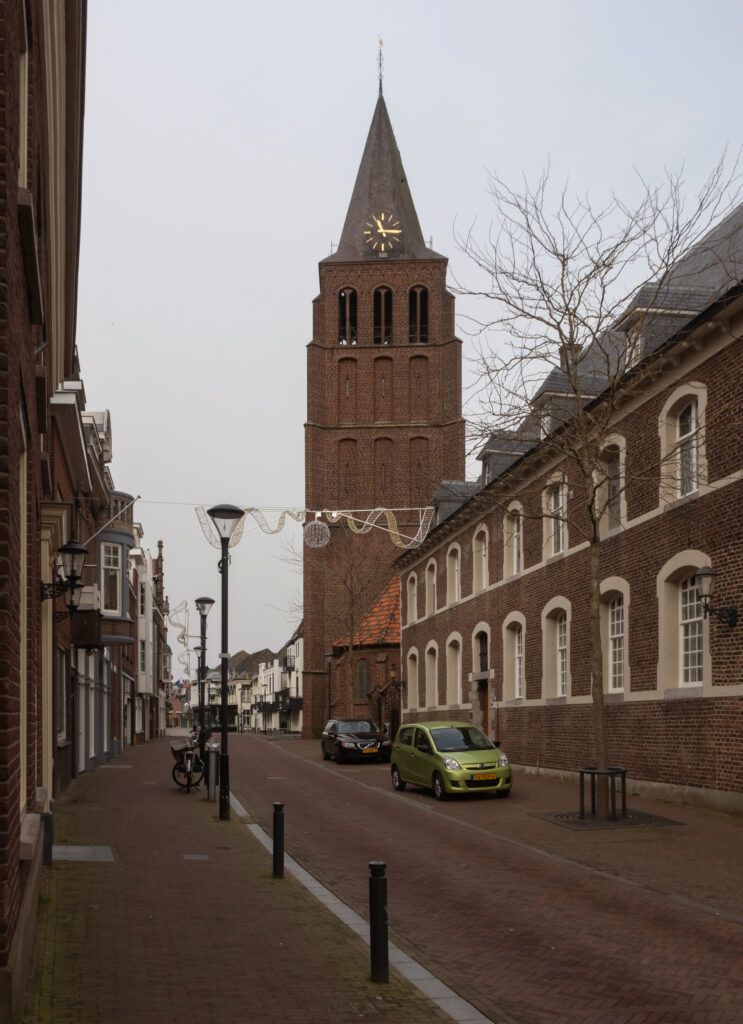
Basilica of St. Peter of Boxmeer, where the relic is preserved and the procession begins. Michielverbeek / Wikimedia Commons, CC BY-SA 4.0. File and license in Wikimedia Commons.
