
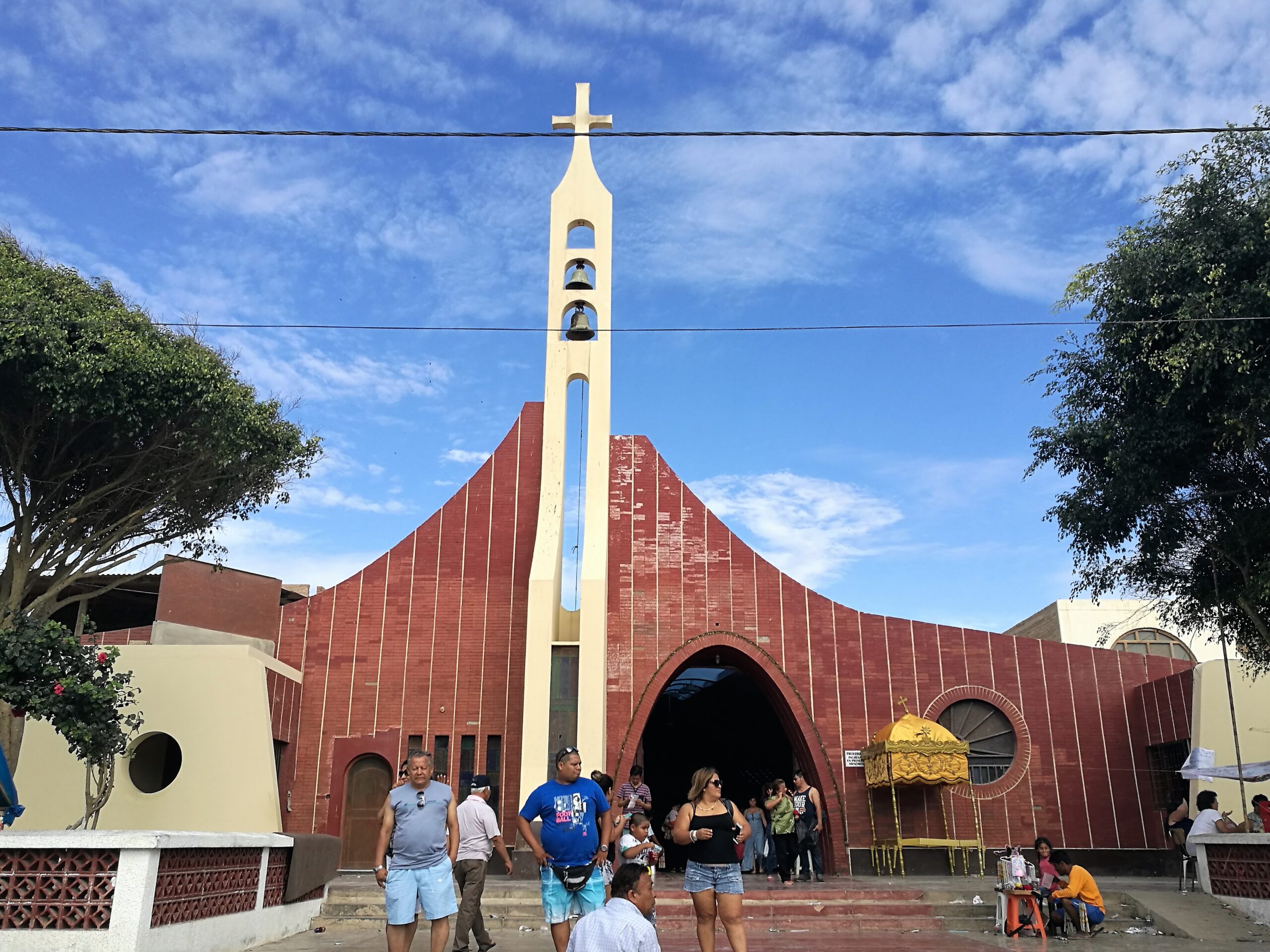
City Eten retains the tradition of two apparitions of the Child Jesus in the holy host, on June 2 and July 22, 1649. The parish of Santa María Magdalena and the Diocese of Chiclayo hold a celebration that brings together thousands of faithful.
Eten City and the celebration of 1649
The Eucharistic tradition of City Eten, in the Peruvian department of Lambayeque, is linked to two liturgical celebrations of 1649. The collection associated with San Carlo Acutis places the first on the night of June 2, on the eve and the solemn exhibition of Corpus Christi. The second is dated July 22, the feast of Saint Mary Magdalene, patron of the community.
The stage is not a devotion separate from the Mass, but the worship of the Most Holy Sacrament. According to the story transmitted, the faithful claimed to contemplate the Child Jesus in the consecrated host. This memory gave rise to the advocation of the Divine Child of the Miracle and continues to be part of the religious and cultural identity of Eten.
The first apparition: June 2
The version of the exhibition by Carlo Acutis named the Franciscan Jerónimo de Silva Manrique. At the end of the Corpus Christi trade and to be prepared to keep custody, the religious would have stopped by observing in the host the bright face of a child, surrounded by dark hair. The faithful present would have shared the vision.
The file does not transform this devotional narrative into a notarial transcription. It is kept with attribution and date because it explains the birth of the cult, but its seniority requires caution: here has not been examined an original act of June 1649 or a complete documentary chain that allows to verify each physical description.
The second apparition: July 22
The second manifestation is that which the Peruvian Episcopal Conference expressly commemorates in its current information. Tradition points out that during the exhibition of the Most Holy in the feast of Saint Mary Magdalene, the Child was again shown in the host. The account attributed to brother Marco López adds a purple robe and a dress associated with the Mochic inhabitants of Eten.
The extensive versions also mention three small white hearts united, interpreted as a symbol of the Most Holy Trinity. This is a catechetical element transmitted by tradition. The real presence of Christ in the Eucharist belongs to the Catholic faith; the visible features attributed to the episode of Eten constitute a particular devotional phenomenon and not a condition for believing in the Sacrament.
An ecclesial reception that continues
The most solid source to prove the validity of the cult is the Peruvian Episcopal Conference itself. His chronicle includes a mass presided over by the apostolic administrator of Chiclayo, Monsignor Guillermo Antonio Cornejo Monzón, in the atrium of the parish Santa María Magdalena. Thousands of faithful gathered to celebrate the 374 years of the second apparition.
In his homily, the prelate linked the memory of the Child Jesus in the host to Christian life, reception, hope and charity. The feast is integrated into the International Fair in honor of Saint Mary Magdalene and the Divine Child of the Eucharistic Miracle. These data demonstrate a current pastoral celebration; they do not in themselves amount to locating a formal decree of authenticity, which is not affirmed until the document appears.
Sources and limits of the investigation
Two layers are distinguished for this publication. The Peruvian Episcopal Conference attests to the temple, the feast, the episcopal preaching and the way in which the local Church calls the event. The exposure associated with Carlo Acutis provides the detailed narrative of the two apparitions, the names and the traditional symbols.
The difference is important: a contemporary pastoral source can confirm that veneration exists, but it does not automatically replace the testimonies of the 17th century. This is why the page uses formulas such as "according to tradition" when it tells the visual elements and reserves the direct statements for the celebration that can be verified today.
The Mochica people and a respectful reading
The tradition interprets the child's dress as a gesture of closeness to the mochic inhabitants. This reading must be expressed with respect, without turning the identity of a living people into a picturesque decoration or attributing descriptions that do not come from careful sources. The spiritual core is the closeness of Christ to a concrete community, with his language, history and dignity.
Devotion can thus remember that the Incarnation does not erase cultures. The Church is called to proclaim the Gospel without despising peoples, listening to their memory and purifying any form of discrimination. The Eucharist gathers ununiformed and demands to recognize the other as a brother.
World map classification
Eten is incorporated as "Eucharistic apparition with existing diocesan veneration and celebration." It is not classified as a preserved material transformation or a host subject to modern scientific analysis. The most firm fact is the continuity of the holiday in the parish and its public reception by the Peruvian Church.
Location and visit
Santa María Magdalena Parish, Eten City, Lambayeque, Peru. The marker uses the coordinates -6.907648, -79.862465, obtained from the geolocation of the free photograph of the facade and contrasted with the nominal identification of the temple in the ecclesial source. The program, the hours and the conditions of access should be consulted with the parish or the Diocese of Chiclayo before travelling.
Spiritual feeling
The Divine Child of the Miracle looks to the humility of Christ: the Son of God is given up under the simple appearance of bread. Tradition invites you to worship with reverence, receive communion with a reconciled life and discover the Lord in those in need of reception.
The best way to honor this memory is not to seek extraordinary signs out of curiosity, but to let the Eucharist transform relations. Faith, hope and charity - the words highlighted in the diocesan celebration - become concrete in listening, accompanying and serving.
Sources consulted
- Peruvian Episcopal Conference: celebration of the Divine Miracle Child in Eten City, main ecclesial source on the current cult.
- International exhibition associated with San Carlo Acutis: Eten, historical-devotional account with contrast.
Para orar
Child Jesus, present in the Eucharist, make us small to welcome you and great in charity. Bless the people of Eten, strengthen those who keep this memory and teach us to recognize you in the consecrated bread and in each brother. Amen.
Image credit
Fachada de Santa María Magdalena de Ciudad Eten. Pitxiquin / Wikimedia Commons, CC BY-SA 4.0. File and license in Wikimedia Commons.
