
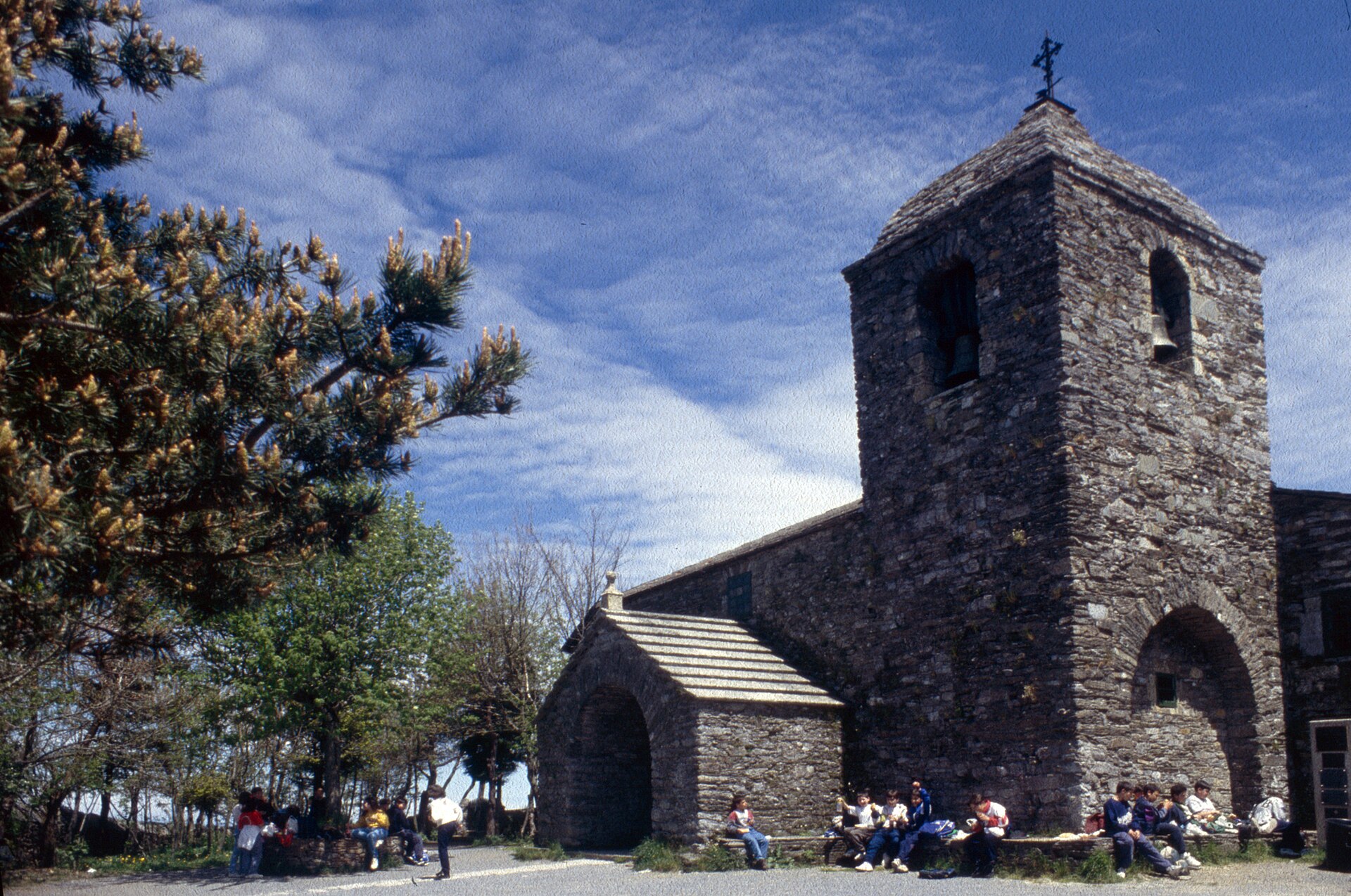
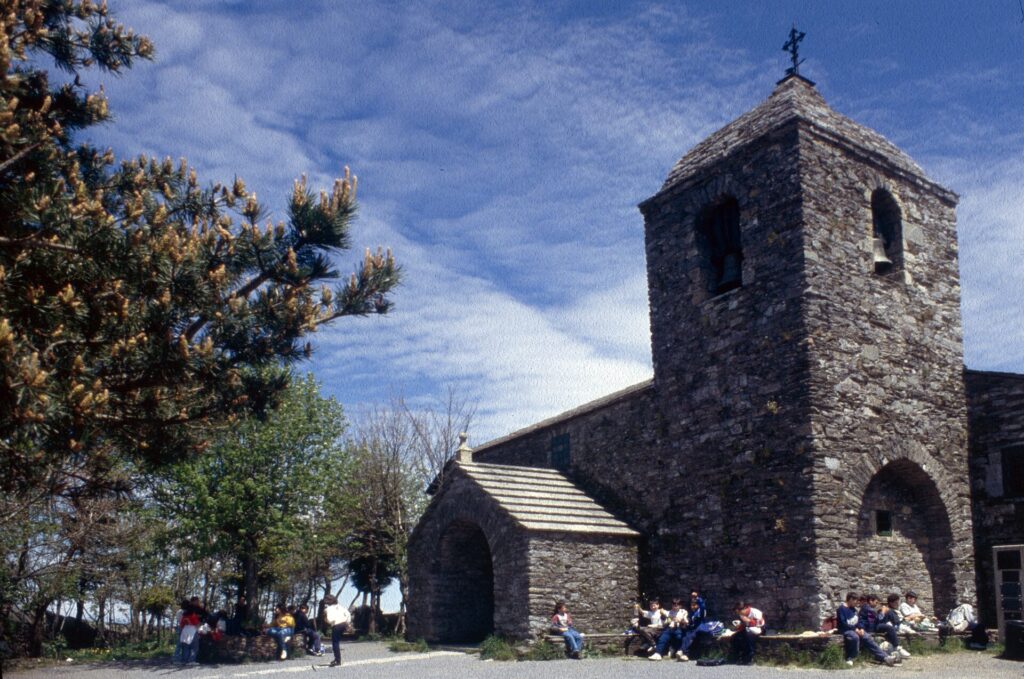
Medieval Eucharistic Tradition of O Cebreiro, on the Way of Santiago, guarded by the chalice and the relicaries of the sanctuary.
History and sense of devotion
The tradition places the prodigy in a mass celebrated during a strong snow: a neighbor of Barxamaior would have come with sacrifice while the celebrant doubted the real presence. During the consecration, bread and wine would have been significantly manifested as flesh and blood. The diocese of Lugo presents O Cebreiro as a Eucharistic and Marian sanctuary and speaks expressly of a tradition located in the 12th century. This fact sheet should therefore not convert late narrative details or an approximate date into documented facts.
The center of devotion
The story invites us to recognize the real presence of Christ in the Eucharist and the continuing faith of the pilgrim. The Church of Santa María la Real retains the Romanesque chalice and blisters linked to tradition.
Relationship to the Marian tab
Reza el Rosario already contains a page about Santa María la Real do Cebreiro. This new fact sheet studies the Eucharistic event and will link with it without duplicating the sanctuary.
Lord Jesus, increase our faith and make us recognize your presence in the Party Bread. Amen.
Sources consulted
- Romeria en O Cebreiro - Diocese of Lugo. The character of the sanctuary and the prudent formulation of tradition.
- Santa Maria A Real do Cebreiro - Pray the Rosary. Related Marian record; do not duplicate sanctuary.
- OpenStreetMap — Santa María do Cebreiro - OpenStreetMap contributors. Proposed location.
Editorial criteria and documentary materials
The diocesan source calls it tradition and places it in the 12th century; corrected the dataset, which stated about 1300 as a fact.
Cartographic location: Santa María la Real do Cebreiro · Lugo (Spain). Coordinates verified by the source linked to the editorial file. In universal devotions, the marker represents a historic place especially linked to devotion and does not restrict its scope.