
On Easter of 1254, a great fall in the collegiate of Saint- Amé would have returned by itself to the purifier and showed different images of Christ. The temple disappeared; a host identified in 1854 with the historical relic is now held in the collegiate of San Pedro.
The Easter episode of 1254
The story is located on April 6, 1254, during Easter time, in the former collegiate of Saint- Amé de Douai. A priest who had just distributed the communion warned a host on the ground and kneeled to pick it up.
According to the narration preserved by the local Church, the form was raised by itself and placed on the purifier. The priest called the canons and the people, who would have seen in it a visible manifestation of Christ.
The images covered
The attendees wouldn't have seen all the same. Some described the Child Jesus; others, Christ crucified or as judge. The diversity of the visions is part of the story and does not advise to present it as a uniform physical transformation observed in the same way.
The fact sheet classifies it as a Eucharistic manifestation linked to a host and a later cult. It does not claim that there is a photograph, modern analysis or contemporary material description capable of replicating those visions.
Tomás de Cantimpré
The diocesan source attributes the main testimony to the Dominican Thomas of Cantimpré, auxiliary bishop of Cambrai. He said that he went to Douai, asked to see the host and first he saw a white form and then the face of Christ with different appearances.
The portal itself recognizes that no other contemporary account is preserved. This limit is decisive: there is an important textual tradition attributed to a 13th century author, but not a plural set of independent coetaneal acts accessible online.
La antigua colegiata de Saint-Amé
The episode occurred in Saint- Amé, not in the temple where the host is kept today. The former schoolgirl was closed in 1790, looted three years later, sold in 1798 and finally demolished. His urban memory remains in the current place Saint- Amé.
The approximate reference of the solar is 50,3689203, 3,0754591. It is not used as a main marker because there is no existing relic or place of Eucharistic veneration there; it appears in the chart to rebuild historical geography.
Party, brotherhood and medieval tradition
A 1356 document shows that the memory of the Most Holy Sacrament of the Miracle was already celebrated at that time and presents the custom as a previous. Over time, a fellowship was created dedicated to safeguarding memory and veneration.
The festive continuity demonstrates the historical roots of the cult. On its own it does not resolve all questions about the preserved matter or every detail of the episode, but it allows to follow a much older ecclesial memory than modern repertories.
The Revolution and the Break of Custody
During the French Revolution, Saint- Amé was desecrated and destroyed. The local narrative claims that pious hands had removed the host before the pixide was opened, but the object ceased to be publicly located and the visible chain of custody was interrupted.
This rupture should not be omitted. It avoids saying that the venerated form today was documented without discontinuity since 1254. The later history depends on an identification made in the 19th century.
The rediscovery of 1854
In 1854 a host was found among relics kept in a small wooden box that served from 1805 of pedestal to a crucifix in a chapel of Saint- Pierre. She was accompanied by a note that identified her as the Sacrament of the Miracle saved in 1793.
The diocesan source adds that the form presented medieval iconographic features. The finding and the note supported ecclesial identification, but they do not amount to a modern material traceability. That's why the file speaks of a host identified with the historical relic.
Recognition and ecclesial custody
In 1855, Cardinal Régnier promoted a commission and ordered that the host be kept religiously in a tabernacle. In the 20th century, Archbishop Jean- Arthur Chollet ordered protective measures and recorded his recognition, although a report was lost in the burning of the archives during World War I.
The host was moved to protect her during the wars of 1914-1918 and 1940. The custody accounts keep dates, responsible and containers, and show pastoral concern to avoid new manipulations.
La colegiata de San Pedro
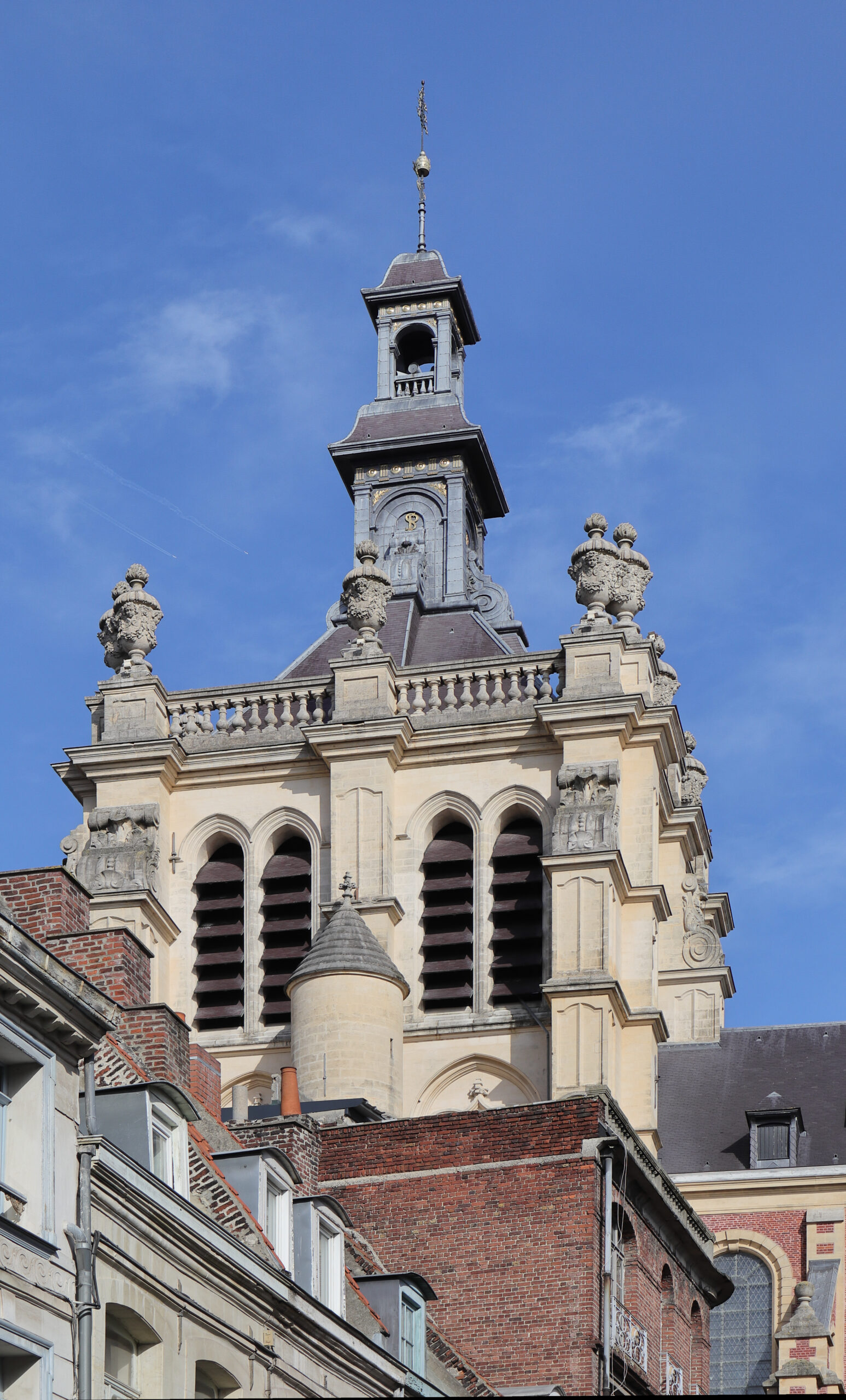
The host is currently kept in the tabernacle of the collegiate of St. Peter, in the chapel of Our Lady of the Miracles. This is the living place of worship and the most useful point for the pilgrim.
The main marker is set at 50,3700920, 3,0817225, the building's coordinate. The page simultaneously presents the current custody and the historical site, without pretending that both places are the same.
The restored fellowship
In 2007, twenty faithful restored the Brotherhood of the Hostia of the Miracle of the Blessed Sacrament. His mission is to maintain worship and memory. The exhibition for worship on the first Thursday of the month shows contemporary and verifiable practice.
The hours may vary and must be confirmed with the parish. The page does not promise continuous access to the relic or replace the liturgical and security indications of the temple.
The annual party
The solemnity of the Most Holy Sacrament, worship and processions have maintained the link between relic and community. The diocesan sources publish recent celebrations and homilies of the Archbishop of Cambrai.
The continuity of the cult is different from a scientific statement about the exact antiquity of the host. Both issues are presented separately so that the reader knows what is institutionalized documented and what belongs to traditional identification.
Classification on the map
Douai is classified as "Eucharistic miracle with current historical ecclesial veneration." The main point is Saint- Pierre, because there the host is preserved and venerated. The Saint- Amé solar is recorded as a secondary historical location.
The category recognizes the medieval story, the feast and the custody, but makes revolutionary discontinuity visible. A responsible map should not hide the transfer or place the original episode within the current building.
The real presence and historical doubts
The Catholic faith in the real presence does not depend on the acceptance of every extraordinary detail of Douai's account. The Eucharist is sacrament by the words of Christ and the liturgical action of the Church, not by a sensitive vision.
Historical questions can be asked without irreverence. Examining sources, dates and custodians protects devotion from exaggeration and helps to venerate with freedom, intelligence and truth.
Guidance for the pilgrimage
The pilgrim can go to Saint- Pierre for Mass and Adoration, respecting parish schedules and standards. The place Saint- Amé allows you to understand the urban transformation and remember the missing temple, but it is not today a sanctuary of the relic.
The visit makes sense when it leads to reconciliation, communion and charity. The contemplation of a relic does not replace the dignified reception of the Eucharist or the care of Christ present in the poor.
Sources consulted
- Archdiocese of Cambrai: origin of the pilgrimage.
- Archdiocese of Cambrai: account attributed to Thomas of Cantimpré.
- diocesan portal: history, revolution and rediscovery.
- Parish Saint- Maurand- Saint- Amé: current brotherhood and custody.
- Exposure associated with San Carlo Acutis: Douai panelas a secondary repertoire.
Para orar
Jesus the Eucharist, strengthen our faith without extinguishing our search for truth. Have us worship you with humility, receive your Body with dignity and serve our brothers with love. Amen.
Image credit
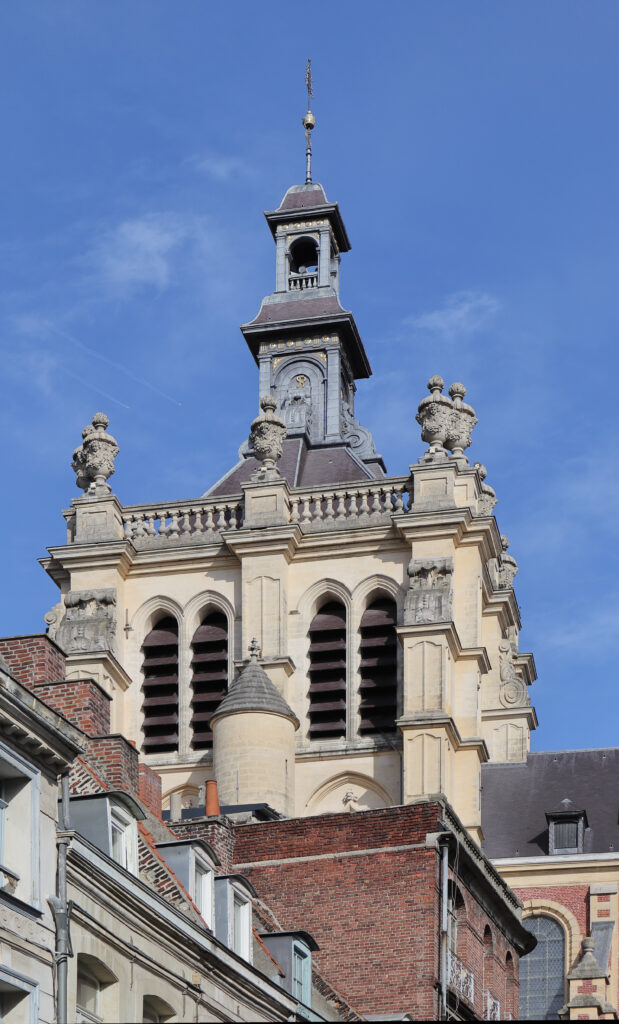
Collegiate of San Pedro de Douai. JackyM59 / Wikimedia Commons, CC BY-SA 4.0. File and license in Wikimedia Commons.
.jpg)