
In Pentecost, 1608, a fire destroyed the repository on which two consecrated forms were exposed in Faverney. According to the ecclesiastical investigation, the ostensory was suspended for thirty-three hours. One of the forms continues to be venerated in the basilica.
Faverney en 1608
Faverney is located in the current French region of Burgundy-Franco Condado. At the beginning of the 17th century, the former abbey was experiencing material and spiritual difficulties. The town, then located in Burgundy County, was also aware of the consequences of wars, epidemics and religious tensions.
In this context, the community celebrated Pentecost in 1608 with the solemn exhibition of the Most Holy Sacrament. The property source of the municipality allows for the reconstruction of the basic sequence and the distinction between subsequent devotional amplifications.
Two forms in a relicary ostensory
For the celebration two consecrated forms were placed in a relicary ostensory on a repository prepared in the church. It was not an isolated mass, but a day of worship linked to Pentecost and the life of the monastic community.
The presence of two forms is important to follow your later history. Both participated in the episode of 1608, but only one remained definitely in Faverney. The other was donated to Dole and had a different fate.
The night fire of Pentecost
During the night of Sunday 25 to Monday 26 May, the fire lit in the repository. At dawn, the monks found the church full of smoke and the support consumed by the flames. The ostensory with the forms, according to the testimonies gathered, remained suspended without visible support.
The narrative does not hold that the forms were transformed into flesh or blood. The sign attributed to the miracle consists in the preservation and suspension of the ostensory after the fire, before whom they went to the church.
Thirty-three hours
The news spread and many faithful approached Faverney. The municipal source states that the ostensory continued to be suspended for thirty-three hours. The number was incorporated in a stable manner into local memory and subsequent commemorations.
On Tuesday, during the Mass and at the time of the elevation, the ostensory would have come down gently to a table ready to receive it. This decrease concludes the extraordinary sequence described by the witnesses.
The ecclesiastical research
The Archbishop of Besançon promoted a commission of inquiry. On 4 June, its members signed a record gathering the statements of more than 50 witnesses and concluding that there was legal evidence of the event in accordance with the criteria of the time.
A few days later, an archbishopric mandate declared authentic a miracle of the Most Holy Sacrament and authorized the worship. This intervention differentiates Faverney from traditions that have only popular memory or an alleged but not identified historical approval.
What does a 1608 statement mean?
Research must be understood in its historical context. The procedures, probative language and technical possibilities of 1608 are not those of contemporary scientific research. The file does not convert the canon file into laboratory analysis.
It can be said that the ecclesiastical authority examined testimonies, left formal record and authorized veneration. This institutional data is relevant and is presented without exaggerating what the document can demonstrate four centuries later.
The form that remained in Faverney
One of the two forms was left in the ancient abacial and was venerated over the centuries. During the French Revolution he was safe and returned to the church in June 1795. The continuity of custody allows to speak of a preserved Eucharistic relic.
The place maintains a chapel of the Holy Hostia, created in 1617 in an earlier chapel. There are also material references to the site of the repository and a commemorative plate installed in 1912.
La forma sent to Dole
In December 1608, the second form was offered and moved to Dole, then the capital of Franco Condado. An exvote made in 1622 recalls the city's thanks for that gift.
During the revolutionary riots, Dole's form disappeared. Their loss should not be confused with the story of the preserved form in Faverney. The tab and map point to the place of the relic still venerated, not a double object today.
The recognition of Pius IX
In May 1864, Pope Pius IX recognized the authenticity of the miracle of Faverney. The data appears in the municipal heritage guide along with the continuity of the pilgrimages and commemorations.
The anniversaries were especially celebrated in 1878, 1908, 1958 and 2008. These dates show the permanence of the cult and its insertion into the ecclesial life, beyond an isolated news of the 17th century.
The Pentecost Monday Party
The Holy Hostia is venerated in a particular way in the Eucharistic pilgrimages and festivities on the Monday of Pentecost. The celebration links the memory of 1608 with the liturgy and the worship of the Most Holy.
Timelines and modalities may change. Anyone who wishes to pilgrim must consult the parish or local institutions before the journey and remember that veneration is integrated into the sacramental life of the Church.
The Basilica of Our Lady the White
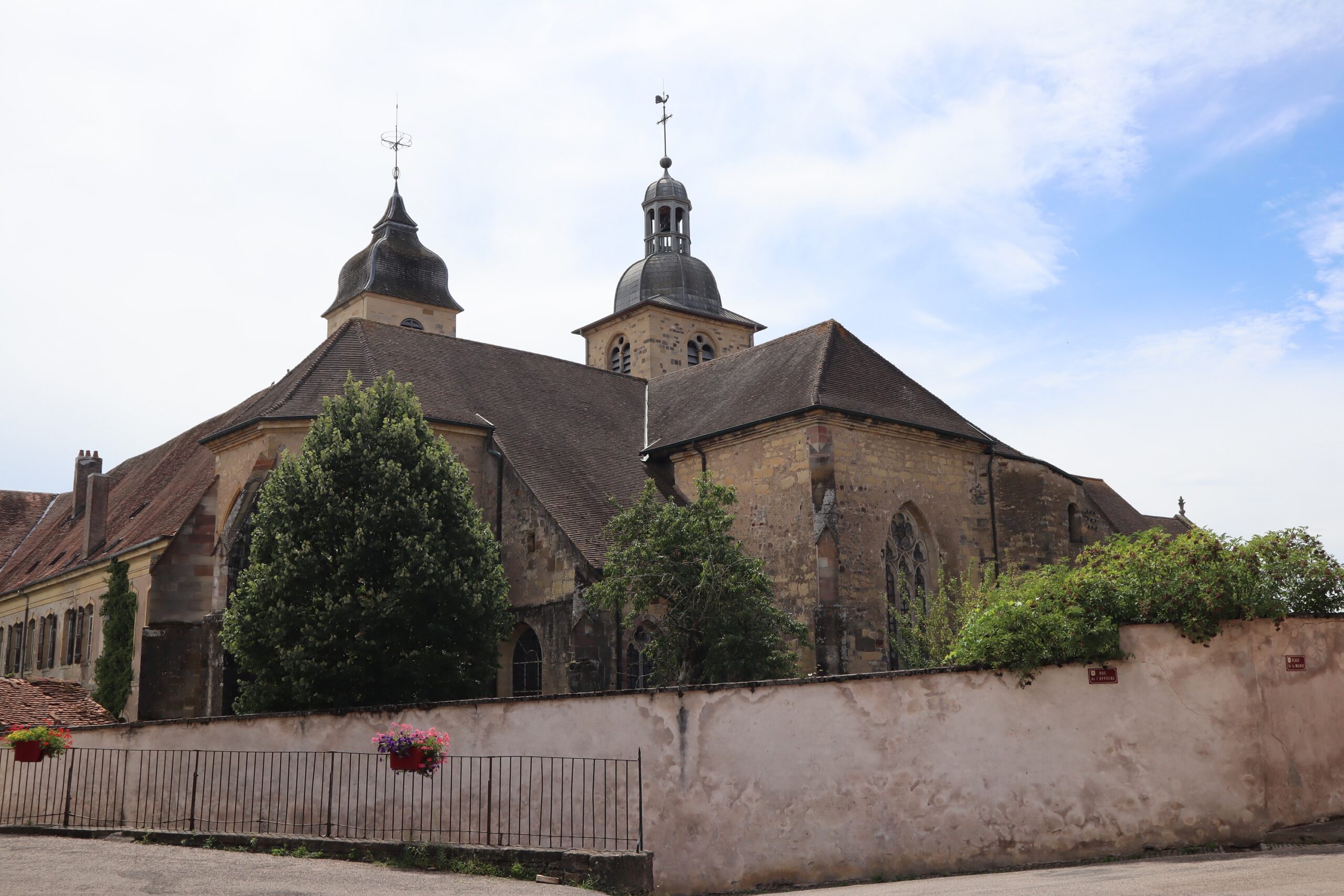
The church brings together a Roman ship and a Gothic choir. It was declared a historic monument in 1860 and raised to a minor basilica in 1912. Its architectural history precedes and survives the Eucharistic episode.
The coordinates 47.7673485, 6.1054571 identifies the building of the old abacial and present basilica, in the place Sainte- Gude. The marker represents both the historical place and the current custody.
Classification on the map
Faverney is classified as "Eucharistic miracle with existing relic and historical ecclesial veneration." The category reports that there is a venerated form, a historical ecclesiastical declaration and a current celebration.
It does not claim that all physical interpretations of the episode are scientifically proven. The map facilitates pilgrimage and places memory, but does not replace the reading of sources or discernment.
The Eucharist needs no show
For the Catholic faith, Christ is truly present in the Eucharist by consecration, even if no extraordinary sign occurs. The value of mass does not depend on a flame, visible suspension or sensitive phenomenon.
Recognized stories can move to worship, but they never replace the Gospel, liturgy and charity. Mature devotion avoids morbid curiosity and leads to silence, communion and service to those who suffer.
How to venerate with prudence
The preserved form is received as relic within a concrete ecclesial tradition. It should not be photographed or treated as an object of entertainment, nor should it be given autonomous power. Every visit must respect the rules of the temple.
The best preparation is to participate in the Eucharist, to reconcile, to pray and to practice mercy. The fire that did not destroy Faverney's memory can be read spiritually as an invitation to a purified and perseverant faith.
Sources consulted
- Municipality of Faverney: historical and heritage guide of the Basilicawith chronology, research, custody and veneration.
- Exhibition associated with San Carlo Acutis: Faverney panelused as a secondary and contrasting repertoire.
- Wikimedia Commons: photography and license of the old abacial.
_01.jpg)
Para orar
Jesus the Eucharist, kindle in us a humble and persevering faith. Have us truly worship you, participate in your table and bring your love to those who need comfort. Amen.
Image credit
Ancient abacial of Our Lady the White of Faverney. Jean de l'Auxois / Wikimedia Commons, CC BY-SA 4.0. File and license in Wikimedia Commons.