
In 1010, according to the ecclesial tradition of Ivorra, the priest Bernat Oliver doubted the actual presence during the mass and the chalice overlaid blood on the body. The sanctuary retains the memory of the prodigy; the Gothic relic and the cult remain linked to the parish of Sant Cugat.
Qué es el Sant Dubte de Ivorra
The Sant Dubte - the "Santa Duda" - is the Eucharistic tradition that has given religious identity to Ivorra, in the Leridan region of the Segarra. The story places the event in the year 1010, in the ancient church of Santa Maria, where today the Baroque sanctuary rises.
His name does not celebrate unbelief, but the passage from doubt to faith. The local memory presents the prodigy as a response to the inner hesitation of a priest at the central moment of the mass.
La misa de Bernat Oliver
According to the narrative transmitted by the sanctuary, Bernat Oliver, a natural priest of the nearby Torah, celebrated the Eucharist when he doubted the presence of Christ under the consecrated species. Then the contents of the chalice would have begun to become blood and to overflow on the bodies, the fabrics of the altar and the ground.
Some women who were spinning near the church would have collected some of the blood with stoves. These details belong to the devotional account preserved for centuries; there is no contemporary chronicle of 1010 that allows each scene to be reconstructed as a notarial act.
St. Ermengol and the tradition of Rome
The tradition tells that St Ermengol, Bishop of Urgell between 1010 and 1035, was in Guissona and went to Ivorra when he knew what happened. Then he would have taken the chalice and some of the bodies to Rome to present them to Pope Sergio IV.
The local account attributed to Sergio IV a bull that certified the miracle, granted privileges to a brotherhood and delivered other relics. The fact sheet retains this tradition, but does not present the bull as an original document now proven: the known documentary references are later and require careful historical reading.
What documents the later story
The sanctuary itself explains that the diocesan file retains nearby, although not coetanised, documentation and that at the end of the Middle Ages a process was formed related to the finding and examination of relics. In the 15th century, Alfonso the Magnanimo authorized the brotherhood to spread the memory of the event and gather aid for a worthy relic.
This later history proves the antiquity and extent of the cult, although it does not replace the original record of the 11th century. Differing the tradition received from the preserved documents does not weaken devotion: it makes it possible to count it with truth and without attributing it to a source more than it actually credits.
El relicario gótico
The most visible piece of this memory is a golden silver Gothic relic, made in the 15th century. Its central compartment keeps a fragment of fabric that tradition identifies with the stained bodies; around there are small relics associated with the pontifical delivery narrated.
The relic is today linked to the parish church of Sant Cugat de Ivorra. It is important to distinguish the two places: the sanctuary points to the location of the event, while the parish usually keeps the venerated whole. A responsible visit must confirm prior hours and conditions of access.
The present sanctuary
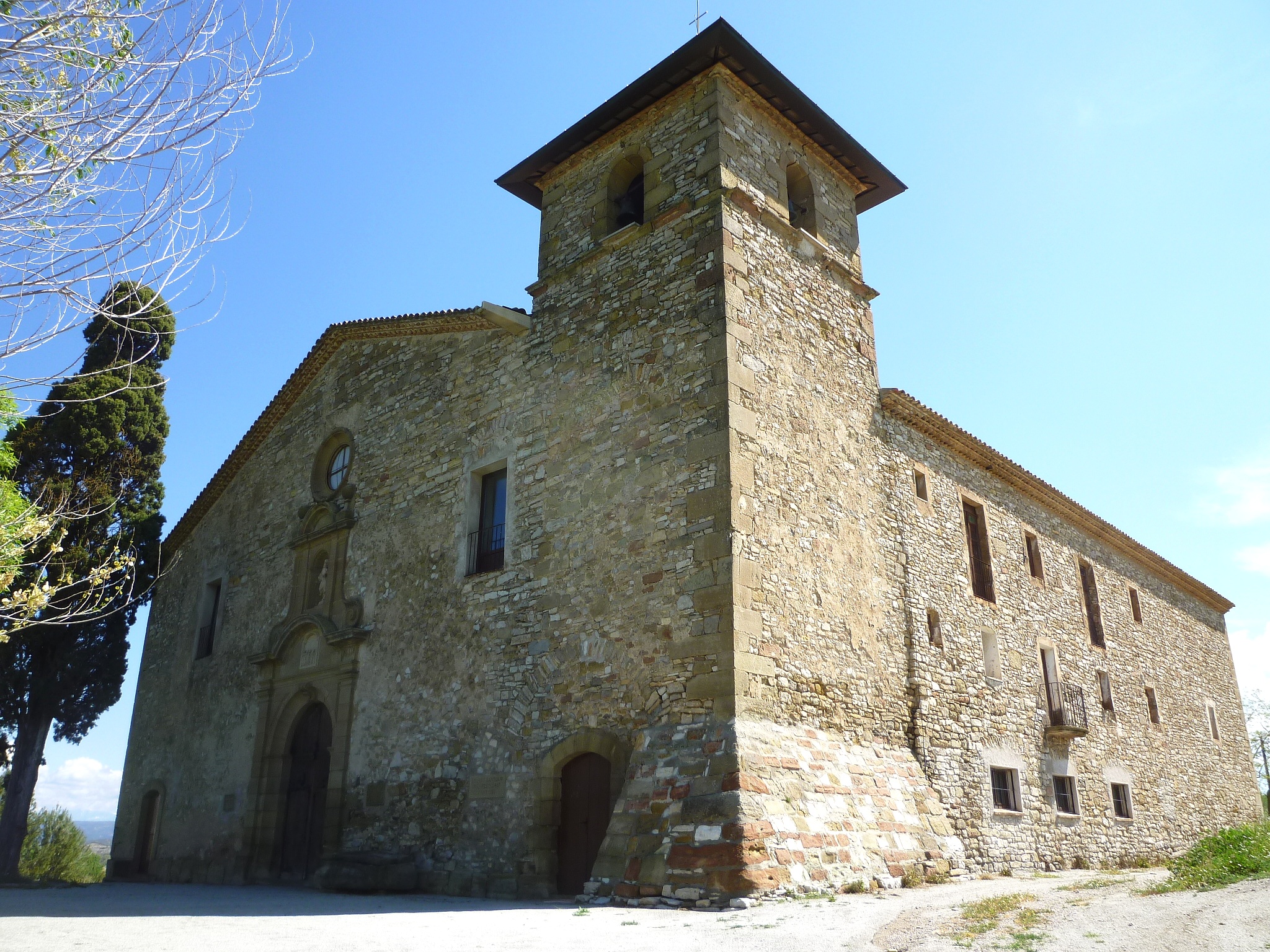
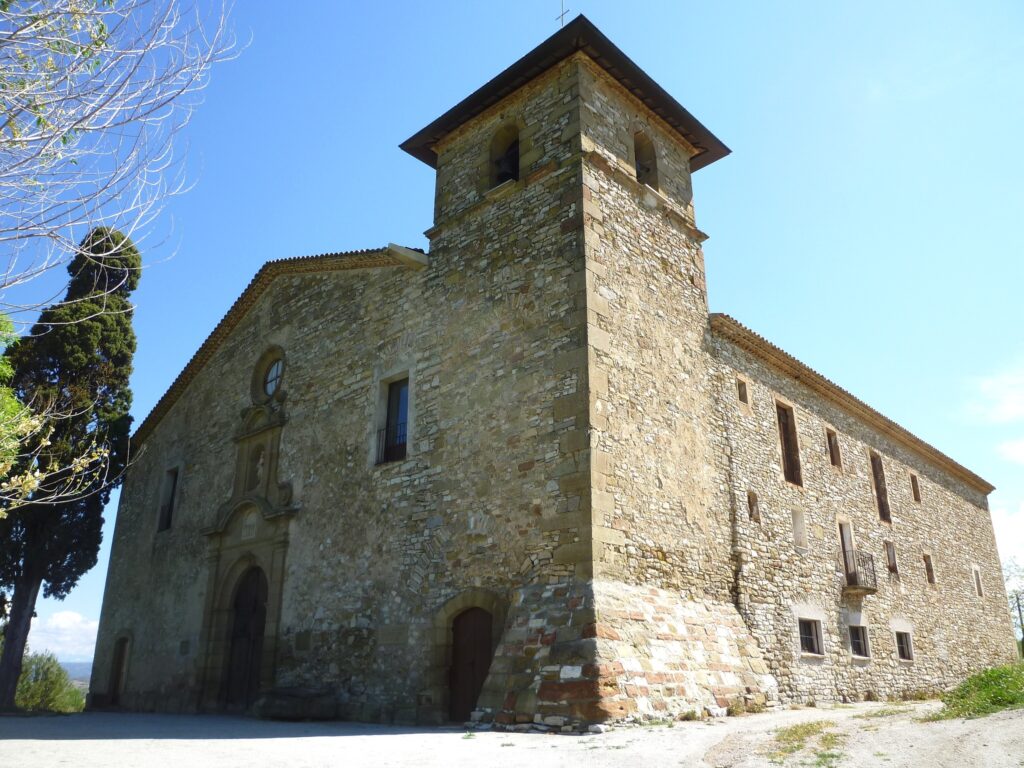
The old church was small for the pilgrimages. Instead the present shrine of Santa Maria de Ivorra, known as Sant Dubte, began to be built in 1663. The Baroque cover, completed in 1762, incorporates a representation of the miracle; next to the temple is preserved the old host for pilgrims.
The building was restored in 1998. Its architecture and rural location allow us to understand how the Eucharistic memory transformed a medieval cult point into a stable destination of prayer and communal encounter.
The altarpiece and the visual memory
The old church had a Gothic altarpiece from the late 15th century attributed to the Joanot de Pau workshop. In his predela the moment of the prodigy and intervention of St Ermengol was represented. After passing through the diocesan Museum of Solsona, the altarpiece returned to Ivorra on the occasion of the millennial and presided over the parish of Sant Cugat.
Art doesn't work here as a photograph of the year 1010. It is testimony of how later generations understood, taught and prayed the story.
The Jubilee of the millennial
Between 2010 and 2011 the millennial of the Sant Dubte was celebrated. An authentic decree of the Apostolic Penitentiary, dated November 3, 2009, empowered the Bishop of Solsona to impart the papal blessing with plenary indulgence in the celebration of the anniversary, under the usual conditions of confession, communion and prayer for the Pope's intentions.
This document attests to the contemporary ecclesial accompaniment of the commemoration. It does not amount to a new scientific research of the relic, nor does it alone demonstrate all medieval details, but it does confirm that the Church authorized and pastoral the Jubilee.
Festivals and pilgrimage
The main party is held on the second Sunday of Easter, called locally Diumenge de Pasqüeteswith the participation of Ivorra and nearby villages. Celebrations are also held on August 15, the Solemnity of the Assumption, and February 2, the Feast of the Presentation of the Lord or Candelaria.
The continuity of these dates shows that the Sant Dubte is not just a archived story. It is a living memory that brings together a community around mass, prayer and pilgrimage.
What can be said with caution
It can be said that Ivorra retains a millennial Eucharistic tradition, a sanctuary in the place marked by memory, a Gothic relic, later medieval documentation and current ecclesial veneration. The 2009 retirement grant for the millennial is also documented.
It is not appropriate to say that there is today an original bull of Sergio IV perfectly preserved or that a modern scientific test has demonstrated all the data of the story. Municipal sources mention analysis, but until the full report is published with authorship, method and custody of samples, that mention should not become an independent scientific conclusion.
exact location on the map
The marker points to the Santuari de Santa Maria d’Ivorra o del Sant Dubteon the western outskirts of the urban core. The coordinates 41,766735, 1,387668 come from the geolocation of an exact photograph of the building and coincide with those provided by the City of Ivorra.
The previous provisional coordinate, 41,7667, 1,3956, was in the general environment of the municipality and was moved to the village. The adjustment avoids confusing the shrine of the event with the parish of Sant Cugat, located within the urban centre.
World map classification
Ivorra is incorporated as "Eucharistic miracle with existing sanctuary, relic and veneration." The category describes the verifiable pastoral and heritage reality, not a scale of scientific certainty. The text clearly explains what comes from tradition and what is supported by subsequent documentation.
Spiritual feeling
The history of Sant Dubte speaks to those who go through uncertainties in faith. Tradition does not invite them to be hidden, but to bring them before Christ with humility. The Eucharist is not reduced to an extraordinary sign: it is the ordinary sacrament of the Lord's surrender and the unity of the Church.
The pilgrimage reaches its meaning when worship becomes charity, reconciliation and care for others. The priest who doubts, the women who help and the community who conserves memory form a call to support the faith of one another.
Sources consulted
- Sanctuary of the Sant Dubte: history, relicary and veneration.
- Bishop of Solsona: diocesan memory of Sant Dubte.
- Apostolic Penitentiary: decree for the millennial of Ivorra.
- Ivorra City Council: sanctuary, heritage and coordinates.
- Exposure associated with San Carlo Acutis: Ivorra, narrative source contrasted with local sources.
Para orar
Lord Jesus, present in the Eucharist, welcomes our doubts and leads us to a humble faith. Make the shared bread join us, reconcile us and teach us to serve with love those who need it most. Amen.
Image credit
Sanctuary of Santa Maria de Ivorra or Sant Dubte. Isidre blanc / Wikimedia Commons, CC BY-SA 3.0. Original file and license in Wikimedia Commons.
