
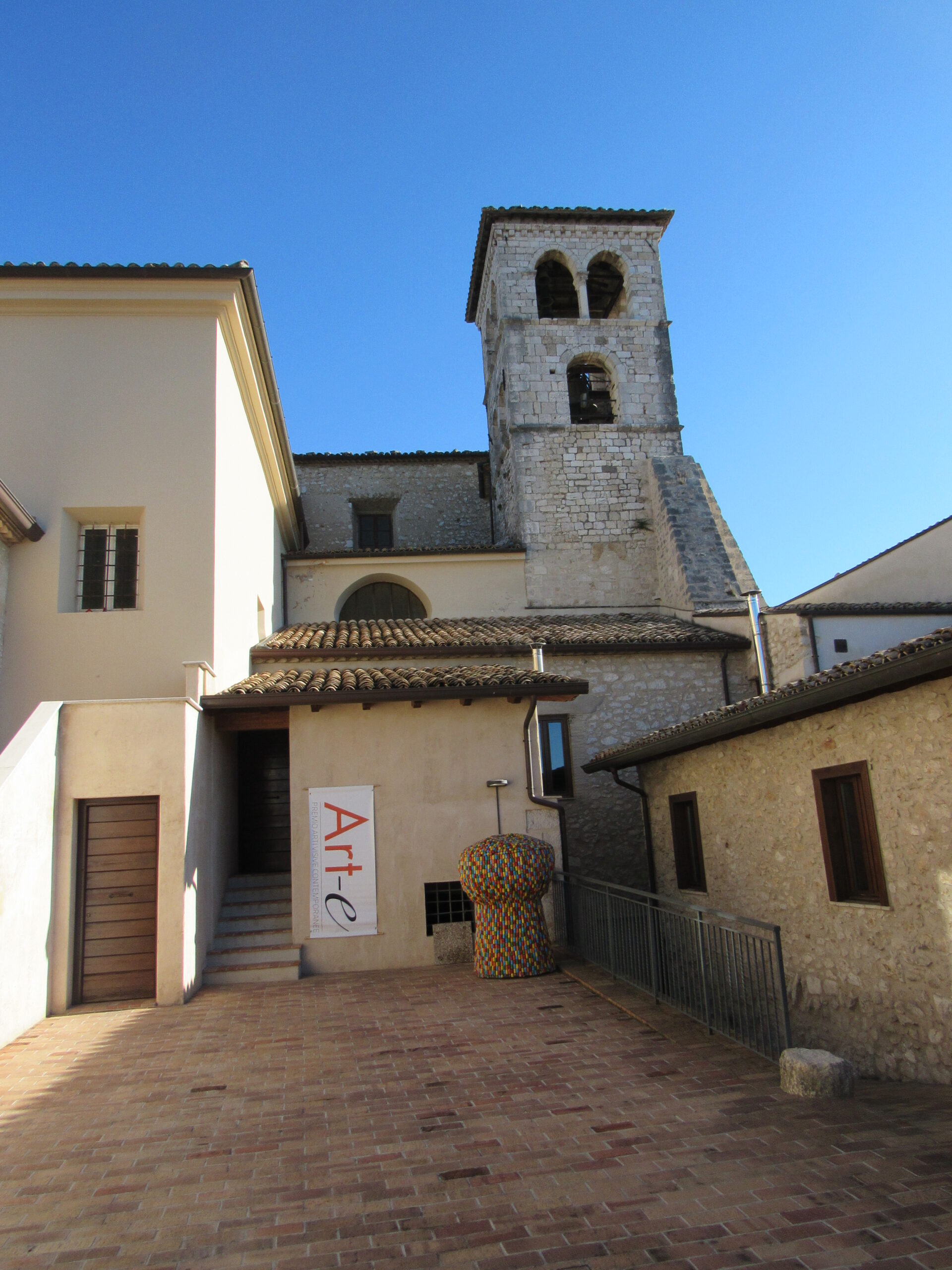
Veroli commemorates every Easter Tuesday the Eucharistic event of 1570 in the Basilica of Sant'Erasmus: during the solemn exhibition, the faithful claimed to contemplate Christological manifestations on the consecrated form.
What happened in Veroli in 1570
The local memory places the episode on Easter night, on March 26, 1570, within the ancient Benedictine Basilica of Sant'Erasmus. During the exhibition of the Most Holy Sacrament for the worship of the Forty Hours, the consecrated form was in a chalice covered by the patena. According to the testimonies transmitted by tradition, the present saw on it different figures linked to Christ, his Passion and the Trinity. A material transformation preserved for analysis is not described, but a series of visions considered during worship.
The subsequent narrations speak of many people who went to the temple and of demonstrations that took place for a long time. Historical prudence requires not to convert every detail transmitted into a proven coethanial data. The firm today is the identity of the place, the antiquity of the commemoration, its liturgical continuity and the public reception that the diocese itself maintains.
La basílica de Sant’Erasmo
Sant'Erasmus was an ancient Benedictine abbey and retains Romanesque structures despite successive reforms. The diocese explicitly identifies it as the stage of the event and presents it as an insignia collegiate. The map's marker points to the building, not a generic point of the city: basilica of Sant'Erasmus, via Garibaldi, Veroli, province of Frosinone.
The memory has not been reduced to a historical plate. Every Tuesday after Easter the community celebrates the Mass and the procession of the Most Holy Sacrament. The diocesan publications of 2021, 2024, 2025 and 2026 show a verifiable contemporary continuity. In 2026, during the anniversary celebration, Archbishop Saint Marcianò recalled that the Eucharistic miracles should lead to Christ and not stop looking at the extraordinary.
The chalice and the memory patena
Veroli's tradition is linked to a chalice and a patena preserved as memory of the episode. The diocesan documentation indicates that John Paul II used these pieces during his pastoral visit. Their existence testifies to the cultual continuity of the memory, but should not be confused with a biological relic or an autonomous test of the narrated visions. This distinction protects both historical truth and the religious sense of objects.
What does "miracle" mean in this tab?
The word is maintained because it is the one used in a stable way by the diocese and the celebrating community. It doesn't mean that rezaelrosario.org emits a canonical judgment of its own. Nor is a laboratory examination, a transformation of the species or an accessible 16th-century file attributed to the account so as to reconstruct all the testimonies.
The tab belongs to the world map of Eucharistic miracles as an event of ecclesial reception and current veneration. Its specific category is "Eucharistic manifestation with diocesan commemoration." It is thus avoided to equalize it without nuances to cases that retain an altered matter, to purely hagiographical accounts or to modern events still investigated.
The Eucharist does not depend on extraordinary phenomena
For the Catholic faith, Jesus Christ is true, real and substantially present in the Eucharist for the sacramental celebration of the Church. That faith is not born of accepting a private vision. The extraordinary signs can awaken a call to conversion, but they never replace Mass, listening to the Word, communion received in dignity, reconciliation and service to the needy.
The celebration of Veroli acquires its most sober meaning when it leads to Easter: Christ dead and risen, delivered as food and principle of communion. The procession is not an exhibition of the prodigious, but a public profession of faith that demands fruits of peace, charity and unity.
Sources and degree of certainty
- Diocese of Frosinone- Veroli- Ferentino: vicar of Veroli, temple identification and commemoration.
- diocesan memory of 2021, celebrative continuity.
- Diocesan Homily of the Anniversary of 2026, current pastoral reading.
- International exhibition associated with San Carlo Acutis, starting point contrasted with diocesan sources.
Location for the pilgrimage
Basílica de Sant’Erasmo, vía Garibaldi, 03029 Veroli, Italia. The coordinates of the map are 41,6930828, 13,4183559. Before travelling it is appropriate to confirm directly with the parish the hours of opening, worship and celebrations.
Prayer before Jesus the Eucharist
Lord Jesus, living bread down from heaven, increases our faith without seeking curiosity, teach us to worship you with humility and make our communion a concrete gift to our brothers. May your Passover overcome in us sin, division and fear. Amen.
Image credit
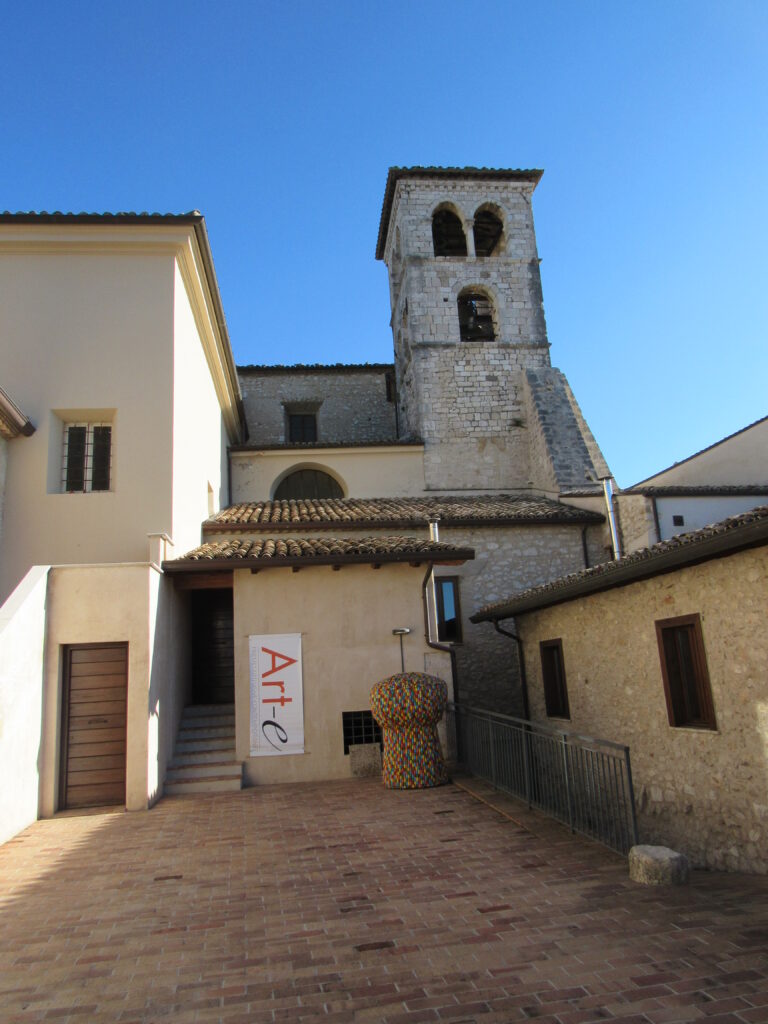
Basílica de Sant’Erasmo de Veroli. FredSeiller / Wikimedia Commons, CC0. File and license. It is used as geographical documentation of the place.
.jpg)