
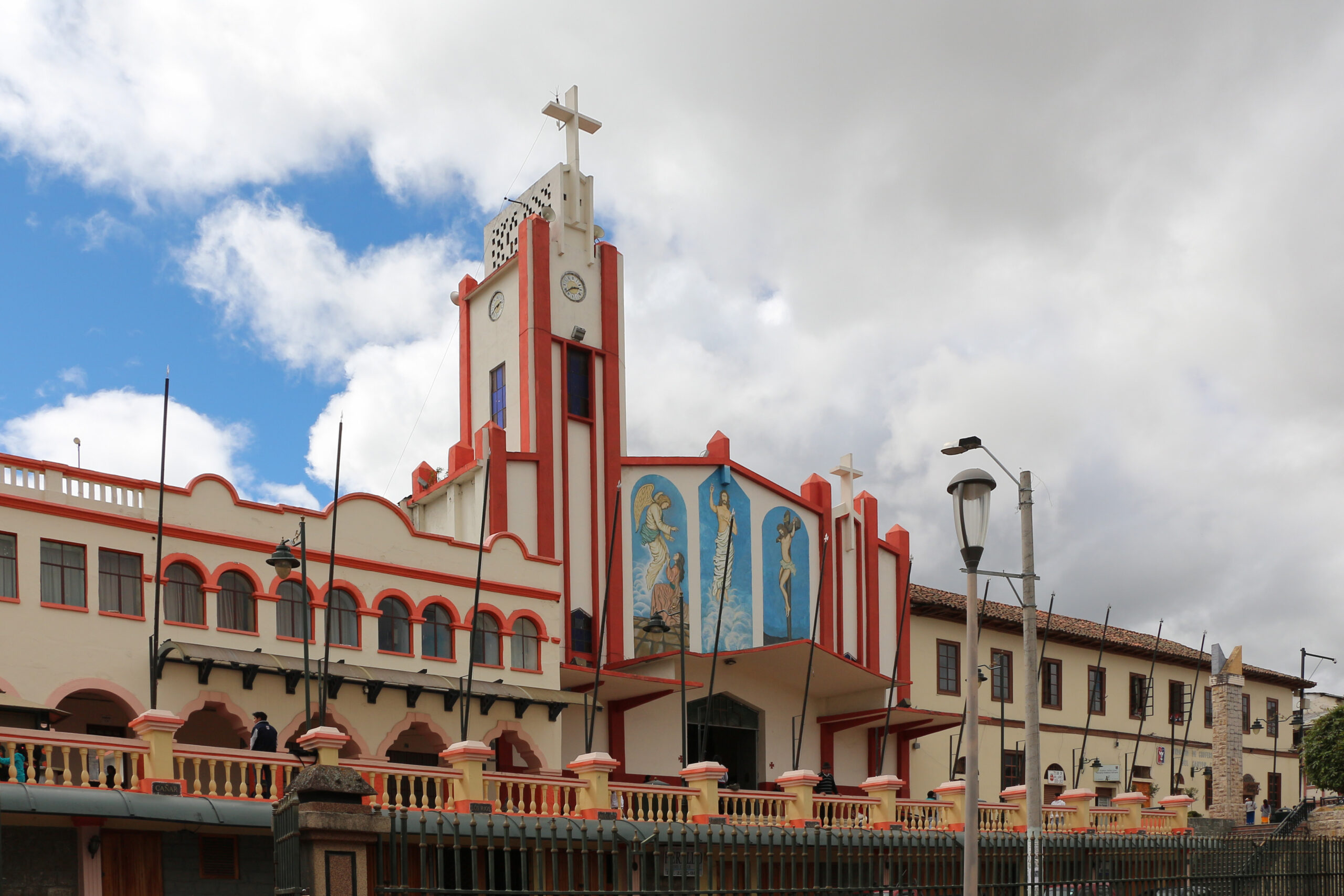
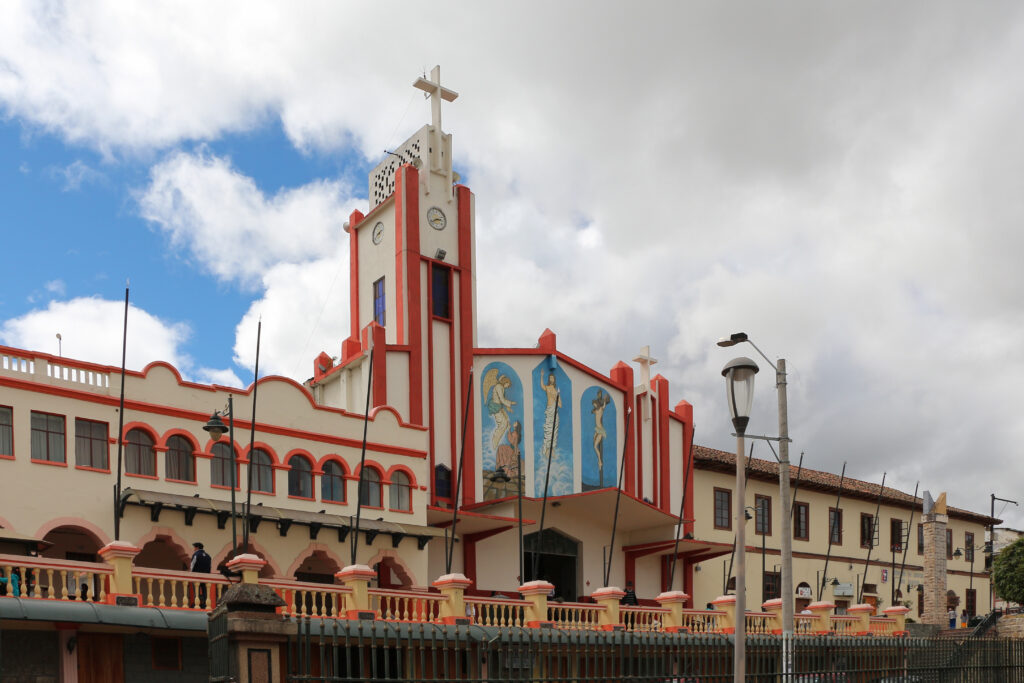

On June 24, 1958, during the exhibition of the Most Holy Sacrament in the chapel of the hill of San Antonio, next to the city of Cañar (Ecuador), several faithful claimed to see how on the exposed Hostia appeared a figure they recognized as the face of Jesus. The Archbishop of Cuenca initiated a canonical process and, by decree of 5 April 1961, declared the fact historically true and not explainable by ordinary and natural causes. Today the place is a diocesan Eucharistic sanctuary.
The fact of 1958
The tradition places the event in the chapel of San Antonio, on a hill about two kilometres from the center of Cañar, more than three thousand meters of altitude. During worship, some attendees - the story mentions in a special way Isabel Palacios de León - said to warn a dark spot in the Hostia that became the face of Christ, with flashes around custody. The parish priest, César Manuel Andrade Ochoa, examined the phenomenon by trying to rule out reflections of light or projection effects.
The canon process
The Archbishop of Cuenca, Mons. Manuel de Jesús Serrano Abad, opened a process on July 3, 1958. An ecclesiastical court was established that gathered testimonies and experts in a file of more than two hundred folio. On April 5, 1961, the Archbishop issued a decree declaring the fact "historically true and not explicable for ordinary and natural causes."
It is important to specify the scope of this recognition: this is a decree diocesan from the headquarters of Cuenca. Some news publications add that the case would have been recognized by the Holy See at the time of John XXIII, but that statement is not supported by a verifiable Vatican document; by prudence, this fact sheet is in keeping with the 1961 archbishopric decree and does not attribute to Rome a pronunciation that does not contain.
The present sanctuary
The place is preserved today as the Diocesan Catholic Eucharistic Sanctuary San Antonio, within the present Diocese of Azogues, built from the ancient jurisdiction of Cuenca. The custody associated with the event was later transferred to the Cañar Matrix Church. The sanctuary is a point of Eucharistic pilgrimage in the Ecuadorian saw, and in recent years the construction of a major temple linked to the memory of the event has been promoted.
Location
The sanctuary is located on the hill of San Antonio, next to Cañar, capital of the homonymous province, in southern Ecuador. The coordinates are taken from public cartographic sources and offered as approximate to their field verification.
How to read this recognition
A decree of historical authenticity states that something real happened and that not enough natural explanation was found; it is not a dogmatic definition and does not force faith with the same force as the revealed mysteries. The Church offers these facts to the devotion of the faithful by always distinguishing the witness, the prudential judgment and the mystery of the Eucharist, which is believed and worshipped by the word of Christ and not by the wonders.
Sources
- Diario El Mercurio: the Eucharistic miracle of Cañar (2021).
- Diario El Mercurio: the sanctuary and the temple project (2023).
- Diocesan Catholic Sanctuary San Antonio.
San Antonio Diocesan Eucharistic Sanctuary, San Antonio hill, Cañar, Ecuador. Recognition by decree of the Archdiocese of Cuenca (1961); approximate coordinates.
Prayer
Lord Jesus, hidden and true in the Most Holy Sacrament, give us the simple faith of those who worshipped you in Cañar. May in contemplating your Eucharist we learn to recognize your face in prayer, in the poor and in your Church. Amen.