
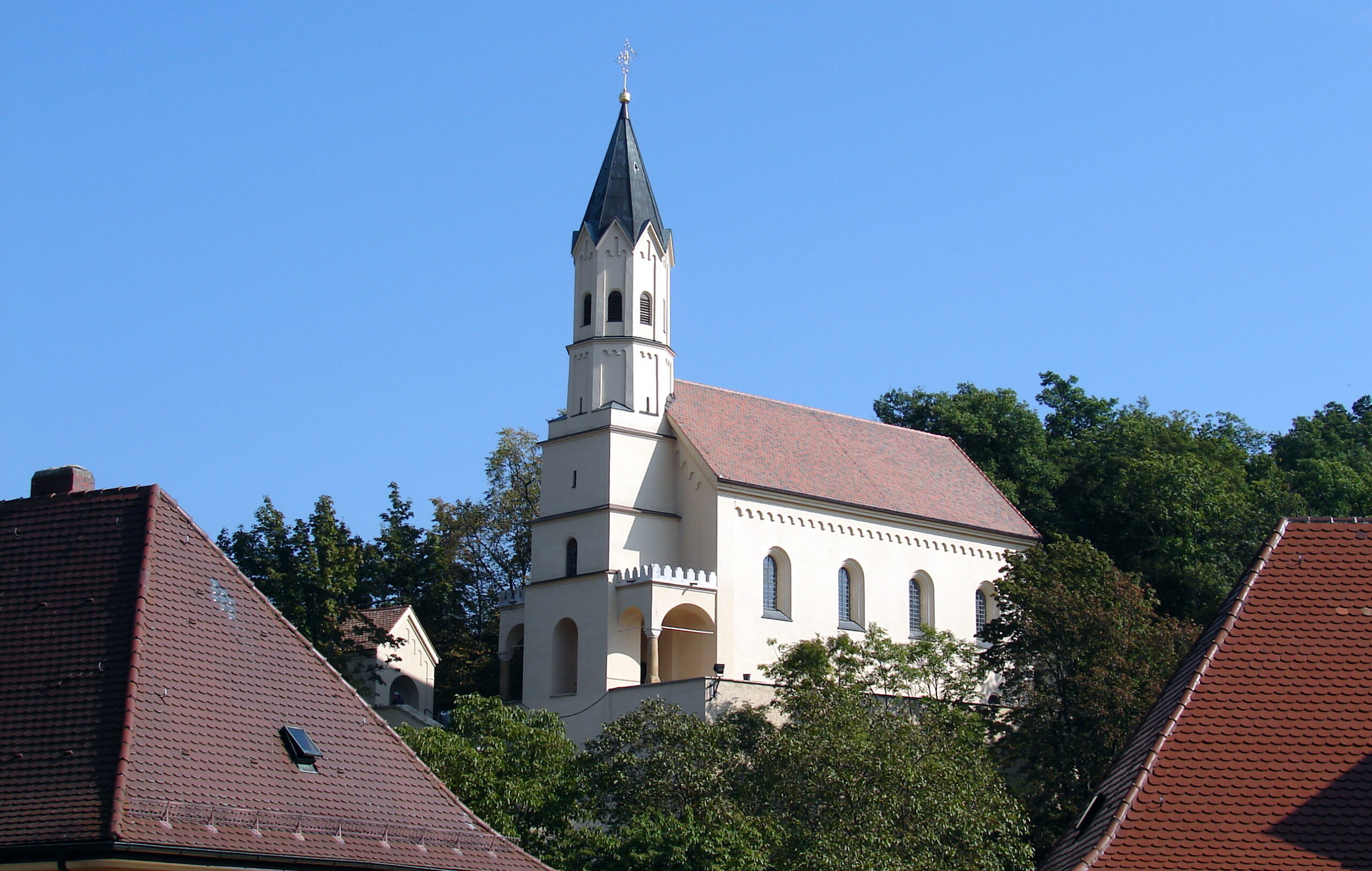
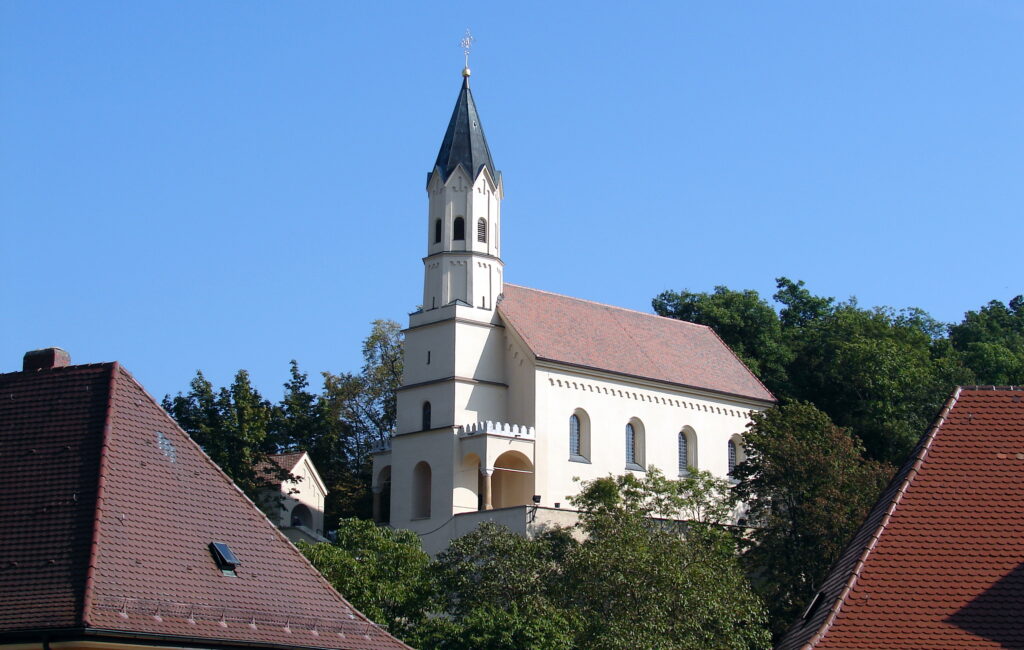

In 1388, during the war of the Bavarian cities, three soldiers looted a church of Sulzbach and hid sacred vessels with consecrated forms in a forest of Donaustauf. His recovery left a lasting impression on the population and gave rise to a chapel, then extended to become the current pilgrimage church of San Salvador.
The episode during the Bavarian war
The official source of the diocese places the episode in a context of military violence and desecration. The center of the story is not a physical alteration of the Eucharistic matter, but the theft, concealment and subsequent finding of the Most Holy. This difference prevents the transformation of history into a supposed bleeding host that the diocese itself does not describe.
Tradition states that the forms were found in a forest of Donaustauf. A small chapel was built there. The concurrence of the faithful grew during the 14th and 15th centuries, which forced the building to be further expanded.
The Church of San Salvador
The diocese explains that the temple was raised to honor the Most Holy Eucharist and to Christ the Savior: its holder is not a saint other than Christ. Around 1607 it reached its current volume. The restorations of 1971-1980 revealed mural paintings made around 1400, an exceptional testimony of the first phase of the sanctuary.
Continuity of veneration
San Salvador holds celebrations linked to the Eucharist. The solemnity of Corpus Christi includes Eucharistic worship and, during the pilgrimage season, acts of piety and masses are celebrated. The institutional continuity of the temple and the cult is more verifiable than the devotional details added over time.
What can be said for sure
It is documented that the diocese recognizes tradition, identifies the place, narrates desecration and finding and keeps San Salvador among its pilgrimage sanctuaries. No medieval decree of supernatural or material relic has been located. The fact sheet therefore speaks of a documented Eucharistic tradition and does not emit a judgment of its own miracle.
The Eucharist does not depend on extraordinary phenomena
The Catholic faith in the real presence of Christ comes from the sacramental celebration of the Church, not from accepting a local legend or prodigy. These memories make sense when they lead to mass, worship, reconciliation, ecclesial communion and the service of the needy. The map therefore distinguishes between material transformation, historical tradition, current worship and undemonstrated statements.
Sources and location
- Diocese of Ratisburg: shrines of pilgrimage, current history and cult.
- Building mapping.
Sanctuary of St. Salvator, Walhallastraße 10, Donaustauf, Alemania. Coordinates: 49.0306731, 12.2165492.
Prayer
Jesus the Saviour, give us reverence before your Eucharistic presence. Repair our indifference, deliver us from all violence and make worship become peace, justice and care for the brothers. Amen.