
The so-called "miracle of the Billettes" was born from a medieval accusation of desecration of a host against a Jewish person who was executed. Historiography forces that documented violence to be separated from a miraculous account developed later.
What is historically documented
In Paris, in 1290, a Jewish person was accused of desecrating a host and sentenced to death at the stake. Auguste Molinier summed up with a decisive caution that was executed because he had "said," committed that desecration. The execution and subsequent appropriation of the place are historical facts; guilt cannot be seen as proven.
The victim's identity appears with different names in later accounts. To present it unreservedly as "Jonathan" or to reconstruct its character from the legend would turn a narrative elaboration into a biography. This fact sheet speaks of a Jewish person accused and executed.
The prosecution is not a proven fact.
The accusations of the desecration of hostias formed a medieval anti-Jewish genre. They attributed to Jewish people ritual acts against the Eucharist and served to confirm to the Christian public religious doctrines through the alleged miraculous reaction of the form.
Contemporary historiography studies these stories for their social, theological and political function, not as neutral acts. A person's religious belonging does not prove a sacrilegious intention. Repeating the imputation without critical distance would perpetuate the damage that historical research helps to recognize.
When the story is kept
Molinier points out that the oldest preserved relationship was written after 1299. The study of the Parisian processions cites a 1322 version for the developed narrative. In other words, the texts describing the alleged prodigy are not an immediate and transparent transcription of the 1290 process.
The temporal distance allowed the story to be extended and adapted to pastoral objectives. The date of a narrative does not automatically invalidate all memories, but it requires that its details not be treated as verified contemporary observations.
What the later legend said
The late versions stated that a Christian woman gave a consecrated form to a Jewish lender and that he injured her or introduced her into boiling water. The host would have bled, left the container and adopted an image of Christ.
These elements are presented here only to identify the content that circulated, not to support it. The variants change names, actions and sequences. Its growth shows how a judicial accusation became an exemplary account, artistic representation and theological argument.
A model of anti-Jewish stories
University studies place the Billettes among the first large accusations of desecration of harlots directed against Jews in Western Europe. The scheme would be repeated in other cities: illegal obtaining of form, aggression, visible blood, discovery by Christians and punishment.
This repetition does not confirm the facts. It reveals a narrative pattern capable of traveling, adapting and justifying new suspicions. The tab does not use the word "miracle" without quotes or qualification when referring to this tradition.
Consequences for the Jewish community
The chapter of Editions de la Sorbonne on the Jewish neighborhoods of Paris links the case to serious disorders and the reduction of the Jewish population recorded a few years later. The accused was not the only one affected: the episode intensified a climate of insecurity and exclusion.
To remember these consequences prevents the victim from being reduced to the antagonist of a Christian narrative. A responsible pastoral presentation must lament violence, reject collective guilt and affirm the dignity of the Jewish community.
The house confiscated and the chapel
In 1294 Philip IV authorized the construction of a chapel over the confiscated house. Boniface VIII confirmed the ecclesiastical foundation in 1295. The building physically consolidated the religious interpretation of the episode and gave rise to the whole known as the Billettes.
The transformation of a confiscated house into a sanctuary shows how power, urban memory and veneration intertwined. The place is not a proof of guilt; it is a mark of how the authorities and Christian society received the charge.
Processions and representations
For centuries, processions were held linked to the alleged host. In them history was reactivated by preaching, images and sometimes dramatic representations. The memory acquired special strength in contexts of defense of the Eucharistic doctrine.
The study of the religions of the Parisians explains that the story appeared even in the penitential procession organized under Francis I after the posters against the Mass of 1534. The liturgical and urban repetition amplified the legend far beyond the medieval process.
The cult and the relic have disappeared
The host attributed to the story was guarded in the church of Saint- Jean- en-Grève and venerated until the French Revolution. Then he disappeared. Nor does the ancient Catholic cult of the Billettes continue, nor does there exist today a Eucharistic relic that can be visited.
Material absence matters because some repertories present the case as if it were an existing devotion. The page states that it is a history of religious veneration and violence, not an active Catholic sanctuary.
The current building
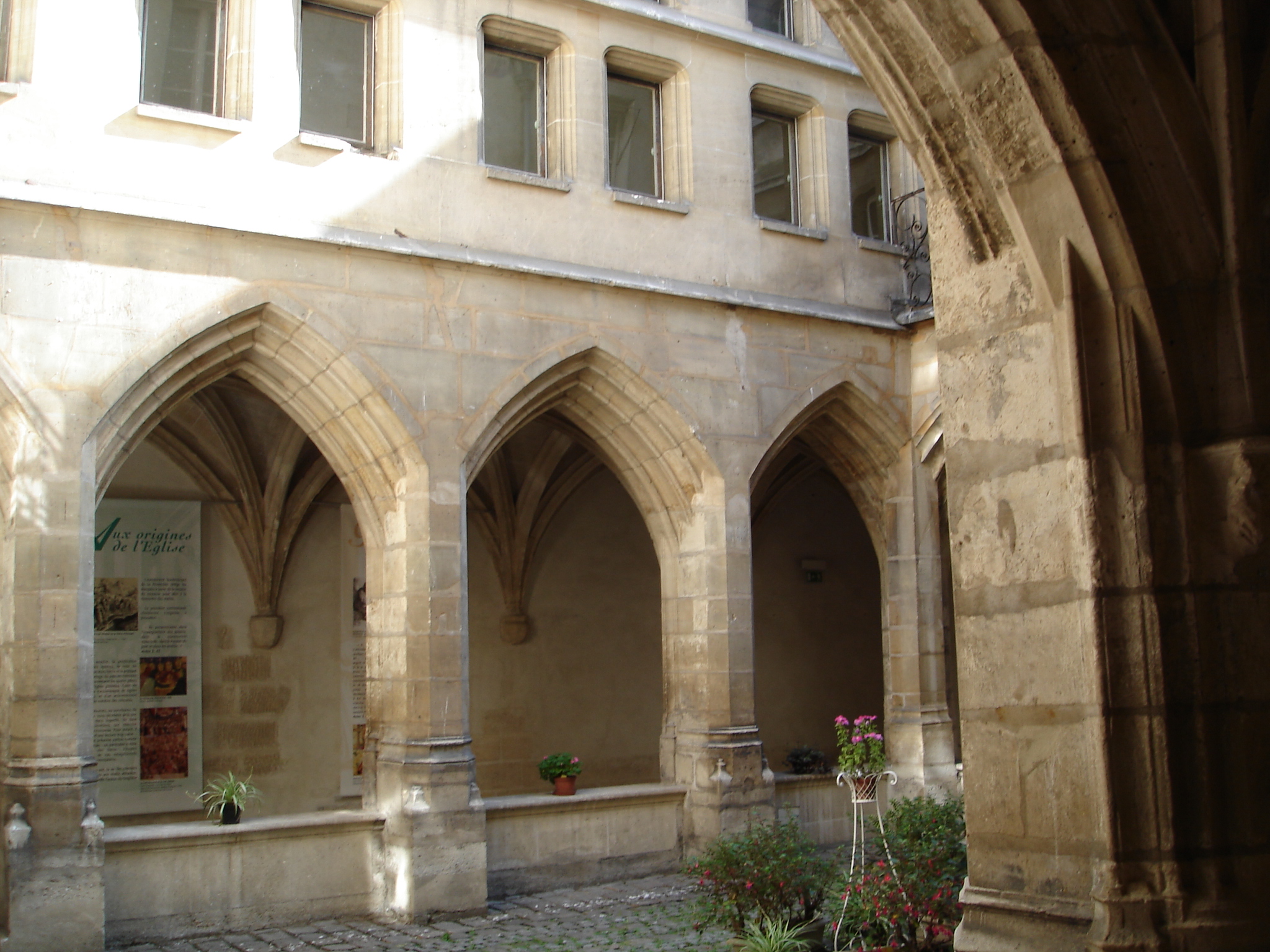
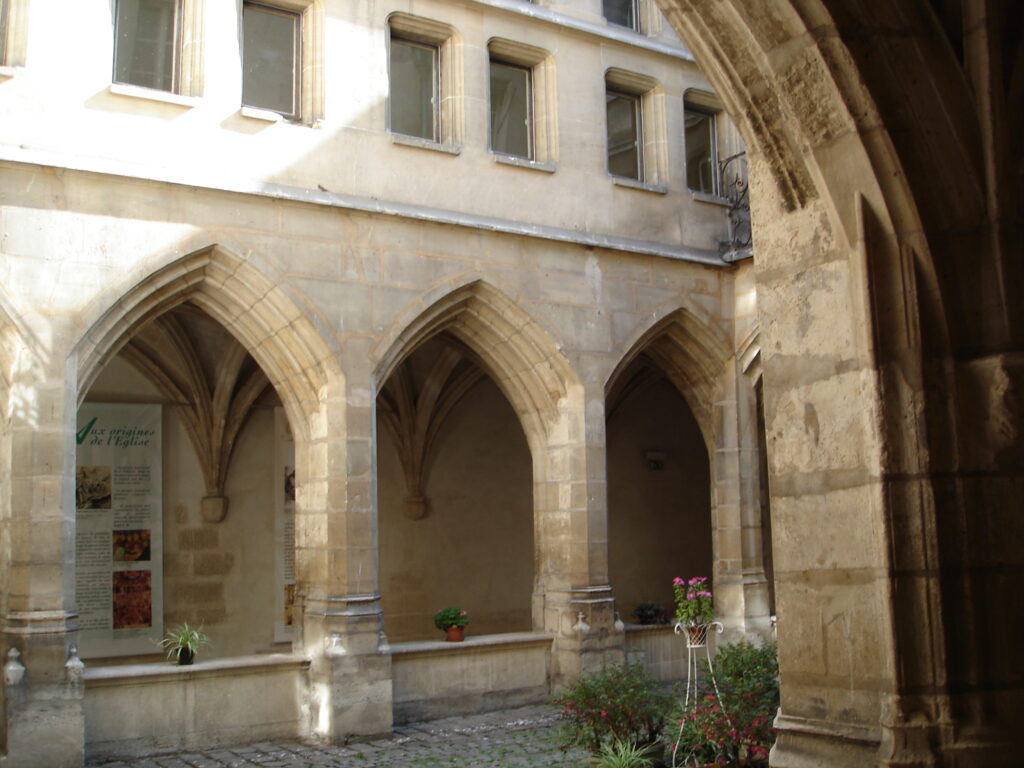
The Ville de Paris explains that the temple visible at number 24 of rue des Archives was rebuilt between 1756 and 1758. The 15th century cloister, at number 26, is the only medieval cloister preserved in Paris and the main vestige of the old convent.
The whole was sold during the Revolution, became municipal property and in 1812 was destined for Lutheran Protestant veneration. Anyone who visits him today enters a Christian place of another confession, which deserves full respect and should not be presented as a sanctuary of the medieval account.
Why not appear on the affirmative map
The coordinates 48.8579834, 2.3551183 identify the historical set of the Billettes. They are kept in the editorial data to locate the memory, but the page does not activate the layer of Eucharistic miracles.
An ordinary marker, without enough context, would visually turn an accusation into an accepted event. The tab is linked from a separate section of critical historical cases, where the reader knows the warning before interpreting the place.
The Eucharistic faith does not need this accusation
The Catholic faith in the real presence of Christ is based on Scripture, Tradition and the celebration of the Church, not on blaming a Jewish person. Rejecting a harmful narrative as evidence does not diminish the reverence towards the Eucharist.
On the contrary, the worship of Christ requires to recognize the truth, to avoid false testimony and to defend the dignity of the neighbor. A Eucharistic memory that would hide an execution unjustly sustained by prejudice would betray the charity that the sacrament demands.
Christian-Jewish relationship
Christianity was born in the Jewish people and shares with him the Scriptures of Israel. European history contains stages of coexistence, dialogue and fertility, but also expulsions, forced conversions, accusations and violence by Christians.
To name that story does not seek to judge every believer of the past with simple categories. It seeks to prevent a hostile scheme from moving on today. No Jewish person or present community must bear a medieval charge.
How to read the work of Carlo Acutis
The repertoire associated with San Carlo Acutis helped to gather and disseminate numerous Eucharistic cases. Its inclusion in Paris allows to identify a tradition that needs review, but does not convert all the details of the data received into historical facts.
Honoring an evangelizing intention also means correcting with transparency what later or deeper research shows problematic. That's why the matrix keeps Paris as a revised record, but it resolves it by a critical page outside the affirmative map.
A repair-oriented memory
The proper remedy here is not to reiterate the charge against the victim. It is to remember the executed person, to regret the violence, to deactivate the stereotype and to ask that the Christian faith never be used again to humiliate or pursue.
The place can invite the examination of conscience, the Judeocrist dialogue and the commitment against anti-Semitism. Historical truth and spiritual conversion support each other when memory serves justice and peace.
Sources consulted
- Éditions de la Sorbonne: processions and urban space in Paris, development and cultural reuse of the story.
- Éditions de la Sorbonne: Jews and Jewish neighborhoods of Paris, anti-Jewish context and community consequences.
- Auguste Molinier, Les Sources de l'histoire de France, execution, caution over the prosecution and dating of the preserved relationship.
- Elsa Marmurstejn, Media, academic study of the story and its theological transformation.
- City of Paris: iglesia luterana de las Billettes, history, direction and current use of the set.
- Repertoire associated with San Carlo Acutis: Paris, subject to critical review, not sufficient source to claim the charge.
Prayer for truth and peace
God of Abraham, Father of mercy, forgives the violence born of prejudice and false witness. It welcomes the forgotten victims, deliver us from anti-Semitism and teach us to serve you in truth, justice and peace. Amen.
Image credit
Medieval closure of the Billettes, in the current Lutheran ensemble of the rue des Archives of Paris. FLLL / Wikimedia Commons, CC BY-SA 3.0. File and license in Wikimedia Commons.
