
Walldürn keeps the body linked to the Eucharistic account of about 1330 and keeps a living pilgrimage. The tradition speaks of the chalice shed by the priest Heinrich Otto and the apparition of a Crucified; the cult received an ecclesiastical research in 1408 and a bull of indulgence from Eugene IV in 1445.
The story of the spilled chalice
The tradition places in 1330 the priest Heinrich Otto celebrating Mass in the ancient church of St. George. By an involuntary movement he turned the chalice after the consecration and the wine fell on the body spread on the altar.
According to the account received, the figure of Christ crucified appeared on the canvas surrounded by eleven heads crowned with thorns, popularly known as Veronicae. Scared, the priest would have hidden the body under the stone of the altar and revealed the place only as his death approached.
Finding and beginning of the pilgrimage
After the priest's confession, the tissue was recovered and began to be venerated. The news attracted pilgrims, first from the region and after more distant territories. The church grew and the city developed an identity closely linked to the Holy Blood.
The story of 1330 is the devotional core. The present community tells it as the origin of the pilgrimage; the fiche retains that ecclesial denomination without presenting the scene as a repetible experiment or a contemporary scientific conclusion.
The ecclesiastical research of 1408
The official chronology records that in 1408 the body was presented to the ecclesiastical authority of Würzburg for an investigation during the episcopate of Johann I von Egloffstein.
This data shows that the cult was the subject of institutional discernment. The complete dossier is not available here to attribute modern laboratory criteria, so the fact sheet speaks of historical ecclesiastical research and avoids making it a scientific analysis of the twenty-first century.
The bull of Eugene IV of 1445
In 1445, Pope Eugene IV granted a indulgence linked to the visit and the support of the church. Local tradition interprets that bull as confirmation and recommendation of the pilgrimage.
The original was lost during the Thirty-Year War. Copies are kept, including one authenticated in 1571 by notary Wunibald Dechelmann. The fact sheet does not state that the original scroll can be consulted today, nor does it confuse indulgence with a physical opinion on the tissue.
The body preserved
The body remains in the basilica within a valuable silver relic, incorporated into the altar of the Holy Blood. The historical fabric is the material center of the pilgrimage and it differs Walldürn from other cases whose relic disappeared.
The original image has faded over the centuries. In 1950 an observation with ultraviolet light made it possible to distinguish in a protective fabric a silhouette related to the Crucified. This test is described as collected by the local source, without deducting from it the supernatural origin of the brand.
El gran altar de la Santa Sangre
The sculptor Zacharias Juncker made the monumental altar of sandstone and alabaster between 1622 and 1626. His reliefs narrate the Last Supper and the tradition of the body. The central relic, known for his work in Augsburg, keeps the canvas.
In 2026 Walldürn celebrates the four hundred years of this altar. The anniversary allows it to be seen as a work of art, a place of prayer and a framework of a Eucharistic memory that has gone through wars, political changes and pastoral transformations.
The Basilica of St. George
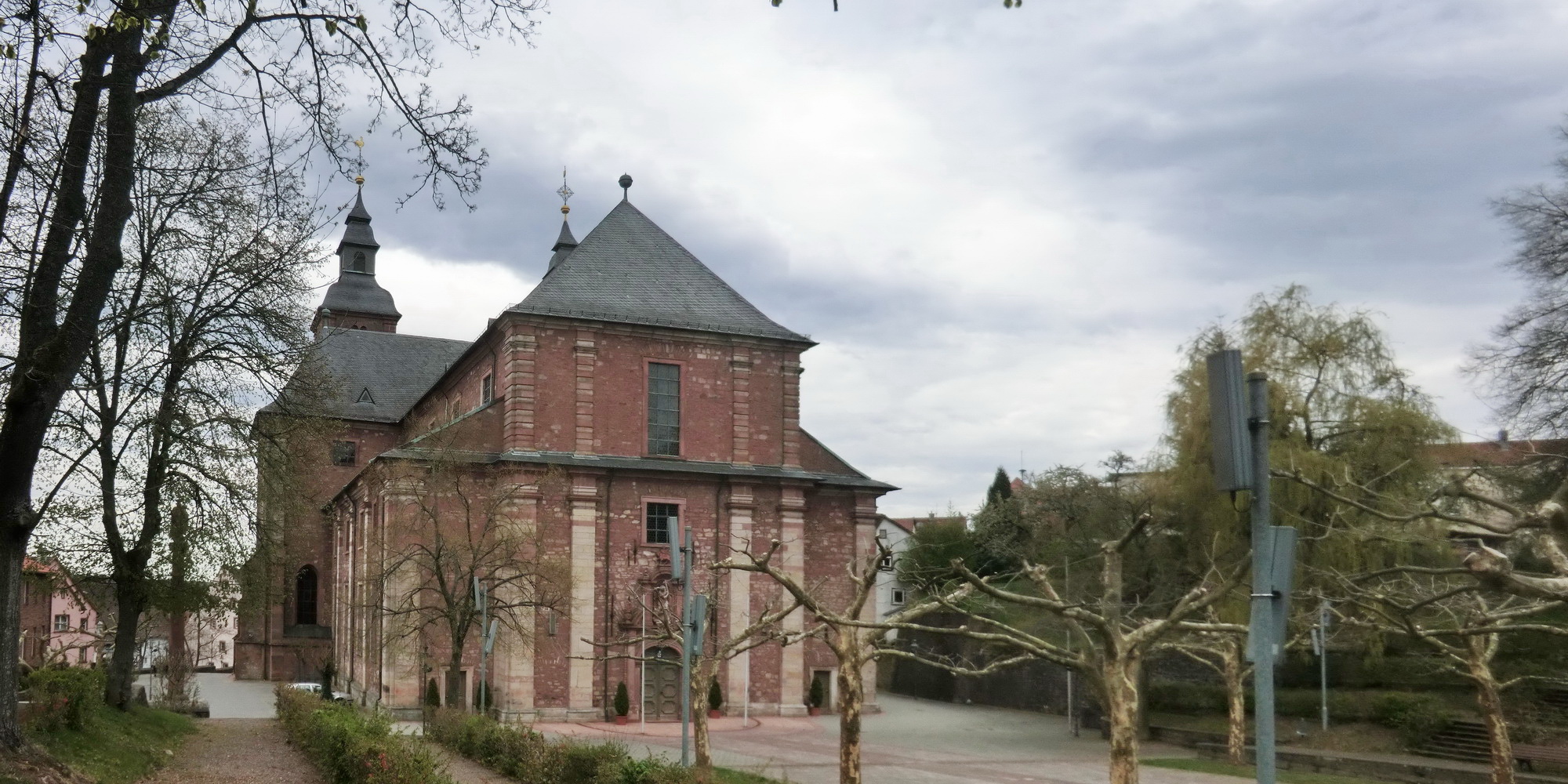
The oldest section of the church retains the place associated with the event. The enlargements responded to the growth of the pilgrimage; the current building integrates Gothic, Renaissance and Baroque elements and was largely configured between 1698 and 1728.
St. John XXIII granted the temple the title of a minor basilica in 1962. The distinction recognizes the liturgical, historical and pastoral importance of the sanctuary, does not replace the ordinary faith of the Church, nor does it force any popular version to be accepted without nuances.
A living pilgrimage in 2026
The main season lasts four weeks and begins on Trinity Sunday. The 2026 programming extends from May 31 to June 28 and includes masses, pontifical celebrations, processions and spiritual proposals.
More than 100 groups usually announce their arrival in ordinary years. Old pilgrimages continue on foot from different regions, along with parish groups, families, cyclists and motorists. The current official programme should always be consulted before travelling.
The Great Day of Blood
The eighth of Corpus Christi became the great day of the pilgrimage. The opening of the relic and the procession express a devotion focused on the Passion of Christ and the Eucharist.
indulgence is linked to spiritual and sacramental provisions, not to an automatic reward. The local source recalls confession, communion, prayer and conversion as part of the pilgrim's path.
Accurate location and visit
The basilica is in Burgstraße 15, 74731 Walldürn, Baden-Württemberg. The marker is corrected to 49,5845215, 9,3662885, centre of the building identified in OpenStreetMap as way 118614774.
The previous coordinate was close, but did not point to the temple with the same precision. The image of a crucifix in Naples is replaced by an external photograph of the royal basilica. The visitor can check celebrations, open the relic and welcome on the official site.
World map classification
Walldürn appears as "Eucharistic miracle with current historical ecclesial veneration." The category is based on the guarded body, basilica, annual pilgrimage and current liturgical acts.
The fact sheet also distinguishes the traditional account, the historical sources and the material state of the object. This transparency strengthens, and does not weaken, a devotion that does not need to hide the limits of documentation.
Spiritual feeling
The spilled chalice recalls human fragility even within the celebration. The tradition of Walldürn does not invite us to live paralyzed by fear of error, but to recognize it, seek reconciliation and return to Christ.
The image of the Crucified leads to the love given. The Blood of Christ is not a sign of violence against others, but of mercy offered by all. The pilgrim is called to receive that mercy and turn it into forgiveness, care and service.
What it means to keep the body
The permanence of the fabric allows continued liturgical and patrimonial custody, but does not eliminate the need to interpret its history. The object has aged, the visible image has faded and its relicary limits manipulation. The present veneration is based on the tradition and pastoral authority of the sanctuary.
To keep does not mean to continuously submit the piece to invasive tests. The protection of material and respect for veneration require decisions of specialists and custodians, not improvised demands of visitors.
The pilgrimage beyond the great day
The Great Blood Day focuses attention, but the program includes weeks of mass, group reception and thematic days. This continuity shows that Walldürn does not live only from an annual commemoration.
The roads on foot from remote regions transmit a community memory. Physical preparation, prayer, mutual help and hospitality are part of the experience. Reaching the basilica is a stage in a process of conversion, not the rapid consumption of a destination.
Discerning historical claims
The research of 1408, the bull of 1445 and the printed work of 1589 belong to different moments. Each document documents something different: ecclesiastical examination, indulgence grant and narrative dissemination of veneration.
The tab avoids turning those three milestones into a single "test." Together they show antiquity, reception and continuity; they do not allow to rebuild every detail of 1330 with the accuracy of a contemporary act. This distinction favours an intellectually honest devotion.
The pastoral custody of the relic
Body is not a piece available at individual demand. Its exhibition, opening of the relic and liturgical use are those responsible for the sanctuary. Consult the calendar avoids travel based on old times or expectations that maintenance cannot meet.
This custody protects the object and orders devotion to community celebration. The faith of the pilgrim is not measured by the distance to which it can be placed from the fabric, but by its willingness to receive and live mercy.
Sources consulted
- Official Pilgrimage of Walldürn: program and pastoral life.
- Altar of the Holy Blood of the Basilica: history, body and sources.
- Official chronology of the pilgrimage of Walldürn.
- Exhibition associated with San Carlo Acutis: Walldürn, contrasted with the sanctuary.
Para orar
Jesus, who spilled your Blood for love, welcomes our fragility and gives us a reconciled heart. May the Eucharist make us merciful, faithful to the truth and willing to deliver life for our brothers. Amen.
Image credit
Basilica of pilgrimage of St. George and the Holy Blood of Walldürn. Mattana / Wikimedia Commons, CC BY-SA 3.0. File and license in Wikimedia Commons.
.jpg)