
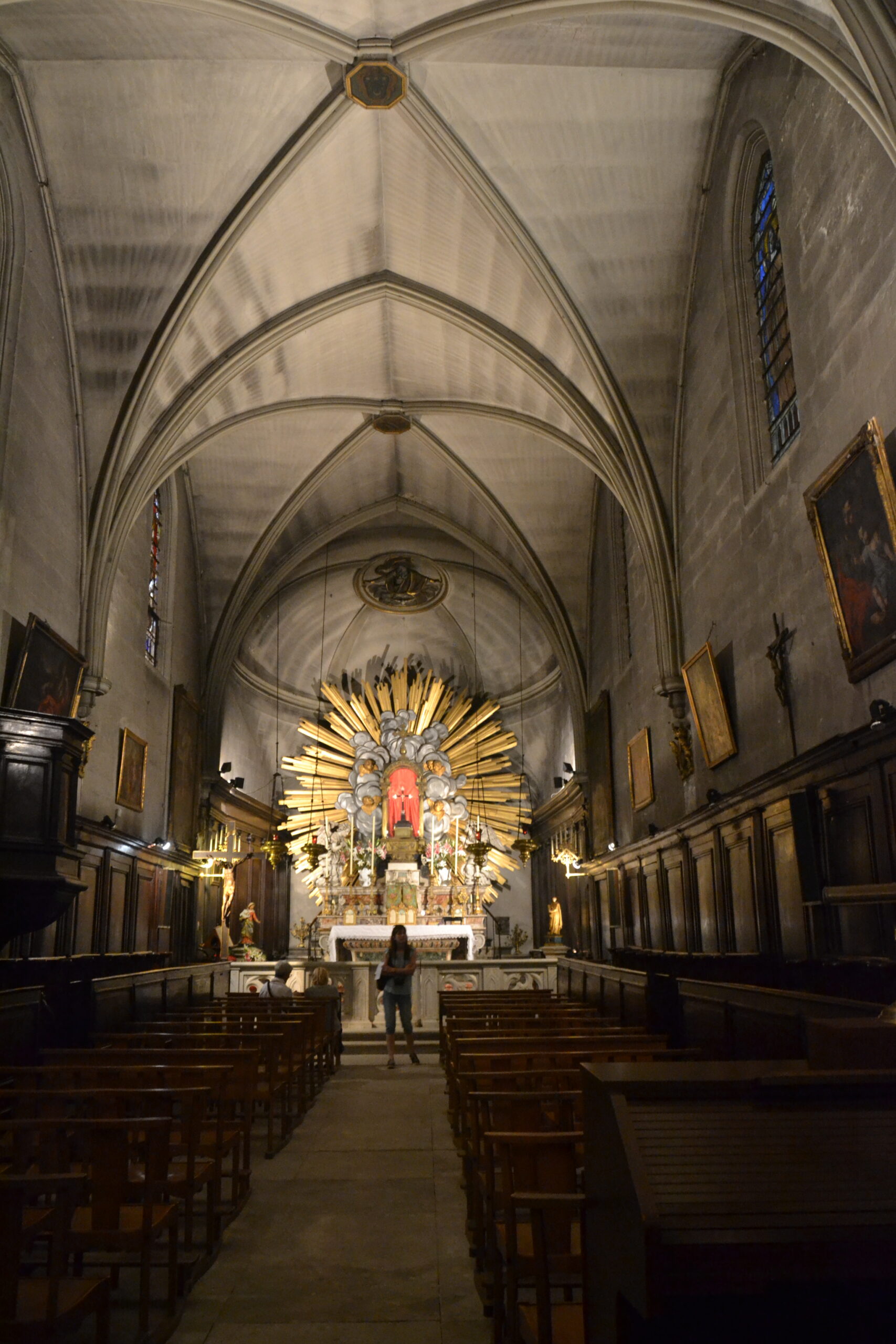
During the flood of Avignon in 1433, the Penitentes Grises found a dry passage between the waters of their chapel and were able to reach the Most Holy Sacrament exposed. The archdiocese retains this memory as a miracle and the fellowship continues its worship.
A tradition born next to the Most Holy
The Eucharistic memory of Avignon is linked to the chapel of the Gris Penitents, in the rue des Teinturiers. The fellowship practiced the worship of the Most Holy Sacrament and maintained the Eucharistic presence in a building located next to the city's watercourses.
The event attributed to 1433 does not describe a host transformed into flesh, blood or visible figure. The sign was the protection of the immediate space to the Sacrament during a flood that covered the chapel.
The flood of November 30, 1433
The repertoire panel associated with San Carlo Acutis dates the episode on November 30, 1433. After several days of rain, the Rhone and the Sorgue grew to flood Avignon. The brothers feared that the chapel and the most exposed would have been destroyed.
Two members of the company approached by boat. Access was difficult and water occupied the environment. When they entered, according to tradition, they discovered that the waters were open on both sides and left the journey to the altar dry.
The dry passage to the altar
The narrative compares the passage with the separation of the waters in the Exodus. Although the water reached a considerable height on the sides, the road from the entrance to the Most Holy remained practical and the altar had not been reached.
The devotional center is not water as a sacred object, but the custody of the Eucharist. There is no water preserved as a relic or a physical analysis of the phenomenon. The memory is articulated by place, prayer and procession.
The arrival of other witnesses
The first brothers called other members of the brotherhood and the news spread throughout the city. The news versions speak of many inhabitants and authorities who came and sang in thanksgiving.
The current diocesan source sums up the fact with caution: during the flood, the cofrades were able to access on a dry foot to save the Most Holy. This institutional formulation is the main basis of the data sheet; the numerical details of the panel are presented as a secondary tradition.
The Archdiocese of Avignon and the present memory
The official page of the Archdiocese calls the episode "a miracle of the separation of the Rhone's waters in 1433." He claims that he strengthened the fame of the brotherhood and gave rise to exceptional popular devotion.
The annual commemoration through a penitential procession attests to ecclesial continuity. It does not amount to a scientific decree on medieval hydrology, but it does confirm that the local Church assumes and celebrates this memory.
Origin of the Grey Penitents
The company dates back to 1226, after Avignon's surrender at the end of the crusade against the albigens. On September 14, Louis VIII promoted an atonement ceremony in honor of the Holy Cross and the Most Holy Sacrament.
From that devotion arose a lay fellowship dedicated to worship. History was born in a conflict medieval context that must be narrated without glorifying religious violence. Authentic Christian penance leads to self-conversion and charity, not persecution.
Permanent worship
The worship of the Most Holy occupies the center of the vocation of the Grave Penitents. Silence, contemplation and presence before the Eucharist express faith in Christ and sustain service to the Church and the city.
The tradition of 1433 is understood within that continuity. The brothers were not looking for a show, but to protect the Sacrament to which they had consecrated their mission. The prodigy is remembered because it refers to that fidelity.
The rainbow of the penitents
From the end of the 15th century other penitent companies, recognized by different colors, appeared in Avignon. They developed work for the care of the sick, support for prisoners, burial of the deceased and assistance for the poor.
The cofradies were suppressed in 1792 and some were later restored. The Grey Penitents remain one of the historical expressions of the Avignon secular religiosity.
Eight hundred years in 2026
In 2026, the company celebrates eight hundred years since the founding date of 1226. The diocesan information presents this commemoration as a witness of fidelity to Eucharistic worship and ecclesial service.
This continuity does not mean that every detail transmitted since 1433 has the same documentary strength. The antiquity of the brotherhood, the present cult and the tradition of the miracle are distinguished and explained without confusion.
The chapel of the rue des Teinturiers
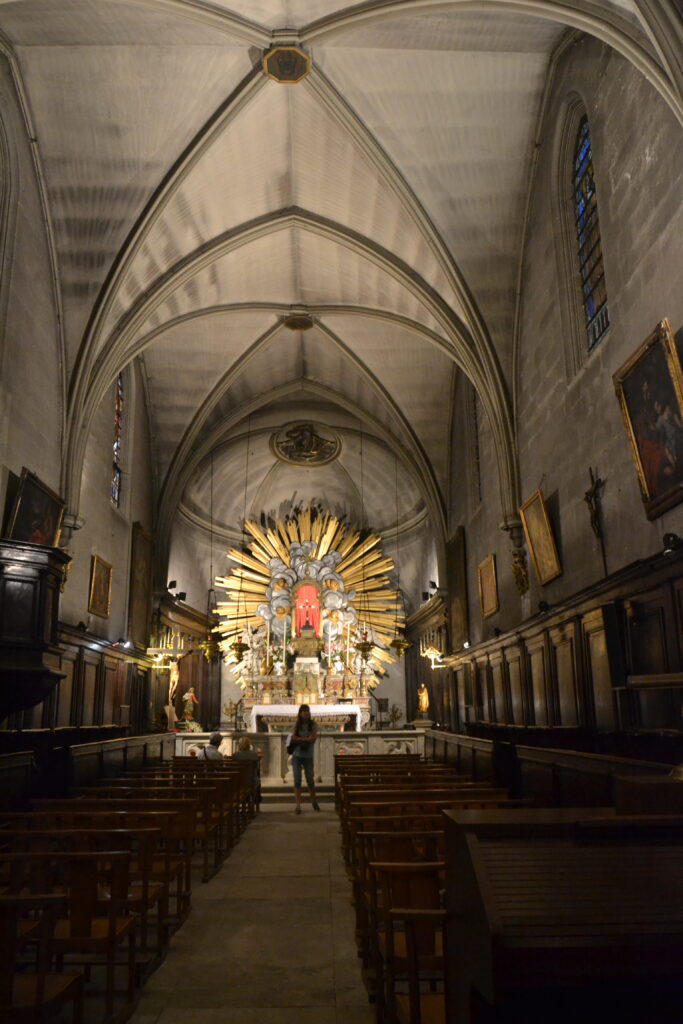
The chapel of the Grey Penitents retains a space called the chapel of the miracle. The outstanding image shows exactly that interior and not a generic Avignon church.
The marker uses 43,9453876, 4,8125869, the building's coordinate at the rue des Teinturiers. The location represents the current place of memory and worship, not a reconstruction of the exact level achieved by water in 1433.
Classification on the map
Avignon is incorporated as "prodigy of Eucharistic protection with current cult." This category allows to distinguish it from Faverney, where a form linked to the fire is preserved, or from cases with visible changes of the species.
The page appears in the Eucharistic directory because the Most Holy is the center of tradition. The label explains to the pilgrim that he will not find a physically altered host or a relic resulting from water.
The Eucharist and Protection
Christian faith does not promise that temples or believers will always be free from floods, wars or disasters. To interpret this memory as an automatic guarantee would be contrary to the experience of the Church and the Gospel.
The story invites us to guard the presence of Christ even in adversity. This custody is now being extended in the protection of life, support for the victims and responsible care for the creation and the cities at risk.
Penitential procession
The annual procession does not magically reproduce the phenomenon. It is a liturgical and community action of memory, thanks and conversion. The song associated with the passage of the sea recalls the biblical liberation and directs the look to God.
Whoever participates must follow the indications of the brotherhood and the archdiocese. The published hours may vary and the tourist visit does not replace respectful participation in prayer.
How to read the sources
The main source is the contemporary presentation of the Archdiocese of Avignon, which confirms the brotherhood, worship, memory of the miracle and procession. The Acitis panel provides the date, the boat, the height of the water and other narrative details.
The file does not attribute to the diocesan document what is only on the panel. This separation allows to preserve the wealth of the story and, at the same time, to show the reader the different degree of support of each statement.
Spiritual feeling
The dry road to the altar can be seen as an image of hope: even when the waters seem to overflow everything, faith seeks Christ and opens way to service. It is not a question of denying danger, but of responding faithfully.
Adoration leads to action. He who remains before the Eucharist learns to recognize Christ himself in people affected by disasters, in the poor and in those who need company.
Sources consulted
- Archdiocese of Avignon: History and Spirituality of the Grey Penitents.
- Exposure associated with San Carlo Acutis: Avignon panelas a secondary repertoire.
- Wikimedia Commons: photography and license of the chapel of the miracle.

Para orar
Jesus the Eucharist, stay with us in every trial. Open paths of hope, make us guard your presence with humility and move us to help those who suffer. Amen.
Image credit
Chapel of the miracle of Avignon's Grave Penitents. Marianne Casamance / Wikimedia Commons, CC BY-SA 4.0. File and license in Wikimedia Commons.