
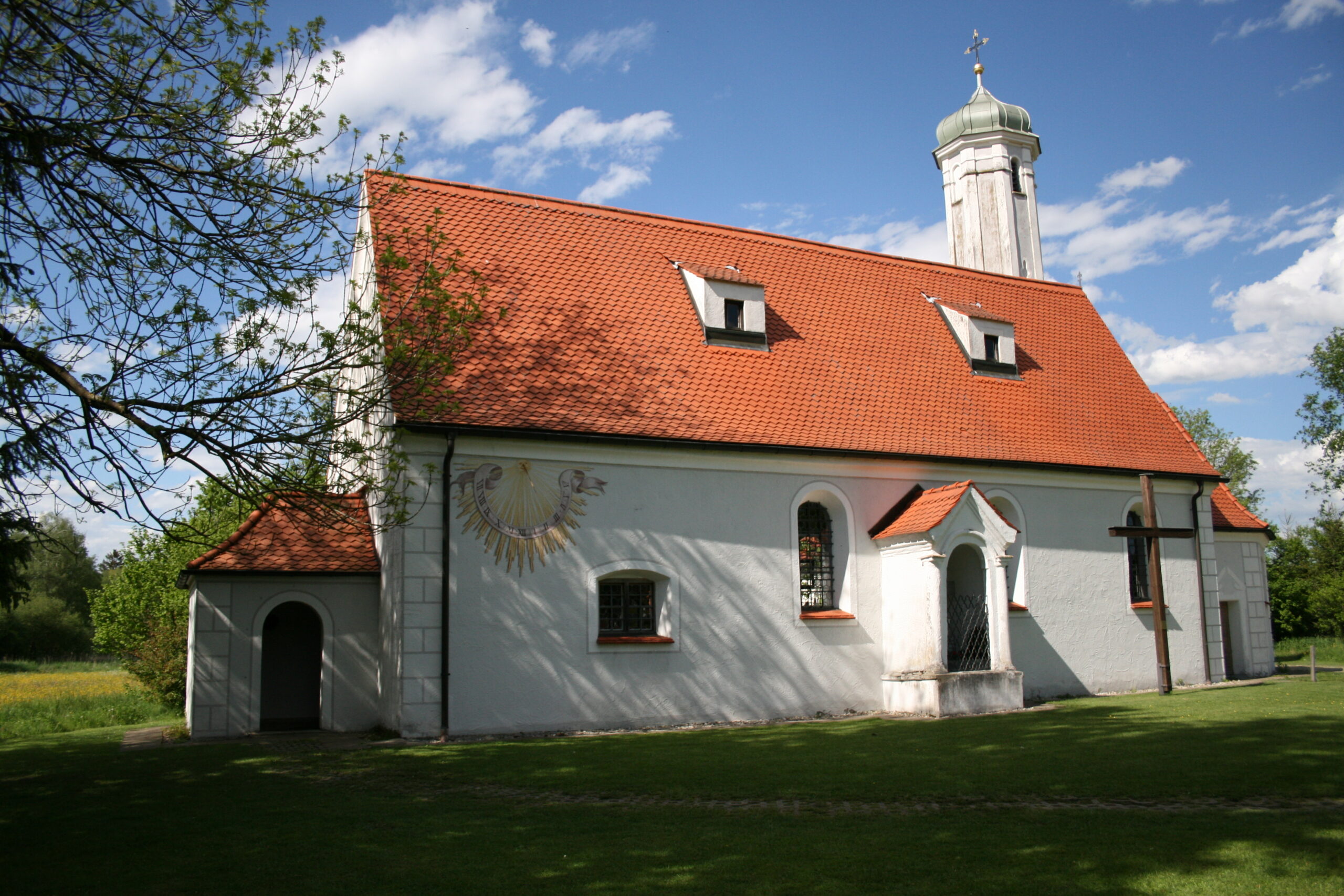
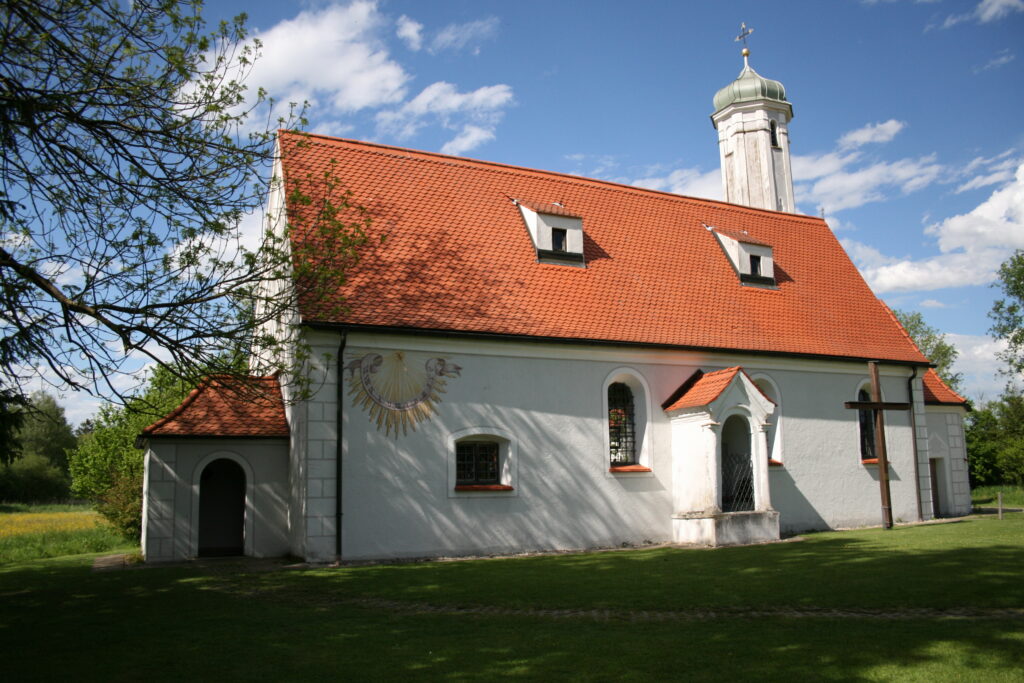
The Riedkapelle retains the memory of Benningen's Eucharistic account of 1215-1216. The host was moved to San Martín de Memmingen and disappeared during the Reformation; the chapel, its paintings and the procession of Corpus today maintain the local memory.
The account of 1215 and 1216
Tradition is the beginning of the Holy Thursday of 1215. In Benningen there were two mills and one of the mills, moved according to the account by envy to its competitor, would have hidden the form received in communion. He first placed it next to the rival mill and, by not getting the damage he was looking for, returned a year later to put it under the milling stone.
The narrative states that a voice was then heard that warned that the "sumo well" was crushed there. The neighbors came and told the people responsible and the priest. When the form was placed on a body, blood would have sprout on the hands of the priest. These details belong to the religious memory transmitted by the chronicle and by the paintings of the chapel; they are not verifiable observations at present.
A legend that demands responsible reading
The medieval account attributes to the mill a sacrilegious conduct and adds an extraordinary punishment against its mill. The file retains this version because it explains the origin of the sanctuary, but does not offer it as an invitation to fear, to revenge or to judge a particular person.
His Christian reading must lead to reverence, reparation of damage and conversion. The Eucharist never authorizes violence against those who doubt or sin. Historical truth requires a distinction between the documented existence of the chapel and the cult and the legendary elements added to the narrative.
Transfer of the host to Memmingen
The venerated form did not remain in the Riedkapelle. The local tradition states that the clergy took her to the church of San Martín de Memmingen, where she was known as the Healing or sacred treasure. The city received pilgrims and kept news of favors attributed to its veneration.
The Municipal Archive of Memmingen brings together the sources concerning this medieval cult. The documentation allows us to study how Benningen's memory was linked to San Martín and how the object was interpreted in different times, without confusing the spread of a devotion with a contemporary material test.
The perdida of the reliquia
Over time the form deteriorated. Historical news indicates that in the 15th century his sacramental condition was questioned because of his state. During the Reformation he disappeared: some traditions claim that his remains were matched in San Martín, but no proven location is known.
For this reason Benningen is not presented as a place with exposed Eucharistic relic. The preserved heritage is the memorial chapel; the alleged object of the event cannot be visited or examined. This precision avoids creating false expectations for the pilgrim.
The first chapel and its renovations
The local memory places the construction of a first chapel in 1218, at the initiative of Abbot Konrad I of Ottobeuren. The building was damaged and transformed. In 1586 the monastery of Ottobeuren promoted a repair, and in 1674 a profound renewal was carried out that shaped much of the current chapel.
The temple was extended and received its tower; the rostrum was added later. Its scale and location next to the Benninger Ried maintain the character of a remote place for memory and prayer. The chapel is protected as a monument and is one of the local identity signs.
The paintings tell the tradition
Inside, a cycle of scenes attributed to the painter Johann Friedrich Sichelbein narrates the episode of the mills, the finding and the transfer of the form. The rods of the ancient brotherhood also contain Eucharistic images and passages of the story.
These works are sources to know how later generations understood history. A painting can document the reception and pedagogy of a devotion, although it does not prove that each scene would happen in the way represented. Its artistic and catechetical value remains.
The Brotherhood of the Most Holy Sacrament
In 1679 Bishop Johann Christoph authorized a fellowship linked to the chapel and the Most Holy Sacrament. Its members participated in processions and funerals with painted rods and shields. The organization shows that the Baroque recovery was not only architectural, but also community and liturgical.
The fellowship helped to transmit history, care for the temple and order devotion. His memory allows him to understand the place within the Eucharistic religiosity of Suabia, beyond a single prodigious narrative.
Corpus Christi y memoria viva
The parish of Benningen maintains the relationship with the Riedkapelle and makes a station there during the procession of Corpus Christi. This current use focuses on Christ present in the Eucharist celebrated by the Church, not in the search for a lost medieval form.
The procession links the past with a living liturgical practice. The chapel serves as a place of prayer and memory, while the sacramental life is held in the parish and in the present celebration.
Visiting the Riedkapelle
The chapel is north-west of Benningen, next to the natural space of the Benninger Ried and the local museum. The marker is corrected to 47,9723506, 10,2064126, coordinates the building identified in open mapping. The reference address is Riedkapelle 2, 87734 Benningen.
The hours of the museum and access can vary according to the time; before you move you should consult the information of the centre of the Benninger Ried. The visit must respect both the sacred character of the building and the protection of the nearby wetland.
World map classification
Benningen appears as "historical tradition with memorial chapel and lost relic." The marker points to the preserved building and not San Martín de Memmingen, as the Riedkapelle is the place associated with the origin and the main current space of interpretation.
The label differs three realities: the extraordinary account of 1215-1216, the documented history of veneration and chapel, and the absence of a locable relic today. This separation makes the record useful for both devotion and responsible research.
Spiritual feeling
Tradition recalls that communion is not an object to use against another person. To receive the Body of Christ calls for reconciliation, humility and care of the most vulnerable. True reparation is born not from terror, but from the love that recognizes the gift received and corrects the damage caused.
The disappearance of the old form also leads to the permanent center of faith: Christ is given in every Eucharist celebrated validly. The believer does not need to possess a medieval vestige to worship, communicate with fruit and transform his life into charity.
Benningen, Memmingen y Ottobeuren
Tradition cannot be understood by looking only at the chapel. Benningen was the place attributed to the finding; San Martín de Memmingen received the venerated form; and the abbey of Ottobeuren intervened in the construction and renovations of the Riedkapelle. The three points form a historical geography, although only the chapel is marked as the main place.
This network also explains why the sources appear distributed between the municipal memory, the Memmingen file and the monastic history. Meeting them prevents an isolated version from turning a complex legend into a simple chronicle.
The wetland around the chapel
The Riedkapelle rises next to the Benninger Ried, a natural space protected from great fragility. The religious visit shares the place with environmental conservation tasks. Staying on the roads, respecting the indications and not altering the vegetation is part of a responsible pilgrimage.
The landscape also offers a sober spiritual reading. Water, plants and silence do not prove medieval prodigy, but help to contemplate creation as a gift. The Eucharistic memory thus leads to the care of the earth and not only to the memory of an ancient account.
What remains and what was lost
The building, the paintings, the cofradia rods, the historical sources and the Corpus station remain. The form that was moved to Memmingen was lost and there is no point today where it can be located with certainty.
This enumeration avoids two errors: to claim that nothing remains because the relic disappeared, or to suggest that the relic remains exposed because the chapel remains. The real history contains conservation and loss at the same time.
Memory, art and catechesis
The painted scenes are not photographs of the 13th century. They were created to teach tradition to people who might not be able to read and organize the story with understandable symbols, gestures and sequences. His analysis belongs to both the history of art and the history of devotion.
In observing them it is appropriate to ask what the community that commissioned them wanted to transmit: reverence for the Eucharist, rejection of envy, reparation and trust. This reading avoids only the most dramatic elements of legend.
Sources consulted
- Benninger Ried y municipio de Benningen: capilla, relato, arte y visita.
- Municipal Archives of Memmingen: medieval sources on the Healing.
- Government of Suabia: historical and natural guide of the Benninger Ried.
- Exposure associated with San Carlo Acutis: Benningen, compared to local sources.
Para orar
Jesus the Eucharist, deliver our heart from envy and all desire to do harm. Teach us to receive you with reverence, to repair our faults and to turn communion into humble service to our brothers. Amen.
Image credit
Riedkapelle de Benningen. Johannes Böckh y Thomas Mirtsch / Wikimedia Commons, CC BY-SA 3.0. File and license in Wikimedia Commons.
